
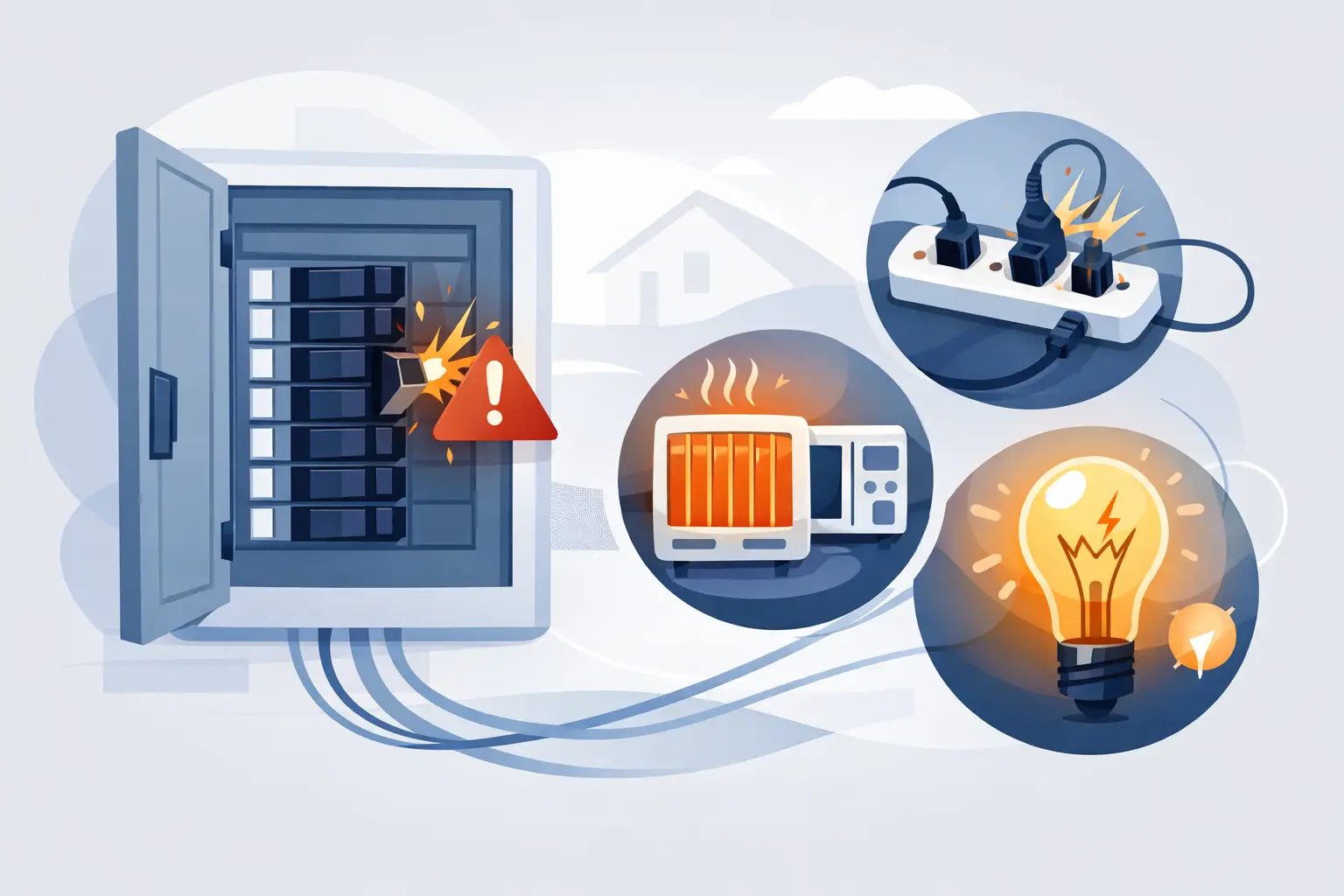
You reset the breaker, everything comes back on, and then it trips again an hour later – or immediately. When a breaker keeps tripping, it is not being overly sensitive. It is doing its job by shutting off power when something on that circuit is drawing too much current or creating an unsafe condition.
For homeowners, the hard part is figuring out whether this is a simple overload, a failing device, or a warning sign of a deeper wiring problem. Some causes are minor. Others point to heat, damaged insulation, loose connections, or a panel issue that should not be ignored.
What it means when a breaker keeps tripping
A circuit breaker is a safety device. It monitors electrical flow and trips when the circuit exceeds its safe limit or detects certain fault conditions. That shutoff helps prevent overheating, equipment damage, and in some cases electrical fires.
The reason matters. A breaker that trips once after you plugged in a space heater and a hair dryer at the same time is a different situation than a bedroom breaker that trips every few days with normal use. Repeated tripping usually means there is an underlying issue that needs a proper diagnosis, not just another reset.
In many Sonoma County homes, especially older ones, the problem can be tied to how the home was originally wired versus how people use electricity now. Kitchen appliances, garage tools, portable AC units, EV charging equipment, and hot tubs all place demands on electrical systems that older circuits were never designed to handle.
The most common reasons your breaker keeps tripping
Circuit overload
This is the most straightforward cause. Every branch circuit is rated for a certain amount of current, such as 15 or 20 amps. If the total load on that circuit goes too high, the breaker trips to protect the wiring.
This often happens in bedrooms, living rooms, bathrooms, and garages where several high-draw devices get used at once. Portable heaters, microwaves, hair dryers, toaster ovens, and vacuums are common culprits. In some homes, one breaker may serve more outlets or rooms than you expect, so the overload is not always obvious.
If the breaker only trips when multiple devices run at the same time, overload is likely. The trade-off is that reducing the load may solve the immediate problem, but if the circuit is routinely maxed out, the long-term fix may be adding a dedicated circuit or upgrading part of the electrical system.
Short circuit
A short circuit happens when current takes an unintended path, often because a hot wire contacts a neutral or ground. This can create a sudden spike in current and trip the breaker immediately.
Shorts may be caused by damaged wire insulation, loose connections, failed outlets, worn cords, or problems inside an appliance. Sometimes there are warning signs such as a burning smell, discoloration around an outlet, buzzing, or a breaker that trips the moment you turn something on.
This is not a wait-and-see issue. A short circuit can create significant heat very quickly.
Ground fault
A ground fault is similar to a short, but the current flows from a hot wire to a grounded surface or path. These are especially common in kitchens, bathrooms, garages, laundry areas, and outdoor circuits where moisture is more likely.
If a bathroom, garage, or outdoor breaker trips often, the issue could be a device exposed to damp conditions, a failing GFCI receptacle, or damaged wiring. In some cases, the breaker itself may be a GFCI or dual-function breaker designed to react to specific fault conditions.
Arc fault detection
Newer homes and updated panels may have AFCI or dual-function breakers. These are designed to detect arcing that standard breakers may not catch. Arcing can happen when a wire is loose, damaged, pinched, or deteriorating behind a wall or at a device.
From a homeowner perspective, this can feel confusing because the breaker trips even though the circuit does not seem overloaded. That does not necessarily mean the breaker is bad. It may be catching a real hazard, or it may be reacting to a wiring issue that needs inspection.
A bad breaker or panel problem
Breakers do wear out. They can become weak, trip more easily than they should, or fail to reset properly. Panels can also develop connection issues, corrosion, heat damage, or compatibility problems if the wrong breaker type was installed.
That said, replacing a breaker without confirming the cause is a gamble. If a new breaker trips too, the real problem was elsewhere. Good diagnosis matters here, especially in older homes with aging panels or past electrical work of unknown quality.
What you can check safely first
If your breaker keeps tripping, start with simple observations. You do not need to remove panel covers or touch wiring to gather useful information.
First, take note of which breaker is tripping and what areas or devices lose power. Then think about timing. Does it trip when you run a specific appliance, when several things are on at once, or seemingly at random?
Next, unplug or turn off everything on that circuit if you can identify it. Reset the breaker once. If it holds, plug things back in one at a time. If the breaker trips when a certain appliance is used, that device may be faulty or too demanding for the circuit.
Also look for visible warning signs at outlets and switches on the affected circuit. Scorch marks, warmth, buzzing, flickering, or a burnt odor all justify stopping and calling a licensed electrician.
One thing not to do is keep resetting a breaker repeatedly. The breaker is signaling a problem. Forcing it back on again and again can allow heat and damage to build in the circuit.
When breaker tripping points to a bigger upgrade
Sometimes the issue is not a single defect. It is that the home has outgrown part of its original electrical system.
This is common when homeowners add modern loads such as EV chargers, hot tubs, workshop equipment, or major kitchen upgrades. It also comes up in older homes where too many rooms share too few circuits. In those cases, the breaker is not malfunctioning. The circuit design is no longer a good match for real-world use.
A dedicated circuit may be the right answer for a microwave, garage refrigerator, sump pump, EV charger, or spa equipment. In other cases, a panel upgrade makes sense because there is no room for added circuits, the panel is outdated, or the existing service is already near capacity.
This is where an honest electrician adds real value. The right recommendation depends on the age of the home, the panel condition, the load calculation, and how you actually use the space. Not every tripping breaker calls for a major upgrade, but some absolutely do.
When to call a licensed electrician
You should bring in a professional if the same breaker trips repeatedly, if it trips with normal everyday use, or if there are any signs of heat, odor, buzzing, or damaged outlets. The same goes for tripping tied to a bathroom, garage, outdoor area, kitchen appliance, EV charger, or hot tub circuit, since these often involve specialized protection requirements.
A licensed electrician can test the circuit, inspect devices and connections, evaluate the breaker and panel, and identify whether the issue is overload, a fault, a failing component, or a capacity problem. That saves time and helps avoid replacing parts that were never the cause.
For homeowners in Santa Rosa and the surrounding area, this kind of issue is exactly why clear diagnosis matters. At APG Electric Co., the goal is not to oversell a panel replacement when a repair will do, or to swap a breaker without finding the reason it tripped in the first place. It is to make the home safe and give you a solution that makes sense for the way you live.
Don’t treat a tripping breaker like a nuisance
A breaker that trips once in a while may be protecting a circuit from a temporary overload. A breaker that keeps tripping is asking for attention. Sometimes the fix is simple. Sometimes it reveals worn wiring, a failing device, or an electrical system that needs to catch up with the home.
Either way, the safest next step is to take the warning seriously. A little investigation now is a lot better than dealing with melted wiring, damaged equipment, or a preventable emergency later.