
You usually feel the difference between level 1 vs level 2 charging the first week you own an EV. The car is great. The quiet ride is great. Then real life shows up – commuting, errands, school drop-offs, a low battery at the end of a long day – and your charging setup starts to matter a lot more than you expected.
For most homeowners, this is not really a question about plugs and voltage. It is a question about convenience, electrical capacity, installation cost, and whether your home can support the way you actually drive. The right answer depends on your vehicle, your daily mileage, and the condition of your electrical system.
Level 1 vs level 2 charging: what is the difference?
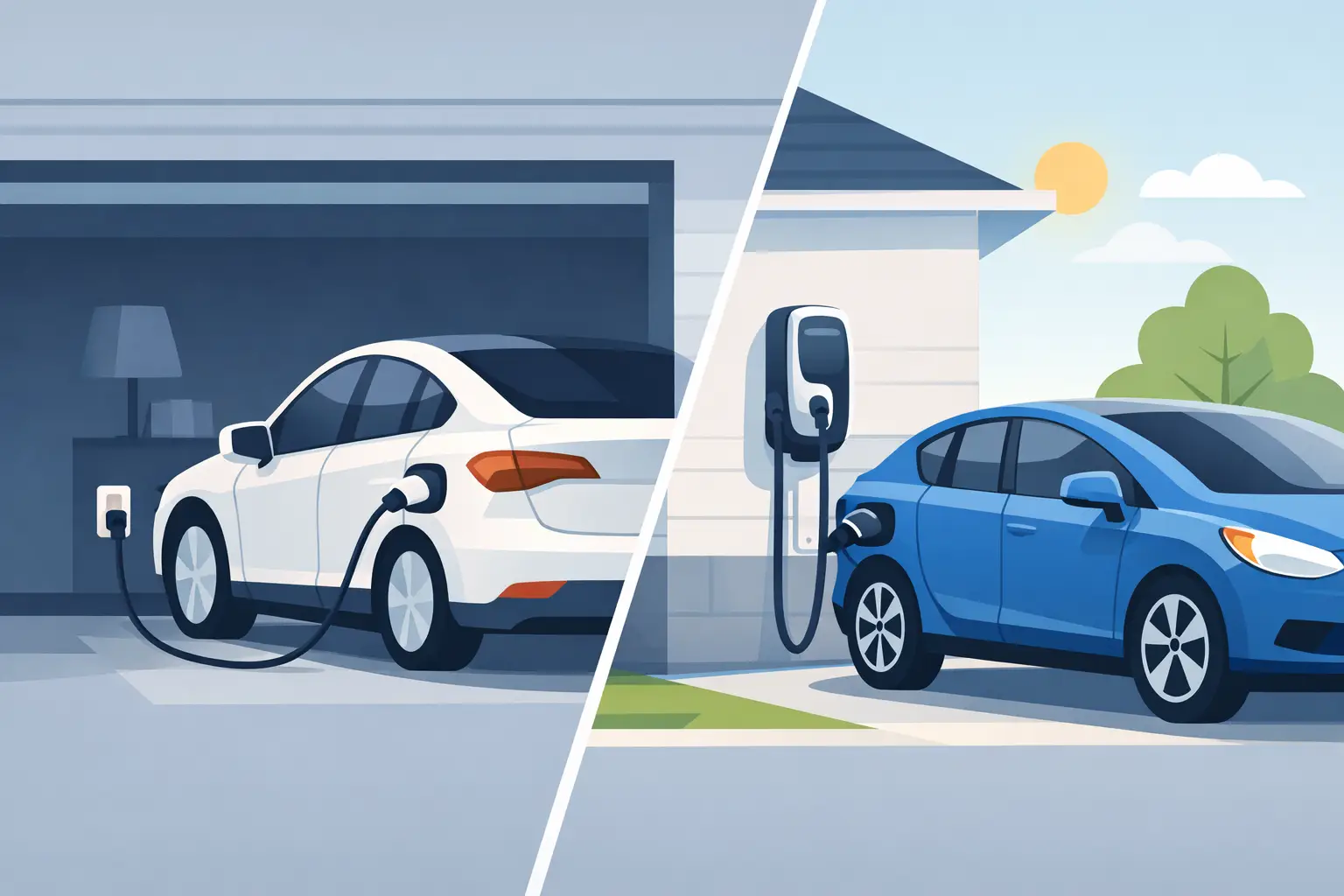
Level 1 charging is the most basic form of home EV charging. It typically uses a standard 120-volt household outlet and the portable charging cord that comes with many vehicles. Because it runs on a regular outlet, it is the easiest option to start with and often requires no new equipment if there is already a suitable outlet nearby.
Level 2 charging uses a 240-volt circuit, similar to what powers an electric dryer or oven. It charges much faster than level 1, but it usually requires a dedicated circuit and professional installation. In many homes, it may also raise a bigger question: can the electrical panel handle the added load safely?
That is where the comparison becomes less about the charger itself and more about the home behind it.
How fast is level 1 vs level 2 charging?
Charging speed is the reason most homeowners move beyond level 1. A level 1 charger often adds only a few miles of range per hour. For someone who drives very little and can leave the car plugged in overnight every night, that may be enough. If your daily routine is light and predictable, level 1 can work.
Level 2 charging is a different experience. Depending on the vehicle and charger, it can add a much larger amount of range per hour and recharge the battery far more quickly. That makes it much easier to recover from a busy day, top off overnight, or prepare for back-to-back driving days without worrying about whether the battery will catch up.
A homeowner who drives 20 to 30 miles a day may be able to live with level 1. A homeowner who drives 50 miles or more, has multiple drivers, or simply wants faster charging at home will usually prefer level 2.
When level 1 charging makes sense
Level 1 is often a reasonable starting point, especially for new EV owners who want to see how their routine feels before investing in equipment. If your vehicle sits parked for long stretches, your commute is short, and you have access to a reliable outlet in a garage or near a parking space, you may not need anything more right away.
It can also make sense as a temporary solution. Some homeowners use level 1 while waiting for a charger installation, a panel upgrade, or a remodel. Others keep it as a backup even after installing level 2.
The catch is consistency. Level 1 usually works best when your schedule is predictable and your charging needs stay modest. If you regularly come home low on battery and need the car ready again by morning, it can start to feel limiting quickly.
When level 2 charging is worth it
Level 2 is usually the better long-term fit for homeowners who rely on their EV every day. It gives you more flexibility, shorter charging times, and a setup that feels much more practical for a busy household. You are not trying to stretch a slow charge over every hour the car is parked. You are charging with room to spare.
This matters even more in households with more than one EV, longer commutes, or changing schedules. It also matters if you plan to stay in the home and want an EV charging setup that adds convenience now and supports future needs.
Many homeowners in Sonoma County also have older electrical systems, detached garages, or panels that were not designed with modern electrification in mind. In those homes, level 2 charging can still be the right answer, but it needs to be evaluated properly. The charger is only one piece of the project.
The real issue: your home’s electrical capacity
A level 2 charger is not just a plug upgrade. It adds a significant electrical load, and that load has to be supported safely by the panel, wiring, breaker space, and circuit design. If any of those pieces are outdated, undersized, or already close to capacity, installation may require more than homeowners expect.
Sometimes the fix is simple. There may be room in the panel and a straightforward path to run a new dedicated 240-volt circuit. In other cases, the panel is full, the service is older, or there are already major electrical demands from air conditioning, kitchen appliances, laundry equipment, or a hot tub. That is when a proper load calculation and site evaluation become essential.
This is also where honesty matters. Not every home needs a major upgrade, and not every charger project should be treated like one. A licensed residential electrician should look at how you use the home, what capacity is available, and what solution makes sense without overselling unnecessary work.
Installation cost: cheaper now vs better later
Level 1 usually has the lowest upfront cost because it may use an existing outlet. But that does not always mean it is the better value. If the outlet is old, worn, poorly located, or on a circuit that is not well suited for continuous charging, it may need attention anyway.
Level 2 costs more upfront because it involves a new 240-volt circuit, possible permit requirements, and sometimes panel work. But for many homeowners, the added convenience and daily reliability make it the better investment. It is often the difference between charging as an afterthought and charging as a dependable part of the home.
There is also a practical middle ground. Some homes can support level 2 with minimal electrical work, while others need strategic upgrades to do it safely. A clear estimate should explain what is required, what is optional, and why.
Safety matters more than speed
Homeowners sometimes assume EV charging is just another appliance, but charging is a sustained electrical load that runs for hours at a time. That is why outlet condition, wire size, breaker sizing, circuit quality, and code-compliant installation matter so much.
With level 1, the biggest risk is often using an outlet that was never meant for repeated heavy use or plugging into extension cords and adapters that create heat problems. With level 2, the risks come from improper circuit installation, overloading an older panel, or using equipment that is not matched to the home’s capacity.
A professionally installed setup helps protect your car, your home, and your electrical system. It also gives you confidence that the charger will perform reliably instead of becoming one more thing to troubleshoot.
Which option is best for your home?
In the level 1 vs level 2 charging conversation, there is no universal winner. There is only the setup that fits your routine and your house.
Level 1 is often enough if you drive relatively little, have plenty of time to charge, and want the lowest-cost starting point. Level 2 is usually the better choice if you want faster overnight charging, drive more often, or want a home charging setup that feels easy rather than limiting.
The smartest next step is not guessing based on online averages. It is looking at your actual driving habits and your actual electrical system. A newer home with plenty of panel capacity may be a straightforward level 2 install. An older home may need a more careful plan. Either way, the goal is the same: safe charging that fits your life without wasted expense.
For homeowners who want clear answers, this is where a local residential electrician can make the process much simpler. APG Electric Co. helps homeowners in Santa Rosa and throughout Sonoma County evaluate charger options honestly, identify panel limitations early, and install the right solution for long-term reliability.
If you are deciding between level 1 and level 2, think beyond charging speed. Think about how you use your car, how your home is wired, and what will still feel convenient six months from now.