
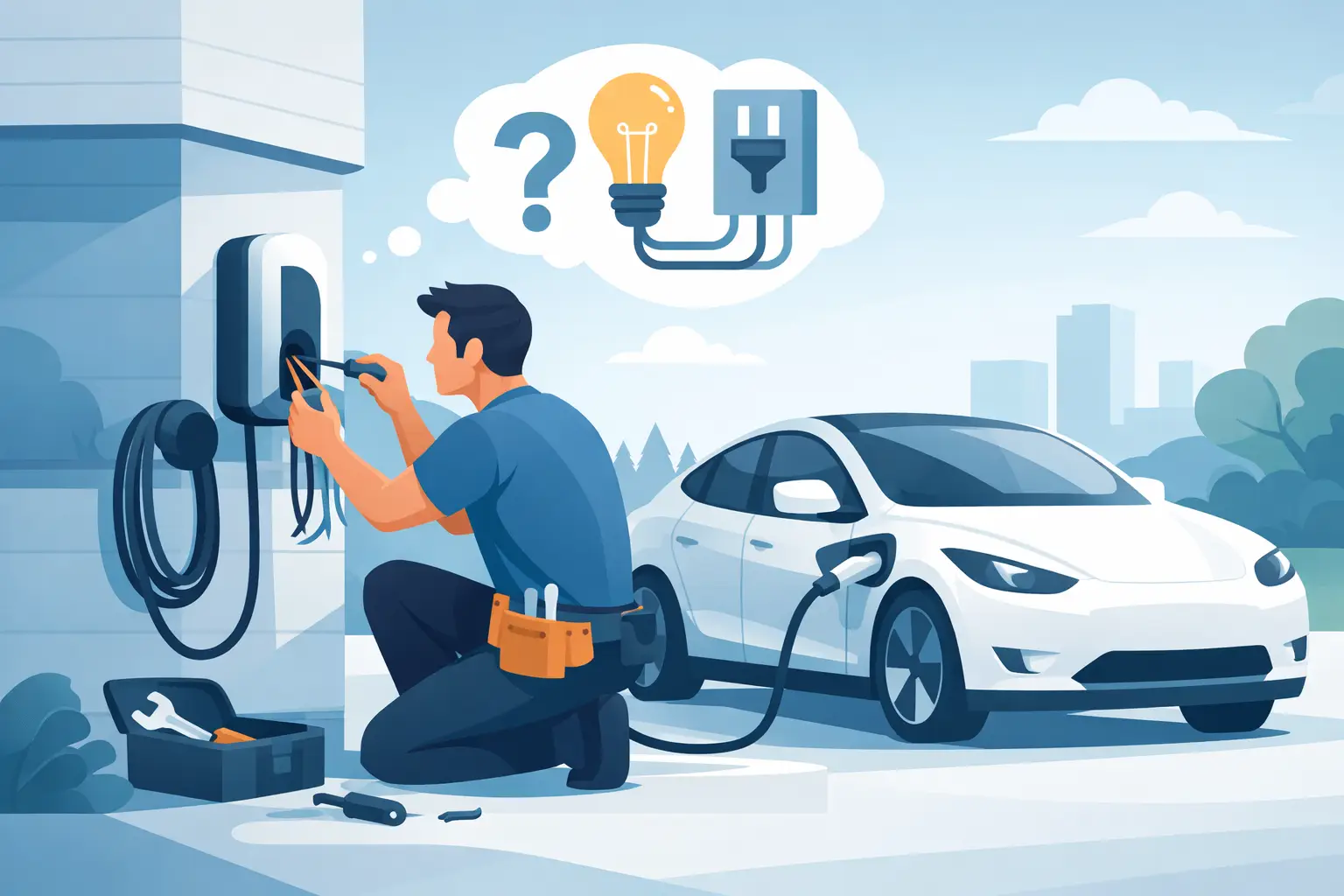
If you’re asking, can I install my own EV charging point, the honest answer is usually no – or at least, not the part that matters most. Plugging a portable Level 1 charger into a standard outlet is one thing. Installing a dedicated Level 2 charging circuit at your home is a different job entirely, and it involves electrical capacity, code compliance, permitting, and fire safety.
For most homeowners in Santa Rosa and Sonoma County, the better question is not just whether you can do it yourself, but whether you should. EV charging equipment pulls a significant continuous load for hours at a time. If the wiring, breaker, outlet, panel, or charger setup is wrong, the risk is not just inconvenience. It can mean nuisance breaker trips, damaged equipment, failed inspections, or overheating inside walls.
Can I install my own EV charging point in California?
In practical terms, California homeowners can do some work on their own property in certain situations, but that does not mean a DIY EV charger install is a smart or low-risk project. Local permitting rules, California electrical code requirements, utility considerations, and manufacturer instructions all still apply. If the installation includes a new 240-volt circuit, breaker work inside the panel, load calculations, or a hardwired charger, you are well into licensed electrician territory.
That matters because EV chargers are not like swapping a light fixture. A proper installation often starts with evaluating your electrical panel, available amperage, breaker space, wire size, grounding, and the distance from panel to charger location. In older Sonoma County homes, panel limitations are especially common. What looks simple on the garage wall may require a panel upgrade, a subpanel, or load management to support the charger safely.
There is also the inspection issue. Many jurisdictions require permits for EV charger installations, and for good reason. An inspector wants to see that the circuit is sized correctly, overcurrent protection matches the equipment, the charger is installed to code, and the work meets clearance and mounting requirements. If you skip that step, you may create problems when selling the home or dealing with insurance after an electrical failure.
What homeowners can do themselves
There are a few parts of the process a homeowner can usually handle without taking on electrical risk. You can choose where you want the charger installed, decide whether you want faster charging or a simpler setup, and compare charger features such as Wi-Fi controls, cable length, weather rating, and amperage settings.
You can also use a Level 1 charger that comes with the vehicle if the manufacturer allows it and the outlet is in good condition. That setup uses a standard 120-volt receptacle, but even then, caution matters. If the outlet is old, loose, shared with other loads, or on questionable wiring, it may not be suitable for repeated overnight charging.
What homeowners should not do casually is assume an existing 240-volt outlet in the garage is ready for EV charging. Dryer outlets, welder outlets, and older receptacles are often the wrong type, on the wrong breaker, or wired in a way that does not match the charger’s requirements. Reusing existing equipment without checking the circuit is one of the most common ways DIY installs go wrong.
Why a DIY Level 2 installation gets risky fast
A Level 2 charger is the setup most EV owners actually want because it charges much faster than Level 1. It also places more demand on your home’s electrical system. EV charging is considered a continuous load, which means the circuit and equipment must be sized differently than many homeowners expect.
For example, a charger set to deliver 40 amps generally requires a 50-amp circuit. That sounds straightforward until you factor in conductor sizing, breaker compatibility, voltage drop, panel capacity, and whether your service can handle another major load along with air conditioning, electric cooking, dryers, or hot tubs.
Then there is the installation method. Some chargers plug into a receptacle, while others are hardwired. Hardwiring is often the cleaner and more reliable option, but it absolutely should be done correctly. Terminations need to be tight, torque specs matter, and the charger has to be mounted in a location that meets code and works for daily use.
The danger in DIY work is that electrical mistakes are not always obvious right away. A charger may appear to work for weeks before heat buildup at a loose connection starts causing damage. That is one reason experienced electricians take EV charging seriously. The load is steady, repeated, and unforgiving of shortcuts.
The hidden issue: your electrical panel
Many homeowners focus on the charger itself, but the panel is often the real story. If your panel is older, full, undersized, or already carrying heavy loads, adding an EV charger may not be as simple as installing a new breaker.
A licensed electrician should verify whether the service has enough capacity for the additional demand. Sometimes it does, and the install is straightforward. Sometimes the smart answer is a panel upgrade. In other cases, a load management solution can avoid a more expensive service change while still giving you safe home charging.
This is where honest recommendations matter. A trustworthy electrician should not push a panel upgrade unless the numbers support it. At the same time, they should not force a charger into an overloaded panel just to make the job look easy. The right answer depends on your home, your vehicle, and how you plan to charge.
Cost savings vs. real risk
It is understandable to think about doing the work yourself to save money. A professional installation is an added cost on top of buying the EV and charger. But the savings from DIY can disappear quickly if the install fails inspection, damages the charger, requires rework, or creates a safety issue.
There is also the value of getting the setup right the first time. A good installer will help match the charger to your panel capacity and driving habits. Not every home needs the highest-amperage charger available. In some cases, a lower charging rate is the smarter and more cost-effective choice because it avoids expensive electrical upgrades while still covering daily driving needs.
That kind of recommendation is hard to get from a box on a shelf. It comes from someone who works with residential electrical systems every day and understands how to balance performance, safety, and budget.
What a professional EV charger installation includes
When a licensed residential electrician installs an EV charging point, the work should go beyond simply hanging a unit on the wall. A proper job usually includes evaluating panel capacity, confirming the best circuit size, choosing the right installation method, securing permits where required, and testing the equipment after installation.
It should also include practical details that affect daily use. Charger placement matters. Cable reach matters. Outdoor exposure matters. So does future flexibility if you change vehicles later. A clean installation is not only safer, it is easier to live with.
For homeowners in older neighborhoods around Santa Rosa and throughout Sonoma County, this professional evaluation can prevent expensive surprises. Homes with aging panels, outdated wiring, or previous handyman modifications need extra attention before adding a high-demand appliance like an EV charger.
When the answer is definitely no
If your plan involves opening the panel, adding a new 240-volt breaker, running cable through finished walls, installing a NEMA outlet, or hardwiring a charging station, the answer to can I install my own EV charging point is, for most people, no. Not safely, not confidently, and not in a way that protects your home investment.
The same goes if you are unsure whether your panel has capacity, if your home has aluminum wiring, if the charger will be outdoors, or if you need to navigate permit requirements. These are exactly the situations where professional electrical work pays off.
At that point, this stops being a product-install question and becomes a residential electrical project. That distinction matters. A licensed electrician is not just there to connect wires. They are there to make sure the entire system can support the charger reliably.
The smarter way to think about it
The smartest approach is to treat EV charging as part of your home’s electrical system, not as a gadget you bolt onto the wall. That mindset leads to better decisions about charger size, panel capacity, installation location, and long-term reliability.
If you want the fastest path to home charging, start with a professional assessment. A company like APG Electric Co. can tell you whether your panel is ready, whether a permit is needed, and what setup makes the most sense for your home and budget. That gives you a clear answer instead of a guess.
Owning an EV should make life easier, not add uncertainty every time you plug in at night. The right installation gives you that peace of mind.