
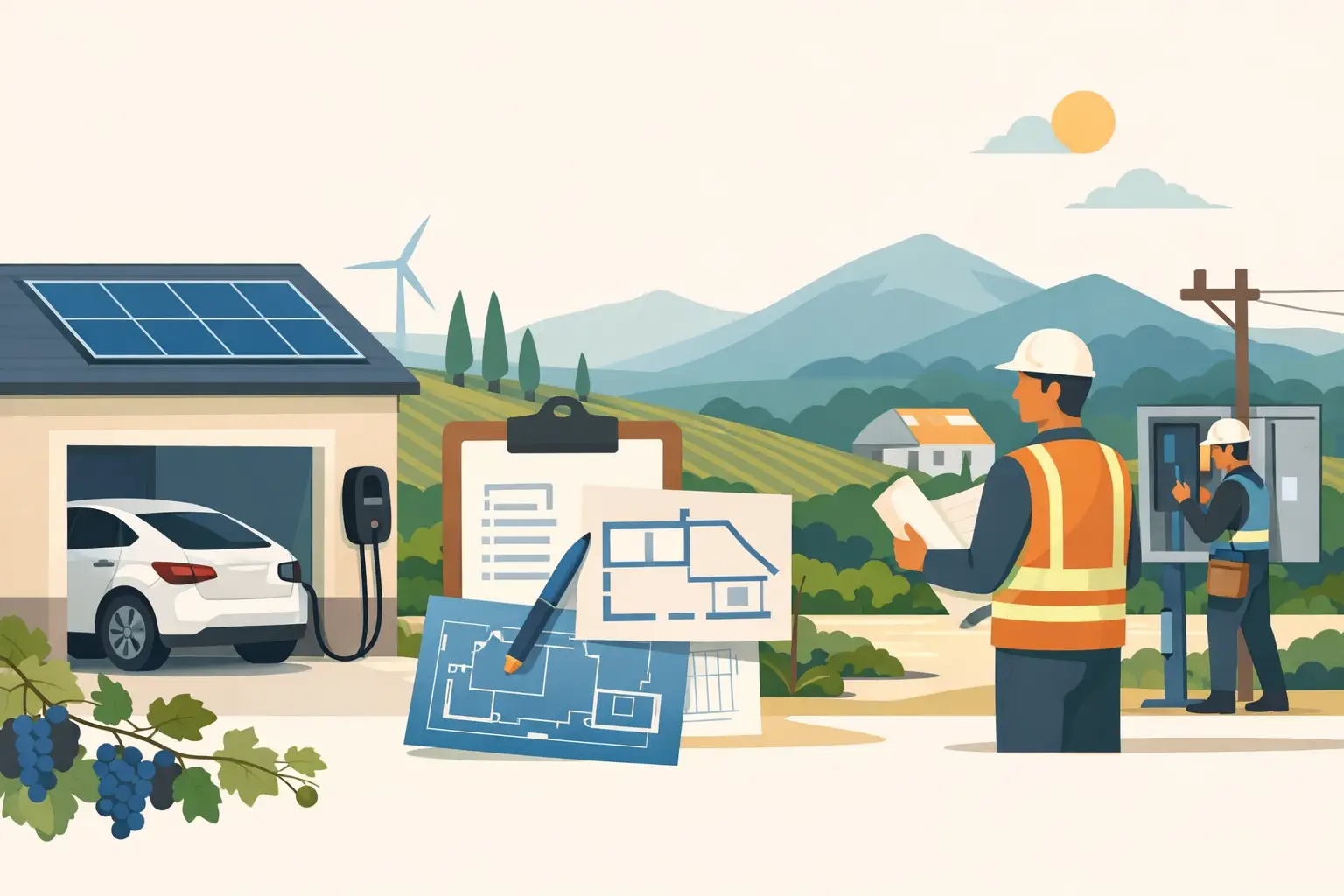
A home EV charger may look like a simple addition to the garage wall, but it connects to one of the most important systems in your home: the electrical service. EV charger permits are the step that helps ensure the circuit, panel capacity, wiring, and equipment are right for the job. For Sonoma County homeowners, a properly permitted installation is not just paperwork. It is a practical safeguard for your home, vehicle, and investment.
A licensed electrician can handle the technical work and guide you through the permitting process, so you do not have to sort through electrical code requirements on your own. The exact process can vary by your city, unincorporated area, and the scope of the installation, but the purpose stays the same: safe, code-compliant charging that is built to last.
Why EV Charger Permits Matter
Level 2 EV chargers operate on 240 volts and can draw a significant, continuous electrical load for hours at a time. That makes the installation very different from plugging a small appliance into an existing outlet. The charger needs a properly sized dedicated circuit, correctly rated wiring and breaker, suitable disconnecting means where required, and an electrical panel that can safely support the added demand.
A permit brings an independent inspection into the process. The inspector verifies that the completed installation meets applicable electrical requirements. This added review helps catch issues that might otherwise stay hidden behind walls or inside a panel, such as undersized conductors, improper breaker sizing, missing grounding, or equipment installed in an unsuitable location.
Permitting also creates a record that the work was completed legally. That can matter when selling your home, filing an insurance claim, planning future electrical upgrades, or answering questions from a buyer’s inspector. An unpermitted charger may seem less expensive at first, but correcting it later can cost more than doing the work properly from the start.
When Is an EV Charger Permit Required?
In most cases, installing a hardwired Level 2 charger or adding a new 240-volt receptacle for EV charging requires an electrical permit. The reason is straightforward: the project usually involves a new dedicated circuit and changes inside the electrical panel.
Even if your charger plugs into a receptacle rather than being hardwired, permit requirements often still apply when the receptacle and circuit are new. A common mistake is assuming that a plug-in charger avoids the need for professional electrical work. The plug may look familiar, but the circuit behind it must still be designed for the charger’s continuous load and the receptacle must be rated for the application.
There can be limited exceptions for certain equipment replacements or existing circuits, but homeowners should not assume an exception applies without confirming it. Local requirements are enforced by the authority having jurisdiction, which may be the City of Santa Rosa, another Sonoma County municipality, or Sonoma County for homes in unincorporated areas.
What a Permitted EV Charger Installation Includes
The permitting process starts well before an application is submitted. A qualified electrician should first assess the home’s existing electrical system. This is where experienced diagnosis makes a meaningful difference, particularly in older Sonoma County homes with limited panel capacity or aging equipment.
The assessment typically considers the charger’s planned amperage, the home’s electrical service size, current household loads, panel space, the route for new wiring, and the charger’s location. A load calculation helps determine whether the service can safely support the new charging demand. It is not enough to see an open breaker space in the panel. The panel may have room physically while the overall electrical service is already near its calculated capacity.
If the system has adequate capacity, the electrician can plan a dedicated branch circuit and prepare the permit application. The application commonly identifies the equipment, circuit size, panel information, and scope of work. Once the permit is issued, installation can proceed according to the approved plan.
After the work is complete, the local jurisdiction schedules an inspection. The inspector may review the charger location, wiring method, circuit protection, labeling, grounding and bonding, and panel work. Some projects require an inspection before drywall is closed if wiring is installed inside walls. A final approval closes out the permit.
Panel Capacity Can Change the Scope of the Project
For some homeowners, the charger itself is the easy part. The larger question is whether the electrical panel and service can support it.
A modern 200-amp panel with reasonable existing loads may have capacity for a Level 2 charger without major changes. However, every home is different. Electric ranges, air conditioners, heat pumps, hot tubs, electric dryers, solar equipment, and future electrification plans can all affect the calculation.
If the load calculation shows insufficient capacity, an electrician may recommend options such as a panel upgrade, service upgrade, lower-amperage charging, or approved load-management equipment. Each option has trade-offs. A panel upgrade can provide room for future projects, while a lower-amperage charger may meet the needs of a household that charges overnight and drives moderate daily distances. The right answer depends on your vehicle, driving habits, budget, and long-term plans for the home.
This is also why permit applications should reflect the actual design, not a quick assumption. A good installation plan solves today’s charging need without creating an avoidable limitation for tomorrow.
How Long Do EV Charger Permits Take?
Timing depends on the local jurisdiction, the completeness of the application, inspection availability, and whether the project includes a panel or service upgrade. A straightforward charger circuit may move faster than a project requiring new service equipment, trenching, meter work, or coordination with a utility.
Homeowners can help keep the process moving by deciding where the vehicle will park, selecting charger equipment early, and mentioning any planned electrical upgrades during the initial estimate. If you are considering solar, battery storage, air conditioning replacement, or a hot tub in the near future, share that information. It may affect the best panel strategy now.
Be cautious of anyone who promises to install a new high-amperage EV circuit immediately without discussing permits, panel capacity, or inspection. Fast service is valuable, but speed should never replace a proper evaluation of the electrical system.
Permit Questions for Garages, Carports, and Outdoor Chargers
Charging equipment in a finished garage is often the most straightforward scenario, but location still matters. The charger needs to be accessible to the vehicle without creating a tripping hazard, protected from physical damage where appropriate, and installed according to the manufacturer’s instructions.
Carports and exterior parking areas can add weather-exposure and mounting considerations. The wiring method, enclosure ratings, equipment location, and protection from vehicle impact may all affect the installation plan. If the charger is far from the electrical panel, longer wire runs can also increase cost and may influence conductor sizing.
Townhomes, condominiums, and homes with shared parking introduce another layer of planning. In addition to city or county permits, homeowners may need approval from a homeowners association or property manager. The electrical service may be shared, and parking arrangements can affect where equipment can be placed. Getting those details resolved before work begins prevents expensive revisions later.
Choosing an Electrician for Permitted Work
A homeowner should feel comfortable asking direct questions before approving an EV charger installation. Confirm that the contractor is licensed, that the project will be permitted when required, and that the estimate explains whether panel work is included. Ask how the electrician will determine available capacity and who will coordinate the inspection.
Clear answers are a good sign. So is an electrician who explains when a more modest charging setup may be sufficient instead of automatically pushing the highest-amperage option. The goal is not to sell the biggest project. It is to install a safe, dependable charging solution that fits your home.
At APG Electric Co., we help Santa Rosa and Sonoma County homeowners evaluate their electrical capacity, plan permitted EV charging installations, and make informed decisions about panel upgrades when they are truly needed. A charger should make daily driving easier, not create uncertainty about the electrical system behind it.