
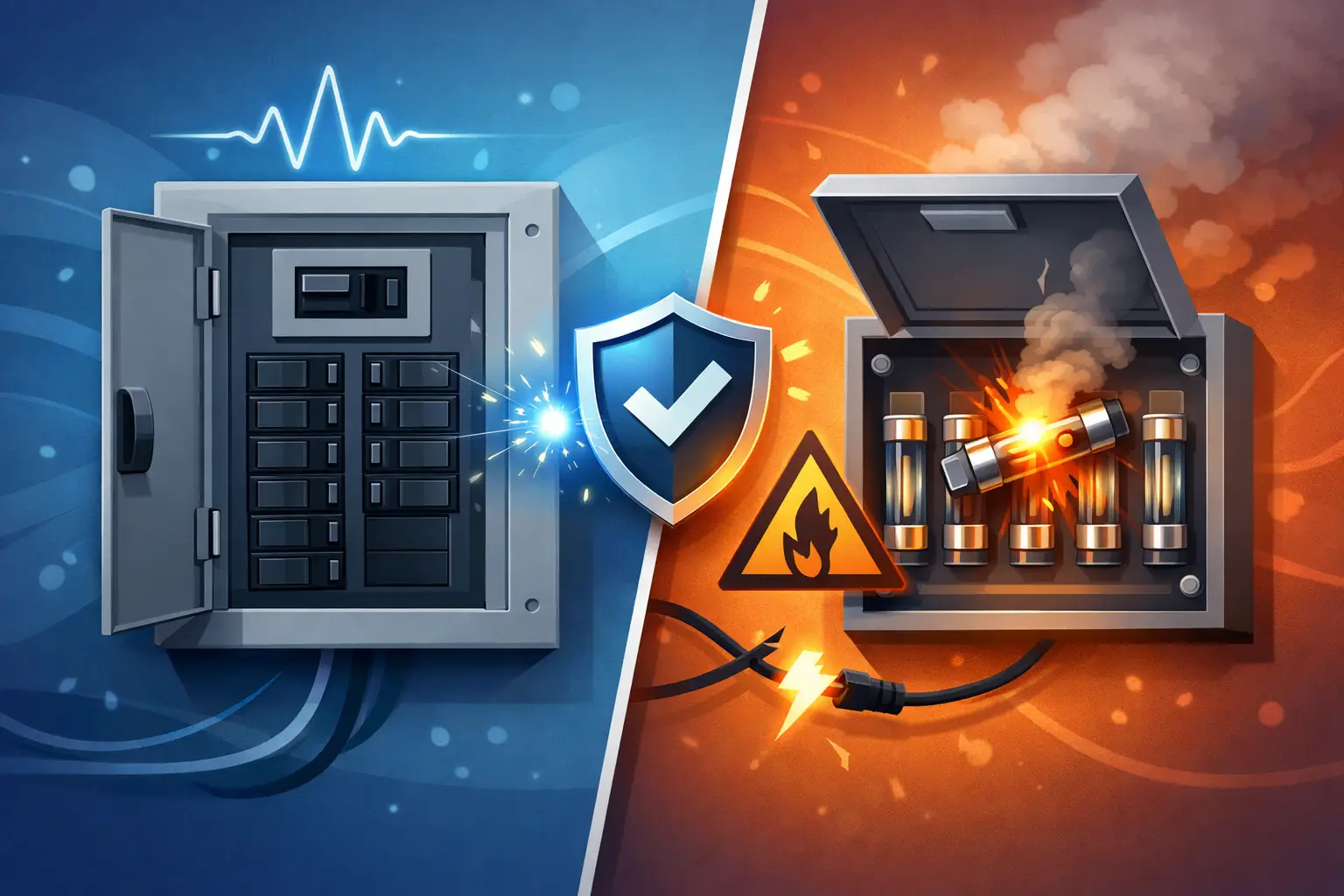
A circuit breaker versus fuse box decision often becomes urgent when a homeowner buys an EV, plans a kitchen remodel, or notices lights dimming when the microwave starts. Both systems can protect wiring from overloads, but they do it differently, and their ability to support a modern California home is not the same.
If your home still has a fuse box, that does not automatically mean an emergency or a code violation. Many older homes in Santa Rosa and throughout Sonoma County have operated safely for years with properly maintained fuse panels. The real question is whether the electrical system is in good condition, correctly sized for the home, and capable of safely handling the loads you use now.
Circuit Breaker Versus Fuse Box: The Main Difference
A fuse and a circuit breaker have the same essential job: they stop electricity when a circuit is overloaded or a fault occurs. This protection helps prevent overheated wiring, equipment damage, and fire risks.
A fuse contains a small metal element that melts when too much current flows through it. Once it blows, it must be replaced with a new fuse of the correct type and amperage. A circuit breaker uses an internal switching mechanism that trips when it detects an overload or fault. After the issue is addressed, the breaker can usually be reset.
That resettable function is the difference homeowners notice first. A tripped breaker can be turned back on at the panel. A blown fuse requires the right replacement, and installing the wrong size fuse can create a serious safety hazard. For that reason alone, breaker panels are generally more convenient and less prone to homeowner error.
Is a Fuse Box Unsafe?
Not necessarily. A properly installed fuse box with undamaged components and correctly sized fuses can still provide overcurrent protection. Age by itself does not prove a panel is unsafe.
However, fuse boxes are more likely to raise concerns during an electrical inspection, major renovation, insurance review, or service upgrade. Many are connected to older wiring methods, limited service capacity, or panels that have been modified over decades. It is also common to find oversized fuses installed to stop frequent blowouts. That practice can allow wiring to overheat before the fuse opens the circuit.
A licensed electrician should inspect a fuse panel if you see discoloration, corrosion, loose parts, warm covers, buzzing, recurring blown fuses, or signs that the panel has been altered. You should also call for an evaluation if lights flicker regularly, outlets feel warm, or you rely heavily on extension cords and power strips because the home lacks sufficient circuits.
Never replace a blown fuse with a higher-amperage fuse simply because the original one keeps blowing. The fuse size is selected to protect the wire in that circuit. A recurring blown fuse is a symptom that needs diagnosis, not a reason to increase the protection rating.
Why Modern Homes Usually Need Circuit Breakers
Modern electrical panels are designed for the way homeowners use electricity now. They provide more circuit spaces, accommodate higher service capacities, and can support safety devices required in newer installations.
For example, a home EV charger typically needs a dedicated 240-volt circuit. A hot tub, electric range, heat pump, air conditioner, dryer, induction cooktop, or workshop equipment may also need dedicated circuits or substantial available capacity. A small fuse box that once served lighting, a refrigerator, and a few receptacles may not have enough room or electrical capacity for these additions.
Breaker panels can also use protective devices such as GFCI and AFCI breakers where required. GFCI protection helps reduce shock hazards in areas where water is present, including bathrooms, kitchens, garages, outdoor spaces, and laundry areas. AFCI protection is intended to detect certain dangerous arcing conditions that conventional overcurrent protection may not catch.
These protections do not mean every older home must be completely rewired immediately. They do mean that a panel upgrade can improve safety and make future projects more practical when the existing equipment is outdated or undersized.
Capacity Matters More Than Panel Appearance
A fuse box may look old, while a breaker panel may look modern, but appearance alone does not determine whether a system can support new equipment. An electrician needs to evaluate service size, panel rating, available spaces, wire condition, grounding and bonding, and the home’s calculated electrical load.
A 100-amp service may be adequate for some homes, especially when major appliances use gas. But it can become restrictive when a household adds EV charging, electric space conditioning, a hot tub, or an all-electric kitchen. In many cases, a 200-amp service provides more practical room for present needs and future upgrades. The right answer depends on the home, its equipment, and its planned use.
When Replacing a Fuse Box Makes Sense
Replacing a fuse box with a modern breaker panel is often a smart investment when the system cannot safely support the home’s needs. The strongest reasons to consider an upgrade include frequent blown fuses, lack of panel space, deteriorated equipment, aluminum or damaged branch wiring that needs evaluation, and plans to add significant electrical loads.
An upgrade is also worth discussing before starting a project that depends on reliable electrical capacity. Installing an EV charger without checking the load calculation can lead to nuisance tripping, inadequate equipment selection, or a system that does not meet permit requirements. The same is true for hot tub circuits, major kitchen upgrades, and HVAC electrification.
For some homeowners, the timing is driven by a sale, remodel, or insurance request. For others, the reason is simply peace of mind. A new panel can make circuits easier to identify, improve access to modern protection, and eliminate the ongoing inconvenience of sourcing replacement fuses.
Still, a panel replacement should not be treated as a one-size-fits-all purchase. The best recommendation starts with an honest inspection. If your existing system is safe and has the capacity for your immediate plans, a full replacement may not be necessary yet. If it has hidden deficiencies or cannot support the way you want to use your home, delaying the work can cost more later.
What a Professional Panel Evaluation Should Include
A useful electrical evaluation goes beyond opening the panel door and counting empty slots. A licensed electrician should look at the service equipment, visible wiring conditions, grounding and bonding, breaker or fuse sizing, load demands, and the requirements of any planned installation.
The electrician should also explain the options in plain language. You deserve to know whether a repair, subpanel, service upgrade, or complete panel replacement is recommended, what problem it solves, and what work may be required beyond the panel itself. Clear answers are especially valuable in older Sonoma County homes, where previous additions and remodels can leave behind unexpected electrical work.
APG Electric approaches these decisions with the goal of identifying the safest, most cost-conscious path for the home. That may mean a targeted repair, or it may mean planning a panel upgrade that supports an EV charger and future improvements without cutting corners.
Do Not Treat Electrical Protection as a DIY Project
Resetting a tripped breaker is generally straightforward once you have unplugged or turned off the likely source of overload. Replacing fuses, modifying panels, adding circuits, or increasing fuse sizes is different. These tasks involve energized equipment and require knowledge of circuit ratings, wire sizes, grounding, permits, and current code requirements.
If a breaker trips repeatedly, do not keep resetting it without investigating why. If a fuse blows more than once, do not keep replacing it. Turn off the affected circuit when possible, avoid using damaged equipment, and have the issue diagnosed by a licensed electrician.
Your electrical panel is not just a metal box in a garage or hallway. It is the control point for the power your family relies on every day. A careful assessment now can help you make a confident decision before the next appliance, renovation, or unexpected electrical problem forces the issue.