
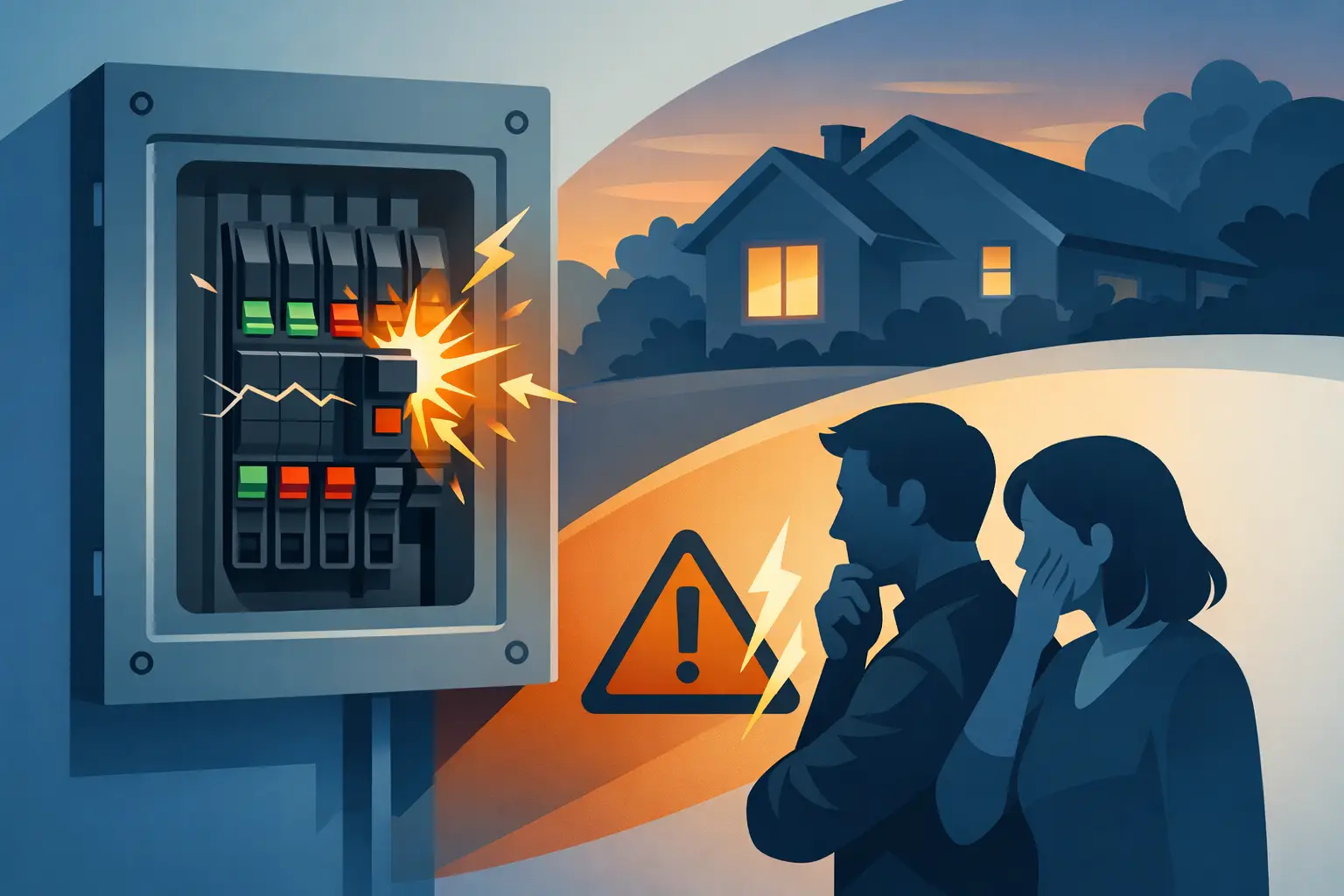
A Zinsco panel can sit quietly in a garage, basement, or utility room for decades without drawing attention. That is exactly what makes the question, are Zinsco panels dangerous, so important. The concern is not that every older panel will fail on a particular day. It is that some Zinsco panels have a documented history of breakers that may not trip reliably during an overload or short circuit – the moment they are supposed to protect your home.
For a Sonoma County homeowner, this is not an issue to solve by removing the cover or replacing a breaker yourself. A licensed electrician can identify the equipment, evaluate its condition, assess the loads your home now carries, and explain whether replacement is the sensible next step.
Why Zinsco panels raise safety concerns
Zinsco electrical panels were installed in many American homes from roughly the 1940s through the 1970s. Some were also sold under the Sylvania or Sylvania-Zinsco name. Their age alone does not automatically make them unsafe. Plenty of electrical equipment lasts a long time when it is properly installed, maintained, and used within its limits.
The concern with Zinsco equipment is more specific. Electricians have found cases where breakers appear to be switched off but do not fully interrupt the electrical current, or where a breaker fails to trip during an overload. Heat can also damage the connection between the breaker and the panel’s bus bar, sometimes leaving the damage hidden behind the panel cover.
When a circuit breaker cannot do its job, wiring and connections can overheat longer than they should. That raises the risk of damaged insulation, melted components, arcing, and fire. The problem may develop gradually, without a dramatic warning that tells a homeowner something is wrong.
Are Zinsco panels dangerous in every home?
Not necessarily. A Zinsco panel is not proof that an electrical emergency is happening right now, and homeowners should be cautious about anyone who treats every older panel as an automatic disaster. The actual risk depends on the panel’s condition, its installation, prior modifications, signs of overheating, and the electrical demands placed on it.
Still, a panel that may not reliably disconnect power during a fault deserves serious attention. This is especially true in homes that have added major loads over the years. Central air conditioning, electric dryers, induction ranges, hot tubs, workshop equipment, solar equipment, and EV chargers can all change the demands on an electrical system originally designed for a different era.
A professional evaluation is the practical middle ground. It gives you facts about your specific equipment rather than reassurance based only on appearances or pressure to replace equipment without a clear explanation.
A breaker that stays on is not a minor defect
Circuit breakers are protective devices. They are designed to open when a circuit is overloaded or when a short circuit creates a dangerous amount of current. If a breaker overheats, loses a sound connection to the bus bar, or does not trip as intended, the panel may no longer provide the level of protection your home needs.
A breaker can also look normal from the outside while damage exists at its connection point. That is why a quick glance at the panel door or a test of lights and outlets does not rule out a problem. Proper diagnosis requires a qualified electrician to inspect the panel safely and determine what is present.
Warning signs that deserve prompt attention
Some Zinsco panels show no obvious outward symptoms. Others provide warning signs that should not be ignored. If you notice any of the following, arrange a professional electrical inspection promptly:
- Breakers that feel warm or hot, trip repeatedly, will not reset, or seem loose in the panel
- A burning odor, buzzing or crackling sounds, discoloration, melted plastic, or scorch marks near the panel
- Lights that flicker or dim when appliances start, especially if the issue is new or worsening
- Corrosion, moisture, rust, or evidence of water intrusion around the panel or meter equipment
- A panel that is crowded with added circuits, mismatched breakers, double-tapped connections, or visible do-it-yourself alterations
If you smell burning, see smoke, hear active arcing, or notice a panel that is extremely hot, treat it as urgent. Keep people away from the area, do not remove the panel cover, and contact an electrician or emergency services as the situation requires. Do not repeatedly reset a breaker that trips. Repeated tripping is a signal that a circuit needs to be diagnosed, not forced back into service.
How a licensed electrician evaluates a Zinsco panel
A careful inspection starts with identifying the panel manufacturer and model, then looking at the condition of the enclosure, breakers, wiring, grounding and bonding, and any previous work. The electrician will also consider the panel’s capacity and the home’s electrical load.
That load assessment matters. A 100-amp service may have been adequate when the home had a gas range, gas furnace, and few high-demand appliances. It may not be adequate after electrification upgrades. An EV charger or hot tub should never simply be squeezed into an already questionable panel because there is an open-looking space.
Depending on the findings, the recommendation may range from correcting specific wiring issues to replacing the electrical panel or upgrading the service equipment. The right answer depends on the condition of the existing equipment, available capacity, local code requirements, and your plans for the home. Honest electrical work means explaining those options clearly, including what is urgent and what can be planned.
Why replacing a Zinsco panel is often recommended
When a Zinsco panel shows heat damage, unreliable breakers, corrosion, improper modifications, or insufficient capacity, replacement is usually the safer long-term decision. Replacing individual breakers does not necessarily address damage at the bus bar or the underlying design concerns. It can also create a false sense of security if the panel itself has deteriorated.
A modern panel replacement provides a properly rated enclosure, current protective devices, organized circuits, and space for future needs. It also gives the electrician an opportunity to correct grounding, bonding, labeling, and other issues that may be common in older homes.
There are trade-offs. A panel replacement is an investment, and some homes need additional work such as service upgrades, meter equipment changes, or trenching before they can support major new electrical loads. But waiting until a panel fails can turn a planned improvement into an urgent repair. For homeowners considering an EV charger, electric appliance upgrades, or a hot tub, addressing the panel first can prevent delays and avoid doing work twice.
Insurance, inspections, and home sales
Older electrical panels can also come up during insurance underwriting, property inspections, and home sales. An insurer may ask about the panel brand or request a licensed electrician’s evaluation. A buyer’s inspector may identify a Zinsco panel as a safety concern, even if no active defect is visible during the inspection.
That does not mean a sale cannot move forward or coverage is impossible. It does mean documentation and a straightforward plan are valuable. If replacement is recommended, having the work completed by a licensed electrical contractor can reduce uncertainty for buyers, insurers, and future owners.
What homeowners should do next
Start by checking the label on the panel door or inside the cabinet only if it can be read without removing anything. If you see Zinsco, Sylvania, or Sylvania-Zinsco, schedule an evaluation rather than assuming the panel is fine because the lights still work. Avoid adding high-demand equipment until the panel and service capacity have been assessed.
APG Electric helps Santa Rosa and Sonoma County homeowners make informed decisions about aging electrical panels, repairs, and upgrades. A clear inspection should leave you knowing what equipment you have, what condition it is in, and what work is recommended for safety and reliability.
Your electrical panel is not an area where guesswork pays off. A professional assessment now can give you a practical plan, protect your home from avoidable risk, and ensure the system is ready for the way you actually live in it.