
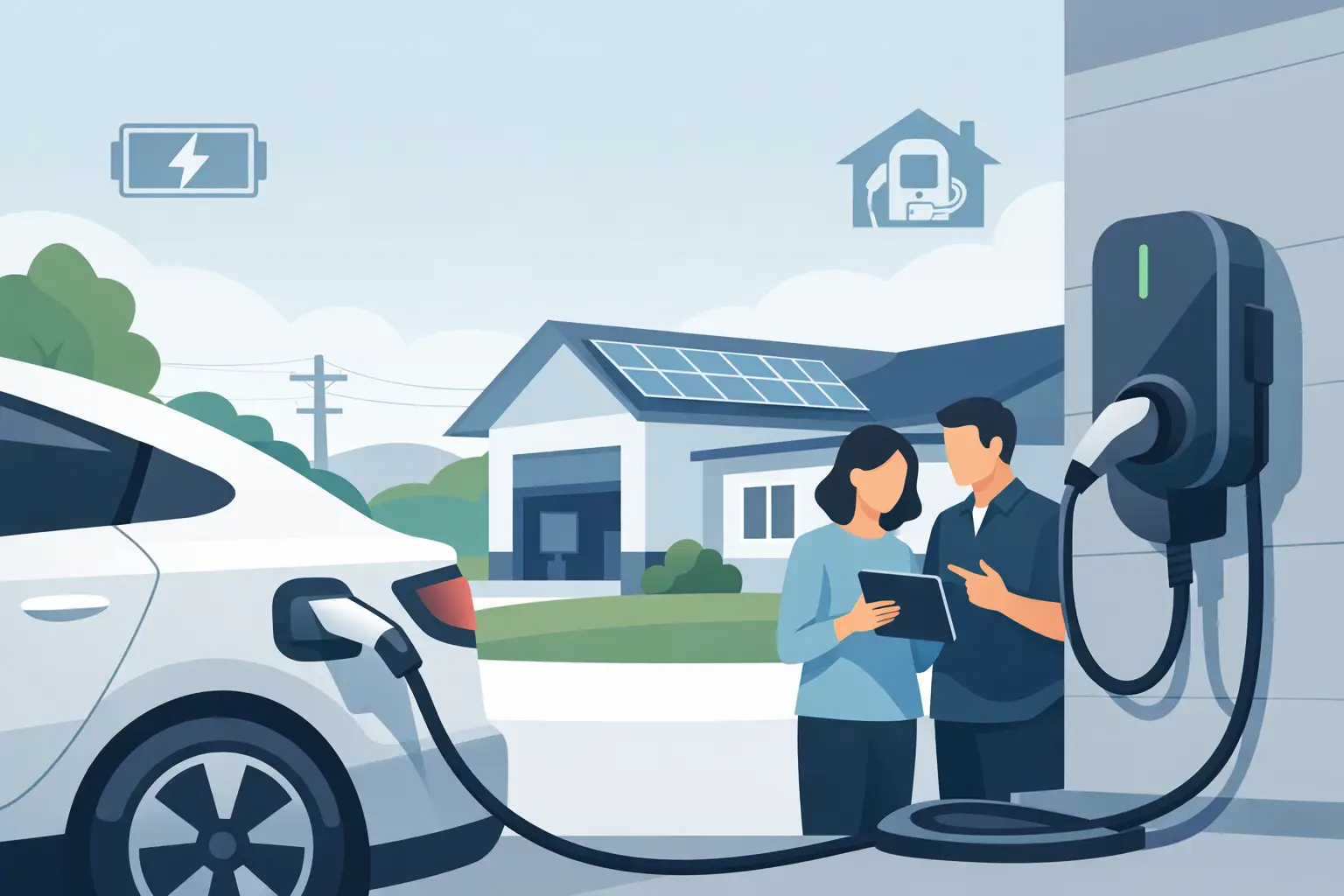
A lot of EV charger projects look simple until one question changes the whole job: can your home’s electrical system support it? That is why a solid home EV charger planning guide matters before you buy equipment or schedule installation. The charger itself is only part of the decision. Your panel capacity, parking layout, permit requirements, and daily driving habits all affect what will work safely and what will feel convenient long after the install is done.
For many homeowners in Santa Rosa and throughout Sonoma County, the goal is straightforward. You want reliable overnight charging, a clean installation, and clear advice without being pushed into upgrades you may not need. Good planning helps you avoid the two common mistakes: underbuilding and ending up with a charger that feels too slow, or overspending on equipment and electrical work that does not match how you actually use your EV.
What a home EV charger planning guide should answer
The best place to start is not the charger brand. It is your routine. How many miles do you drive on a typical day? When do you park at home? Is this your only EV, or is a second one likely in the next few years? A homeowner who drives 20 to 30 miles a day has very different charging needs than someone commuting long distances across Sonoma County every weekday.
Level 1 charging uses a standard household outlet, but for most drivers it is a temporary solution rather than a long-term one. It is slower, and that can become frustrating quickly if your battery runs low or your schedule changes. Level 2 home charging is what most homeowners ultimately want because it gives much faster charging and much more flexibility.
That does not mean every home needs the highest-amperage charger available. In many cases, a moderate Level 2 setup covers daily needs well and keeps installation costs more reasonable. The right answer depends on your vehicle, your driving habits, and what your electrical system can support safely.
Start with your panel and available capacity
Your electrical panel is often the deciding factor in any home EV charger planning guide. Even if there is physical space for a new breaker, that does not automatically mean the panel has enough capacity for the added load. This is especially relevant in older homes, where service sizes may have been adequate years ago but now support far more electrical demand than originally intended.
If your home already has central air, electric appliances, a hot tub, or other major loads, adding an EV charger may require a closer look. Sometimes the answer is simple and no upgrade is needed. Other times, a load calculation shows that a panel upgrade or service improvement is the safer path. That can raise project cost, but it may also position your home better for future improvements like an electric water heater, induction range, or battery backup.
This is where honest electrical guidance matters. A good electrician will tell you when your existing setup is sufficient and when it is not. Homeowners do not need a sales pitch. They need a licensed assessment based on actual load, code requirements, and long-term reliability.
Older panels can change the plan
If you have an aging or outdated panel, EV charger installation may bring existing issues to the surface. Corrosion, overheating, poor breaker connections, or obsolete equipment should not be ignored just because the immediate goal is charging your car. In those cases, fixing the broader electrical issue first is often the smartest move.
That may not be the answer people hope for, but it is better than forcing a new high-demand circuit into a system that is already showing signs of wear. Safety and reliability should come first every time.
Charger location matters more than most people expect
Homeowners often focus on power and forget about placement. A charger that technically works but is awkward to reach can become a daily irritation. You want a setup that fits how you park, how the charging cord reaches the vehicle, and how the installation looks on your home.
Garage installations are often the most straightforward because the equipment is protected from weather and usually closer to the main panel. But not every home uses the garage for parking. Exterior wall installations can work very well too, provided the charger is rated for the environment and the location is chosen carefully.
The distance between the panel and the charger also affects cost. Longer runs generally mean more wire, more labor, and sometimes more complexity if access is tight or trenching is required. A slightly different placement may save money without sacrificing convenience. That is the kind of practical trade-off worth discussing early.
Permits, code, and why professional installation matters
A home EV charger is not a plug-and-play appliance when it involves a new 240-volt circuit. This is electrical work that should be installed to code, permitted when required, and inspected where applicable. The point is not paperwork for its own sake. The point is making sure the system is safe for your home, your family, and the sustained electrical load that EV charging creates.
Improper installations can lead to nuisance breaker trips, equipment damage, and in worst-case situations, overheating or fire risk. It can also create issues later if you sell your home and unpermitted work comes to light.
Licensed electricians know how to size conductors, breakers, and equipment correctly, how to account for continuous load rules, and how to install the charger in a way that is both safe and dependable. For homeowners, that translates into fewer surprises and more confidence that the system will perform the way it should.
Choosing the right charger without overcomplicating it
A lot of charger shopping gets bogged down in features. Wi-Fi apps, scheduling tools, cable management, and brand reputation can all matter, but they are not the first decision. Start with compatibility and charging speed that makes sense for your vehicle and your electrical system.
Some homeowners want smart charger features so they can monitor energy use or schedule charging during lower utility-rate periods. That can be useful, especially if your utility plan rewards off-peak charging. Others prefer a simpler, reliable unit with fewer bells and whistles. Neither choice is wrong.
What matters most is that the charger is properly matched to the circuit and installed according to manufacturer requirements and electrical code. A premium charger will not make up for poor installation. By the same token, a more basic charger installed correctly often performs exactly as a homeowner needs.
Think about the next vehicle too
If your household may add a second EV in the next few years, bring that up during planning. It might influence charger selection, circuit sizing, or panel upgrade decisions. Future-proofing does not always mean spending much more today, but it does mean making choices that do not box you in later.
Cost planning: what changes the price
No responsible electrician should quote EV charger installation as one flat number without seeing the home. Costs can vary quite a bit based on the electrical panel, available capacity, charger location, wall access, wire run length, permit needs, and whether upgrades are required.
A straightforward install near the panel is a very different project from one that needs a panel replacement or a long run to a detached garage. That does not mean homeowners should expect the worst. It just means the right price depends on the actual conditions of the home.
The good news is that a site-specific estimate usually makes the decision clearer. Once you know whether your panel can support the charger and what installation path makes the most sense, you can weigh your options based on both budget and long-term value. Sometimes the lower upfront cost is the right call. Other times, spending more now avoids repeat work later.
A local home EV charger planning guide for Sonoma County homes
Homes in Sonoma County are not all built the same, and that matters. Some properties have newer electrical systems that can accommodate EV charging with minimal changes. Others have older service equipment, detached garages, or remodel history that complicates circuit additions. A local electrician who works in these homes regularly will usually spot issues faster and recommend cleaner solutions.
That local experience also helps when homeowners are balancing multiple upgrades. EV charging is often part of a larger shift toward electrification, and the smartest plan is one that looks at the home as a whole rather than treating the charger as an isolated add-on. APG Electric Co. works with homeowners on exactly these kinds of decisions, with a focus on safe installations, honest recommendations, and work that holds up over time.
If you are planning a home EV charger, start with the house you have, the way you actually drive, and the level of charging convenience you want every day. A well-planned installation should feel simple once it is done, and that usually starts with asking better questions before the work begins.