
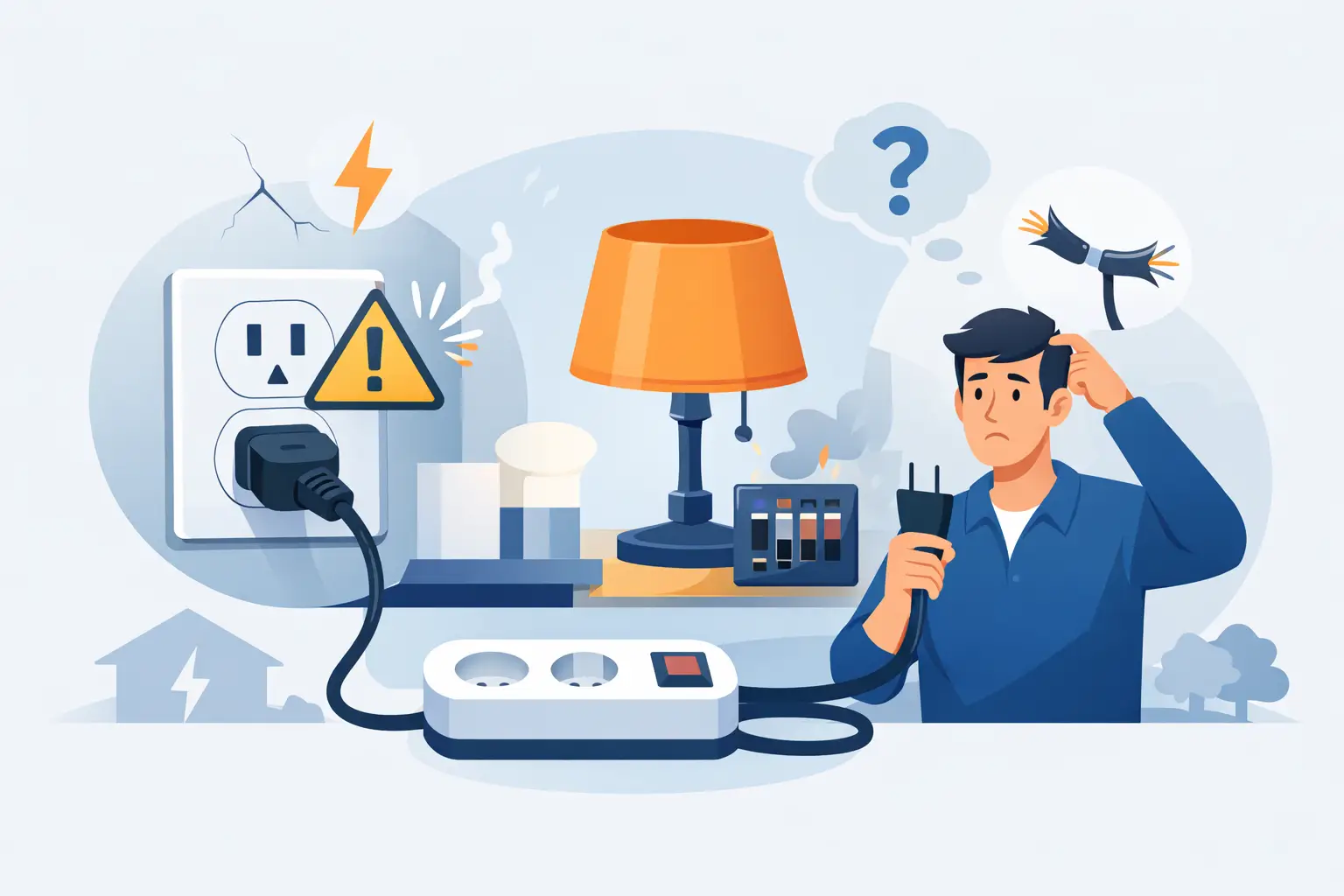
A dead outlet can be more than an inconvenience when it takes out the coffee maker, Wi-Fi router, garage door opener, or a whole wall of plugs. If you are asking, “why are outlets not working,” the answer may be as simple as a tripped safety device or as serious as a loose connection hidden in the wiring. The safest next step depends on what else has stopped working and whether there are any warning signs.
Why Are Outlets Not Working in Your Home?
Outlets usually stop working because power to that part of the circuit has been interrupted. The interruption can happen at the electrical panel, at a GFCI outlet, at another outlet on the same circuit, or at a failed connection in the wiring.
Many homeowners expect each outlet to operate independently. In reality, several outlets, lights, and switches may be connected to one circuit. A problem at one point can affect devices farther down the line. That is why a bathroom GFCI can sometimes shut off an outlet in the garage, exterior area, kitchen, or another nearby space.
The key is to distinguish between a protective shutdown and an electrical fault. A tripped breaker or GFCI may be doing its job. Repeated tripping, warm outlets, buzzing, discoloration, or a burning smell can point to a condition that needs prompt professional attention.
A Tripped Circuit Breaker
A circuit breaker trips when it detects too much current or a fault on the circuit. This often happens when too many high-demand appliances run at once, such as a space heater, microwave, hair dryer, toaster oven, or portable air conditioner.
Check your electrical panel for a breaker that is in the middle position or appears off. To reset it correctly, move the breaker fully to OFF first, then firmly back to ON. If it immediately trips again, leave it off. Repeatedly resetting a breaker can create more risk and does not solve the underlying problem.
A breaker that trips only after you plug in a specific appliance may indicate a problem with that appliance. If it trips with little or nothing connected, the circuit or an outlet may have a wiring issue.
A GFCI Outlet Needs Resetting
Ground-fault circuit interrupter outlets, commonly called GFCIs, are designed to shut off power quickly when they sense an imbalance that could signal current flowing where it should not. They are common in kitchens, bathrooms, laundry rooms, garages, crawl spaces, outdoor locations, and near wet areas.
Look for outlets with TEST and RESET buttons. Press RESET firmly. If the button will not stay in, the GFCI may not have incoming power, may have failed, or may be detecting a fault downstream.
Do not assume the affected outlet itself will have GFCI buttons. An upstream GFCI may protect several regular outlets. Check the likely areas of your home methodically, including the garage and exterior outlets. If you cannot find a reset point or the GFCI keeps tripping, it is time for a licensed electrician to diagnose the circuit.
A Loose or Damaged Outlet Connection
An outlet can fail because a wire connection behind it has loosened, overheated, or worn out. This is more common in older homes, heavily used outlets, and outlets that were installed with push-in wire connections instead of more secure terminal connections.
A loose connection may cause one outlet to stop working, intermittently lose power, or cut power to outlets farther along the circuit. It can also create heat and arcing inside the electrical box. Because the problem is hidden behind the cover plate, it is not a good DIY investigation for homeowners.
Call for service promptly if an outlet feels warm, makes crackling or buzzing sounds, has scorch marks, smells burnt, or no longer holds a plug securely. Turn off the circuit at the panel if you can identify it safely, and avoid using that outlet until it has been inspected.
An Overloaded Circuit
Older homes in Sonoma County were not designed around today’s electrical demands. A single circuit may now be serving televisions, computers, chargers, kitchen appliances, portable heaters, and other equipment that was not part of the original load plan.
Overloading does not always mean the outlet itself is defective. It may mean the circuit needs to be used differently, a dedicated circuit is needed for a new appliance, or the home needs a panel and circuit capacity evaluation. This comes up often with garage workshops, home offices, hot tubs, and EV charger planning.
Power strips and extension cords can make a room more convenient, but they do not add electrical capacity. Plugging one power strip into another is especially unsafe and can hide an overloaded-circuit problem until a breaker trips or equipment overheats.
A Switched Outlet or Failed Switch
Some outlets are controlled by a wall switch. This setup is common in bedrooms and living rooms where a lamp may be the primary light source. If only the top or bottom half of an outlet is dead, try nearby switches before assuming the outlet has failed.
A failed switch, worn wiring connection, or incorrectly configured split outlet can also interrupt power. If the switch has stopped controlling the outlet consistently, or if there is any flickering, heat, or noise, professional repair is the right choice.
A Problem With the Electrical Panel or Main Service
When several rooms lose power, the issue may be larger than one outlet circuit. A failing breaker, damaged bus connection, service issue, or panel problem can affect portions of the home. If lights are dimming, appliances are behaving unpredictably, or multiple circuits are failing, do not treat it as a simple outlet replacement.
This is particularly relevant for homes with aging panels or recent increases in electrical load. Adding an EV charger, electric appliances, air conditioning, or a hot tub can expose limitations that were not obvious before. An electrician can assess whether the issue is isolated or whether the home needs repairs, a dedicated circuit, or a panel upgrade.
Safe Checks to Make Before Calling an Electrician
There are a few checks homeowners can make without removing covers, opening boxes, or touching wiring. First, plug a known working device into the outlet. A phone charger or lamp that works elsewhere is a better test than an appliance with its own possible defect.
Next, check whether nearby outlets and lights are also out. Then inspect the panel for a tripped breaker and look for GFCI outlets with reset buttons in nearby wet or utility areas. These simple observations help narrow the diagnosis and can save time during a service visit.
Avoid removing an outlet cover, tightening internal connections, or replacing an outlet while the circuit is energized. Even after a breaker is turned off, mislabeled panels and shared wiring can leave parts of a box live. A non-contact tester can be useful, but it is not a substitute for proper electrical testing and safe work practices.
When a Dead Outlet Is an Urgent Electrical Concern
A nonworking outlet deserves faster attention when it comes with signs of heat, damage, or instability. Turn off power to the affected circuit if possible and arrange professional service if you notice any of the following:
- A burning odor, smoke, scorch marks, melted plastic, or a warm cover plate
- Buzzing, crackling, sparking, or intermittent power at the outlet
- A breaker or GFCI that will not reset or trips repeatedly
- Water exposure near an outlet, including an outdoor outlet or garage receptacle
- Several outlets or lights failing at once, especially with dimming or flickering elsewhere
Do not use an extension cord as a permanent workaround for a failed outlet. It can add another layer of risk, particularly in high-use areas or where cords run under rugs, through doorways, or outdoors.
Get the Right Repair, Not Just a Quick Reset
The goal is not simply to get power back. It is to identify why the outlet stopped working and make sure the repair addresses the actual cause. Replacing a receptacle will not fix a tripped GFCI upstream, an overloaded circuit, or a loose connection at another location.
APG Electric helps Santa Rosa and Sonoma County homeowners trace outlet problems accurately, explain the options clearly, and complete repairs with safety and long-term reliability in mind. Whether the issue is a single dead receptacle or a recurring circuit problem, a licensed diagnosis can prevent a small interruption from becoming a larger electrical repair.
If an outlet is dead but everything looks normal, start with the breaker and GFCI checks. If anything looks, smells, sounds, or feels wrong, stop using the circuit and let a qualified electrician find the cause before power is restored.