
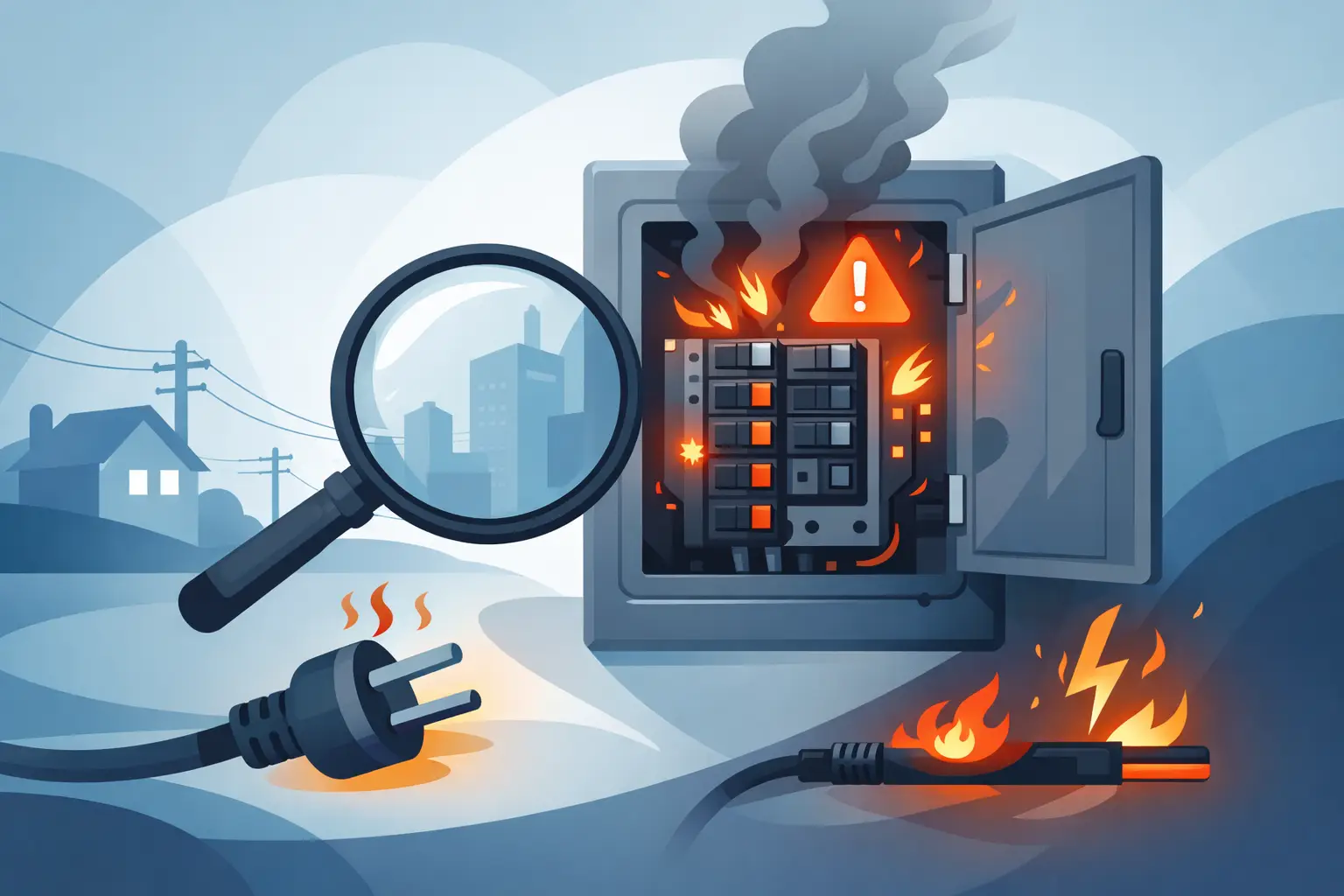
A panel overload rarely announces itself with one obvious failure. More often, it shows up as a breaker that trips after the microwave starts, lights that dim when the air conditioner cycles on, or an outlet that feels warmer than it should. Knowing how to spot panel overload can help you address a growing electrical demand problem before it turns into damaged equipment, repeated outages, or a serious fire risk.
For many Sonoma County homes, the issue is not that the electrical panel is old by itself. It is that the home now asks more of the system than it was designed to handle. EV charging, heat pumps, induction ranges, hot tubs, larger HVAC equipment, and remodeled living spaces can all add substantial demand.
What Panel Overload Actually Means
Your electrical panel is the distribution point for your home’s circuits. It receives power from the utility and sends it safely to lighting, outlets, appliances, heating and cooling equipment, and other electrical loads. Each breaker is designed to protect its circuit by shutting off power if that circuit draws more current than the wiring can safely carry.
Panel overload can mean two related things. A single branch circuit may be overloaded because too many devices are running on it. Or the total electrical demand in the home may be approaching or exceeding what the service panel can safely support. The first problem may call for a dedicated circuit or a circuit repair. The second may require a load calculation, panel upgrade, or service upgrade.
A breaker tripping is not automatically proof that your entire panel is overloaded. In fact, the breaker may be doing exactly what it is supposed to do. The concern is when trips are frequent, when multiple circuits struggle at once, or when warning signs point to heat, loose connections, or an electrical system that is no longer sized for the home.
Warning Signs of Panel Overload at Home
The most common warning sign is a breaker that trips repeatedly under normal use. If the same breaker turns off whenever you run a space heater, hair dryer, toaster oven, or portable air conditioner, that circuit may be carrying too much load. Resetting it once after identifying and reducing the load can be reasonable. Repeatedly resetting it without finding the cause is not.
Dimming or flickering lights can also be a clue, especially when they happen as major equipment turns on. A brief change in lighting when a large motor starts may occur in some homes, but pronounced dimming, frequent flickering, or lights that brighten unexpectedly deserve professional attention. Those symptoms can be related to excessive demand, but they can also indicate a loose connection or service issue.
Pay attention to warmth and odor. A breaker panel door, outlet cover, switch plate, plug, or extension cord should not feel hot. A faint electrical or burning smell, discoloration around an outlet, buzzing from the panel, or a crackling sound are not normal signs of a busy household. Turn off power to the affected circuit if you can do so safely and call a licensed electrician promptly.
Other signs often appear as household workarounds. You may rely on power strips in several rooms, run extension cords for permanent use, avoid operating two appliances at once, or know that the garage circuit trips whenever tools and a freezer are running. These habits can signal that the electrical system needs a better long-term solution rather than another adapter.
How to Spot Panel Overload When Adding New Equipment
Electrical demand often changes after a home upgrade. An EV charger is a common example. Level 2 chargers are designed for substantial, continuous electrical loads and typically need a properly sized dedicated circuit. The same is true for hot tubs, many heat pumps, electric dryers, electric water heaters, and induction cooking equipment.
Before adding any of these loads, a licensed electrician should evaluate the existing service and perform a load calculation. This is not simply a matter of counting empty breaker spaces. A panel can have open spaces yet lack enough available capacity for a major new circuit. Conversely, a crowded-looking panel may be adequate if the home’s calculated demand supports the planned addition and the equipment is properly configured.
This distinction matters in older homes throughout Santa Rosa and Sonoma County. A home may have been built when gas appliances handled most heating and cooking, then later receive central air conditioning, a workshop circuit, solar equipment, and EV charging. The electrical panel may have served the original home well for decades, but modern electrification can change the equation.
Breaker Space Is Not the Same as Electrical Capacity
Homeowners sometimes open the panel door and see a full row of breakers, then assume the panel is overloaded. Others see unused slots and assume there is plenty of capacity. Neither observation tells the whole story.
The amperage rating of the service, the panel’s condition, the size and type of existing loads, the wiring, and the expected use of new equipment all matter. A qualified electrician can assess these details without guesswork. That is especially valuable when deciding between adding a circuit, installing a subpanel, upgrading the main panel, or increasing the service capacity.
Older Panels Need a Closer Look
Age alone does not make a panel unsafe, but older equipment can raise practical concerns. Corrosion, damaged breakers, signs of moisture, outdated components, improper modifications, or poor labeling can make diagnosis and future upgrades more complicated. A panel that has been repeatedly altered over the years may also contain mismatched breakers, crowded wiring, or connections that should be corrected.
If your home still uses fuses, has a panel with visible rust or damage, or has a service that seems undersized for your household’s current needs, schedule an inspection before adding more electrical load. This is particularly wise before purchasing an EV charger or hot tub that may require a dedicated high-amperage circuit.
What You Can Check Without Opening the Panel
You do not need to remove the panel cover or touch internal wiring to gather useful information. Keep the panel door closed beyond normal access, and never work around exposed electrical components. Instead, look for patterns in how your home behaves.
Notice which appliances are running when a breaker trips. Check whether the panel directory clearly identifies rooms and equipment. Look for visible damage on the outside of the panel, including rust, scorch marks, or a door that will not close properly. You can also note your main breaker rating if it is clearly marked and accessible without removing any covers.
A simple record helps your electrician diagnose the problem faster. Write down the time of day, the breaker that tripped, the devices in use, and whether you noticed flickering lights, warmth, or unusual sounds. This is more useful than trying to solve the issue by swapping breakers or adding larger breakers, both of which can create dangerous conditions if the wiring is not rated for the change.
When to Call a Licensed Electrician Right Away
Some symptoms should not wait for a routine appointment. Contact a licensed electrician promptly if you smell burning, see smoke or scorching, hear persistent buzzing or crackling, feel heat at the panel or an outlet, or experience repeated breaker trips with ordinary appliance use. If there is an immediate fire concern, call emergency services first.
You should also schedule an electrical evaluation before installing a Level 2 EV charger, hot tub, major HVAC equipment, or other high-demand appliance. Proper planning protects the equipment, helps prevent nuisance tripping, and gives you a clear understanding of whether your current panel can support the upgrade.
At APG Electric Co., a panel evaluation is approached as a diagnostic decision, not an excuse to recommend the largest possible upgrade. Sometimes the right answer is a dedicated circuit or repair. Other times, a panel replacement or service upgrade is the safer, more practical investment for the home you have now and the improvements you plan to make.
Your electrical panel should support daily life quietly, without forcing your household to choose which appliances can run. If it is sending warning signs, treat them as useful information and have a licensed professional identify the cause before a small inconvenience becomes a larger repair.