
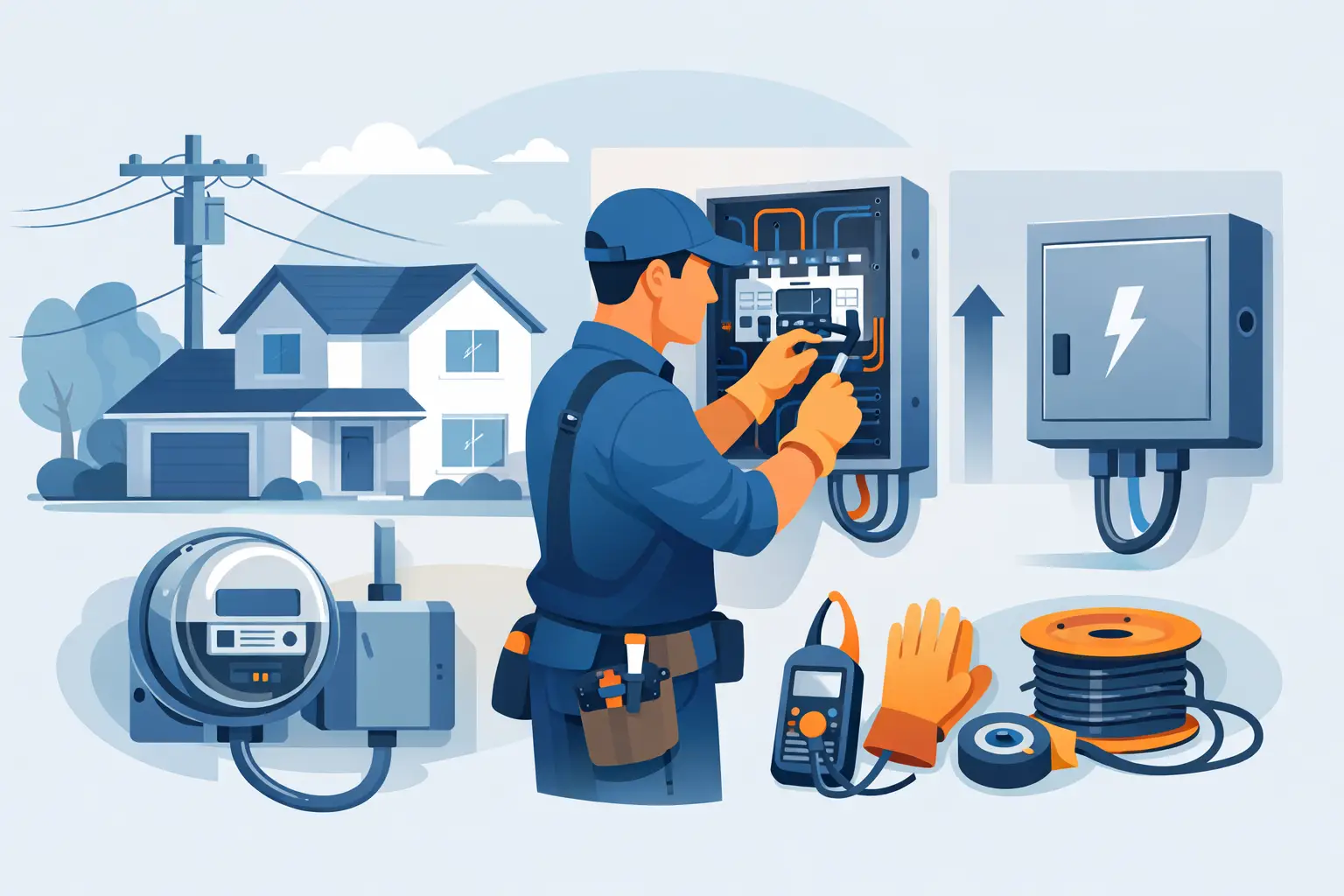
If your lights dim when the AC kicks on, your panel is full, or you’re planning an EV charger, you’re probably wondering how to upgrade home electrical service without turning it into a bigger project than it needs to be. For many Sonoma County homeowners, a service upgrade is less about adding bells and whistles and more about making the house safer, more capable, and ready for the way people actually live now.
A lot of homes were built for a very different electrical load. Decades ago, the average household did not have two refrigerators, multiple TVs, dedicated office equipment, induction cooking, a hot tub, and an electric vehicle charging overnight in the garage. Even if your electrical system has worked fine for years, that does not always mean it has enough capacity for what you want to do next.
What a home electrical service upgrade actually means
When people talk about a service upgrade, they usually mean increasing the amount of power the home can safely receive from the utility and distribute through the electrical panel. In many homes, that means going from 100 amps to 200 amps, although the right size depends on the property, the existing equipment, and the planned electrical loads.
This is not the same thing as simply replacing a breaker or adding one more circuit. A true service upgrade often involves the meter socket, service entrance conductors, grounding and bonding, the main panel, and utility coordination. It is a system-level improvement, not a quick patch.
That distinction matters because homeowners are often told they need a full upgrade when they may only need a subpanel, load calculation, or a more strategic circuit plan. Other times, the opposite happens: someone tries to squeeze one more major appliance onto an already maxed-out panel and ends up with nuisance tripping, overheating concerns, or equipment that cannot be installed to code.
Signs you may need to upgrade home electrical service
The clearest sign is usually capacity. If your panel is fully occupied, or nearly full, adding new circuits gets harder and more expensive. If you’re installing an EV charger, heat pump, electric water heater, or hot tub, there may simply not be enough room or service capacity to support it safely.
Age is another factor. Many older homes in Santa Rosa and surrounding areas still have outdated panels or service equipment that were acceptable years ago but are no longer a good match for modern demand. Some homes also have equipment brands with known reliability concerns, and replacement becomes the smarter long-term move.
You may also notice symptoms before you ever look at the panel. Flickering lights, frequently tripped breakers, warm outlets, or uneven performance when multiple appliances run at once can all point to an overloaded or aging electrical system. Not every flicker means you need a service upgrade, but it does mean the system should be evaluated by a licensed electrician.
How to upgrade home electrical service the right way
The first step is not buying a bigger panel. It is getting a proper assessment.
A licensed residential electrician should look at your existing panel, service size, wiring condition, grounding system, and the loads you currently have or plan to add. That includes the practical things homeowners care about most: Can this house support an EV charger? Will I be able to add air conditioning later? Do I need 200 amps, or is there another way to accomplish the same goal for less?
A load calculation is a big part of this process. It helps determine whether your current service is truly undersized or whether your planned upgrades can fit within the existing system with smart circuit planning or load management. This is where honest guidance matters. The right recommendation is not always the biggest, most expensive option.
Once the scope is clear, the electrician typically handles permitting and coordinates with the utility. In California, and especially in established neighborhoods, that coordination matters more than homeowners expect. Service upgrades often require utility scheduling, temporary power shutoff planning, and inspection approval before final energizing.
Then comes the actual installation. Depending on the home, that may include replacing the main panel, upgrading service conductors, replacing the meter socket, updating grounding and bonding, labeling circuits, and cleaning up old wiring issues found during the work. Sometimes the project is straightforward. Sometimes older homes reveal surprises once the panel is opened up.
What can affect the cost
Homeowners naturally want a number upfront, but service upgrades are one of those jobs where the real answer is, it depends.
The existing condition of the system matters a lot. A relatively accessible panel with clear utility requirements will cost less than a setup with outdated service equipment, limited access, code deficiencies, or utility-side complications. The distance between equipment, whether stucco or finish work needs to be disturbed, and whether the panel location must change can all affect pricing.
Your goals matter too. If the project is only about increasing capacity, the scope may stay focused. If you are upgrading service because you also want an EV charger, new kitchen circuits, a hot tub disconnect, or whole-home surge protection, it makes sense to plan those improvements together. That can increase the upfront investment, but it often reduces repeat labor and avoids piecemeal work later.
The lowest quote is not always the best value on a service upgrade. This is foundational electrical work tied directly to safety, code compliance, and long-term reliability. Good workmanship, premium components, accurate diagnosis, and a clean installation are worth paying for.
100 amp vs. 200 amp service
For many homeowners, this is the main question.
A 100 amp service may still be adequate for a smaller home with gas appliances and no major electrification plans. But once you start adding electric vehicle charging, all-electric appliances, larger HVAC equipment, or future expansion, 200 amp service often becomes the more practical choice.
That does not mean every house automatically needs 200 amps. Some homes can support new equipment through careful load calculations or managed charging solutions. In other homes, a 200 amp upgrade is the cleanest way to stop capacity issues before they become recurring problems.
A good electrician should explain the trade-offs clearly. If a full service upgrade is necessary, you should understand why. If there is a safe and code-compliant lower-cost alternative, you should hear that too.
What homeowners should expect during the project
Most service upgrades involve at least a temporary power interruption. In many cases, the work can be completed in a day, but scheduling depends on utility coordination, permit timing, and whether hidden issues are uncovered.
You should also expect a professional contractor to explain the process in plain language. That includes what is being replaced, what is being brought up to code, whether there will be wall repairs afterward, and what future electrical additions the upgraded service can support.
This is one of those jobs where communication matters almost as much as technical skill. Homeowners should not be left guessing about timelines, inspections, or why a recommendation is being made.
Why DIY is the wrong move here
There are some home projects that reward a confident DIY approach. A service upgrade is not one of them.
This work involves live utility connections, code requirements, grounding and bonding rules, load calculations, and permit inspections. Mistakes can create fire hazards, equipment damage, failed inspections, and utility problems. Even if someone is handy, this is licensed electrical work for a reason.
In a residential setting, the goal is not just to get the lights back on. The goal is to have a system that is safe, properly sized, clearly labeled, code-compliant, and dependable for years to come.
Choosing the right electrician for a service upgrade
If you’re comparing contractors, ask how often they perform residential panel and service upgrades, whether they handle permit and utility coordination, and how they determine whether a full upgrade is actually needed. You want clear answers, not pressure.
Look for a company that focuses on residential work, explains options well, and has a strong reputation for honest recommendations. That matters even more in older homes, where experience often determines whether a project stays orderly or turns into a string of avoidable surprises.
At APG Electric Co., that customer-first approach is a big part of the job. Homeowners want straight answers, safe work, and recommendations that make sense for the house and the budget.
If you’re thinking about adding major electrical loads or your current system is showing its age, the smartest next step is not to wait for a breaker to trip at the worst possible time. Have the service evaluated now, while you still have room to make a careful decision.