
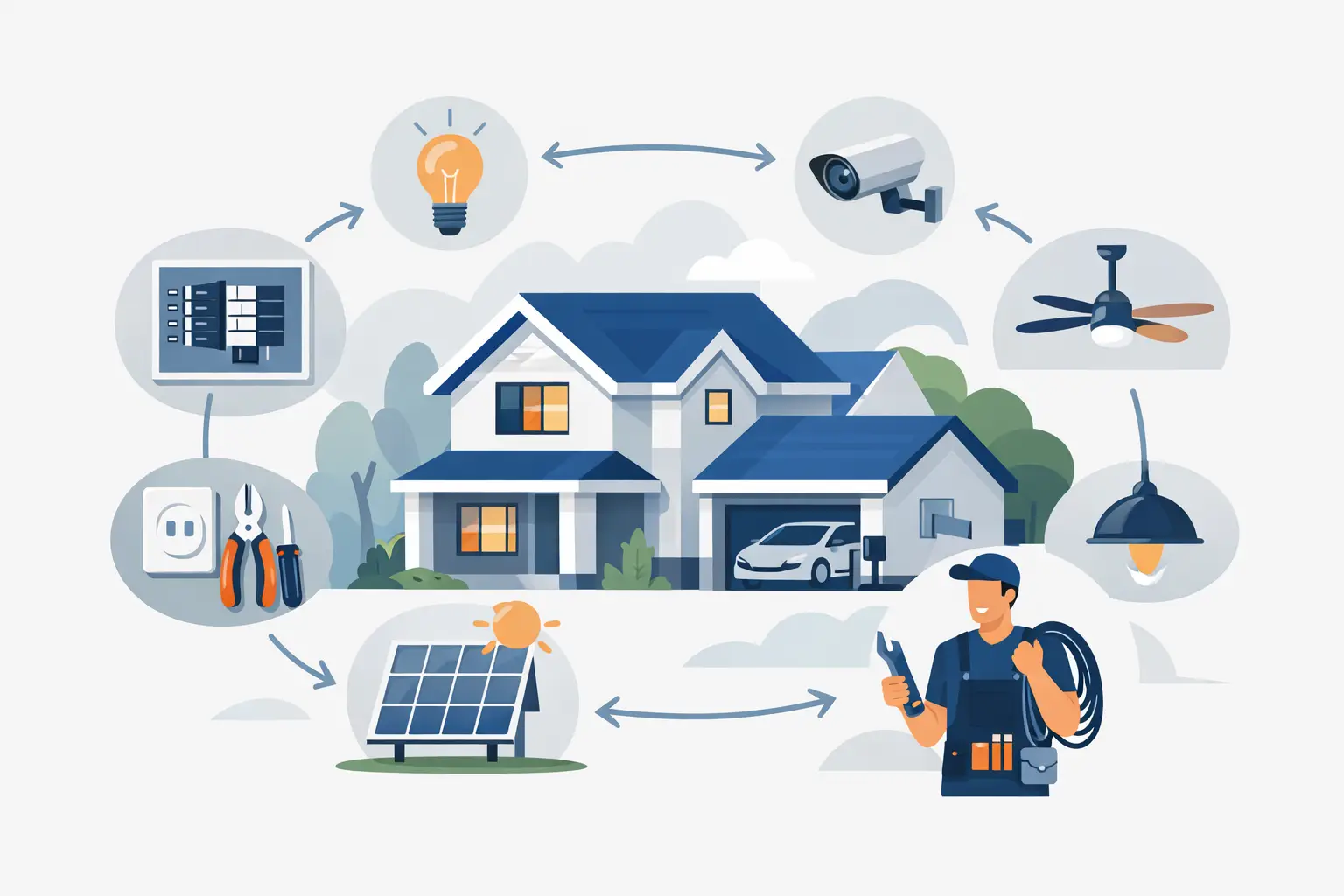
When a breaker keeps tripping, a room loses power, or a new EV arrives in the driveway, most homeowners are not looking for theory. They want a clear residential electrical services list that tells them what electricians actually do, when to call, and which jobs need a licensed professional.
That clarity matters even more in older Sonoma County homes, where electrical systems may have been expanded, patched, or outgrown over time. Some projects are obvious, like adding recessed lighting or installing a hot tub circuit. Others start as small warning signs, such as flickering lights, warm outlets, or a panel that no longer supports the way your household uses power today.
What a residential electrical services list should include
A useful residential electrical services list is more than a menu of tasks. It should cover the services homeowners need most often, from urgent repairs to planned upgrades, and it should reflect how modern homes use electricity now. That includes traditional work like outlet replacement and troubleshooting, along with newer needs such as EV charger installation.
For most homes, residential electrical services fall into a few core categories: diagnosis and repair, panel and service upgrades, lighting improvements, outlet and switch work, dedicated circuits, and safety-focused corrections. The right service depends on the age of the home, the condition of the existing wiring, and what you are trying to add or fix.
Electrical repairs and troubleshooting
Repair work is often the most urgent item on the list because it starts with something that is already wrong. A circuit may trip every time the microwave and toaster run together. Half the living room may stop working without warning. A switch may spark, buzz, or feel hot to the touch.
Good troubleshooting is what separates a quick guess from a correct repair. The visible symptom is not always the root problem. Flickering lights could point to a failing connection, an overloaded circuit, a bad fixture, or an issue at the panel. A licensed electrician should identify the cause before recommending the fix, especially when the goal is to avoid paying for work that does not solve the real issue.
Some repairs are straightforward, like replacing a failed receptacle or switch. Others involve damaged wiring, hidden junction issues, or circuit problems that take time to isolate. That is why experience matters. Homeowners usually do not need a complicated explanation, but they do need confidence that the diagnosis is accurate.
Electrical panel upgrades and replacements
Panels are one of the most important parts of any residential electrical system, and they are also one of the most overlooked until capacity becomes a problem. If your home was built decades ago, the panel may not have been designed for today’s electrical demand. Large appliances, HVAC equipment, home offices, and EV charging all add pressure to an older system.
A panel upgrade may be needed when breakers trip often, new circuits cannot be added, or the panel shows signs of wear, corrosion, or outdated components. In some cases, replacement is the smarter long-term move, especially if the equipment is obsolete or no longer considered reliable.
This is also one of those areas where trade-offs matter. Not every home needs a full panel replacement. Sometimes a repair, reconfiguration, or subpanel addition may be enough. Other times, delaying a panel upgrade only makes future projects harder and more expensive. A trustworthy electrician should explain which option fits the home and why.
EV charger installation
EV charger installation has become a standard part of modern residential work, not a specialty add-on. Homeowners who buy an electric vehicle quickly find that regular charging from a standard outlet is slow and often impractical. A properly installed Level 2 charger makes daily use easier and helps future-proof the home.
The installation itself is not one-size-fits-all. The charger location, available panel capacity, distance from the electrical panel, and charger amperage all affect the scope of work. In some homes, the charger can be added with minimal changes. In others, the project may require a load calculation, a new dedicated circuit, or a panel upgrade first.
This is a good example of why residential electrical work should be planned around the whole system, not just the new device. Installing the charger correctly means thinking about safety, code compliance, performance, and how the home will handle added demand over time.
Lighting installation and recessed lighting
Lighting upgrades are one of the most visible improvements homeowners make, but they still need the same level of professional care as any other electrical project. Recessed lighting is especially popular because it can brighten kitchens, hallways, living areas, and remodeled spaces without the visual bulk of hanging fixtures.
A proper lighting installation is about more than cutting holes and wiring fixtures. Placement matters. Circuit load matters. Dimmer compatibility matters. In some homes, existing wiring conditions also affect what is feasible without opening walls or doing more extensive updates.
Recessed lighting can make a home feel cleaner, brighter, and more functional, but the best results come from planning. The same is true for pendant lights, under-cabinet lighting, exterior lighting, and fixture replacements. What homeowners want is a finished look and reliable performance, not callbacks for flickering, uneven spacing, or incompatible controls.
Outlets, switches, and everyday electrical upgrades
Many service calls involve small components that have a big impact on daily life. Dead outlets, cracked switches, loose receptacles, and outdated two-prong devices are common in older homes. These issues can feel minor until they become safety concerns or interfere with normal use.
Updating outlets and switches can also be part of a broader improvement plan. Homeowners may want USB outlets in key rooms, GFCI protection in kitchens and bathrooms, weather-resistant devices outdoors, or additional receptacles where extension cords have become permanent fixtures. These are practical upgrades that improve convenience and reduce risk.
Sometimes the request starts with a simple replacement, but the electrician finds a deeper issue, such as aluminum wiring concerns, poor terminations, or circuits that were altered over the years. That is why even smaller jobs deserve careful evaluation instead of rushed swap-outs.
Dedicated circuits for hot tubs and major equipment
Some equipment needs its own dedicated circuit to operate safely and reliably. Hot tubs are a common example. They draw significant power and must be wired correctly to meet code, protect users, and prevent nuisance tripping or equipment damage.
Dedicated circuits are also common for EV chargers, microwaves, garage equipment, laundry appliances, and other high-demand loads. In many homes, adding one of these circuits is simple. In others, the panel has limited room or the existing electrical service is already near capacity.
This is another area where honest recommendations matter. A homeowner may call about powering one new feature, but the right answer depends on what the electrical system can support now and what additions may be planned next year.
Safety corrections and code-related improvements
Not every electrical service is about adding something new. A large part of residential work involves correcting unsafe conditions, replacing deteriorated components, and bringing parts of the system up to current standards where needed.
That may include replacing damaged outlets, correcting improper wiring, installing required protective devices, or addressing issues found during a remodel, inspection, or home purchase. The goal is not to create alarm. It is to reduce risk and make the home’s electrical system more dependable.
For homeowners, this can be one of the hardest categories to judge because the problems are often hidden. If lights dim unexpectedly, breakers trip without an obvious reason, or the home has aging electrical equipment, it is worth having the system evaluated before a small problem turns into a larger one.
How to choose the right service for your home
The best way to use a residential electrical services list is to match the service to the symptom or goal. If something is failing, tripping, sparking, or overheating, start with repair and diagnosis. If you are adding a major appliance, hot tub, or EV charger, ask whether a dedicated circuit or panel work is needed. If the project is aesthetic, like recessed lighting, the wiring condition still matters just as much as the design.
It also helps to think beyond the immediate job. If you already know you want an EV charger, kitchen upgrades, or more outdoor power in the next few years, that should be part of the conversation now. A thoughtful electrician can often help you avoid repeating work or paying twice for related upgrades.
At APG Electric Co., that homeowner-first approach is what matters most: clear recommendations, licensed work, and solutions that make sense for the house, not just the invoice.
If you are not sure which service fits your situation, that is usually the sign to start with a professional evaluation. A good electrician should leave you with less uncertainty, a safer home, and a plan you can trust.