
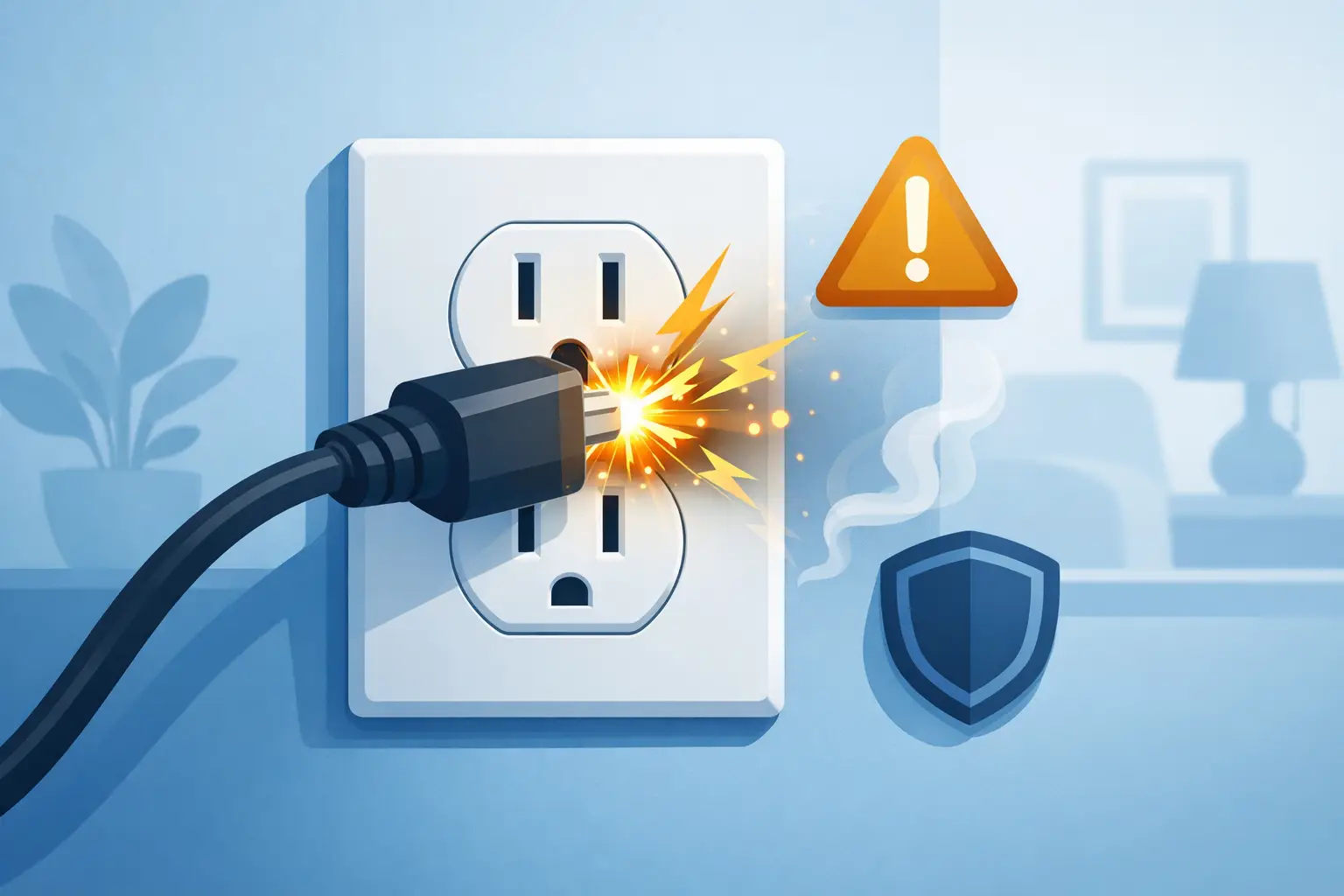
A brief flash at an outlet can make even a routine task feel alarming. If you are asking, “why does my outlet spark,” the answer may be as simple as a normal electrical connection – or it may point to a worn outlet, loose wiring, or an overloaded circuit that needs professional attention. The key is noticing when the spark happens, what it looks like, and whether other warning signs are present.
A healthy electrical system should deliver power reliably without heat, odor, buzzing, or visible damage. When an outlet does more than produce an occasional tiny blue flash as you plug something in, it is worth taking seriously. Electrical problems rarely improve by being ignored.
Why Does My Outlet Spark When I Plug Something In?
A small, quick blue spark can occur when a plug’s metal prong first contacts the energized portion of the receptacle. This is called an electrical arc. It is more likely with devices that draw a larger burst of power at startup, such as a vacuum, space heater, window air conditioner, power tool, or television.
In that limited situation, the spark should be tiny, brief, and happen only as the plug is being inserted or removed. The outlet should not feel warm, make noise, smell burnt, or show discoloration. The plug should also fit firmly.
That said, “normal” does not mean every spark should be dismissed. A visible arc can become more frequent when an outlet is worn or when a device has a damaged cord or internal fault. If the spark is larger than a quick pinprick, happens repeatedly, or appears inside the outlet without you touching a plug, stop using it.
Signs the Spark Is a Safety Concern
A sparking outlet deserves prompt attention when it comes with other symptoms. Turn off the circuit at the electrical panel if you can do so safely, and do not use the receptacle until a licensed electrician has assessed it.
Watch for these red flags:
- A yellow, orange, or white spark, especially one that lingers or crackles
- A burning, fishy, or melting-plastic smell near the outlet
- Brown or black marks, melted plastic, smoke, or a warm faceplate
- Buzzing, popping, crackling, or a loose plug that falls out easily
- A breaker that trips, lights that flicker, or power that cuts in and out
- Sparks that occur when nothing is being plugged in or unplugged
If you see smoke, flame, or active arcing, move people away from the area and call 911. Do not throw water on an electrical fire. If it is safe and there is no smoke or fire, shut off power at the breaker. Otherwise, leave the panel alone and wait for emergency help.
Common Reasons an Outlet Starts Sparking
A worn or damaged receptacle
Outlets do not last forever. Each time a plug is inserted and removed, the internal contacts experience wear. Over years of use, they can lose their grip on the plug blades. That loose connection creates resistance and heat, which can lead to arcing.
A loose plug is more than an annoyance. It can damage the receptacle and increase fire risk, particularly when high-draw appliances are involved. Replacing the outlet is often straightforward, but the electrician should also inspect the wiring and box behind it to make sure the outlet was the only issue.
Loose wiring connections behind the outlet
An outlet can look fine from the outside while a wire connection behind it is loose. As electricity moves across a loose connection, it may arc and generate heat. In older homes, aging conductors, brittle insulation, or outdated installation practices can add to the concern.
This is not a repair to handle by tightening a screw without proper training. A circuit can remain energized even when a wall switch is off, and improper work can create a more dangerous connection than the one you started with. A licensed electrician can identify whether the problem is at the receptacle, within the electrical box, or farther upstream on the circuit.
An overloaded circuit or high-demand appliance
A circuit has a limited capacity. Plugging a portable heater, microwave, toaster oven, hair dryer, or similar appliance into a circuit already serving other equipment can overload the wiring or receptacle. Extension cords and power strips can make the problem less obvious because they allow several devices to share one outlet.
The right fix depends on the load and the circuit. Sometimes a homeowner simply needs to move a device to another circuit. In other cases, the safer long-term solution is a dedicated circuit for an appliance. Replacing an outlet alone will not solve an overloaded circuit.
A damaged cord or faulty device
The outlet may not be the source of the problem. Frayed cords, bent plug blades, damaged power strips, and failing appliances can spark when they connect. Unplug the device only if it is safe to do so, then inspect the cord and plug for damage.
A useful clue is whether multiple devices spark at the same outlet, or whether one device sparks at several outlets. If the issue follows the device, stop using that device and have it repaired or replaced. If it follows the outlet, schedule an electrical repair.
Moisture or an incorrect outlet type
Outlets near sinks, laundry areas, garages, exterior walls, and bathrooms may be exposed to moisture. These locations typically need GFCI protection, which is designed to cut power quickly when it detects a ground fault. A GFCI outlet may have Test and Reset buttons, though protection can also be provided from another location.
If an outlet near water sparks, trips repeatedly, or has signs of dampness, do not use it until it has been inspected. The same applies to exterior outlets with broken covers or water intrusion. Electrical safety depends on using the right equipment for the location, not just getting power to the device.
What You Can Safely Do Before Calling an Electrician
Homeowners do not need to diagnose energized wiring to gather useful information. First, stop using the outlet and remove the plug if it can be done safely. Do not force a stuck plug or touch a damaged cord.
Next, check for heat by holding the back of your hand near, not directly on, the outlet. If it feels warm, smells unusual, or shows discoloration, turn off the breaker if it is safe to do so. Note what was plugged in, whether the breaker tripped, and whether nearby outlets or lights are affected. Those details help an electrician find the actual source of the problem efficiently.
Avoid a few tempting shortcuts. Do not keep using the outlet “just for low-power items.” Do not cover scorch marks with a new faceplate. Do not replace a standard outlet with a GFCI as a guess at the problem. And do not rely on an extension cord as a permanent workaround. Each can conceal a fault while leaving the underlying hazard in place.
Older Sonoma County Homes May Need a Wider Look
Many homes in Santa Rosa and across Sonoma County have electrical systems that have been added to over decades. A single sparking outlet may be isolated, but it can also reveal broader issues such as aging receptacles, undersized circuits, ungrounded outlets, or a panel that is no longer suited to the home’s electrical demand.
That matters more as households add electric vehicle chargers, induction cooking, heat-pump equipment, hot tubs, and larger home office loads. Modern upgrades are valuable, but they need to be planned around the capacity and condition of the existing electrical system. An honest assessment should separate the immediate repair from improvements that are genuinely recommended for safety or future needs.
APG Electric approaches outlet problems by identifying why the failure occurred, not simply swapping the visible part and moving on. A proper repair includes checking the receptacle, wiring connections, box condition, circuit protection, and the load being placed on that circuit.
When to Schedule Service
Schedule a licensed electrician promptly if an outlet sparks more than once, feels loose, gets warm, makes noise, smells burned, or trips a breaker. A same-day evaluation is especially wise if the outlet serves a high-demand appliance, is near water, or shows visible damage.
A small spark can be ordinary physics. Repeated sparking is your home asking for a closer look. Addressing it early protects the outlet, the circuit, and the people who depend on both every day.