
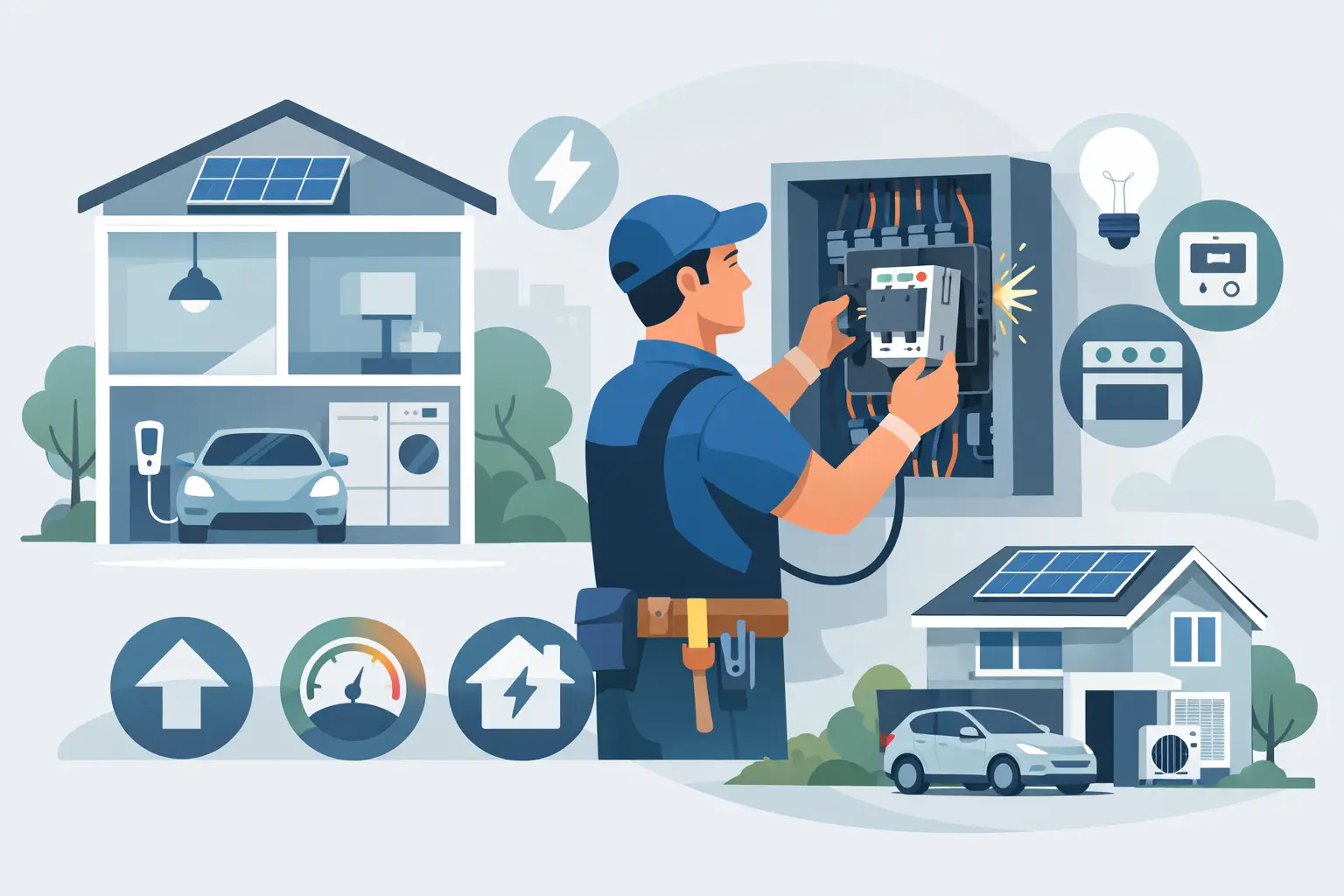
Your electrical panel is easy to overlook until it starts limiting the way you use your home. A breaker that trips when the microwave and toaster run together, an EV charger that needs more capacity, or plans for a new hot tub can all point to the same issue: your home may be due for panel upgrades.
The panel is the central distribution point for your home’s electrical system. It receives power from the utility, sends it safely to individual circuits, and uses breakers to shut off power when a circuit is overloaded. When the panel is undersized, outdated, damaged, or simply full, adding new electrical features becomes more complicated and potentially less safe.
For Santa Rosa and Sonoma County homeowners, the right answer is not always a full replacement. A licensed electrician should inspect the existing equipment, calculate the home’s electrical load, explain the available options, and recommend only the work the home actually needs.
What Panel Upgrades Actually Change
An electrical panel upgrade may involve replacing an older panel with a modern model, increasing the home’s electrical service capacity, adding circuit spaces, or all three. These are related projects, but they are not identical.
A panel replacement addresses the equipment itself. If the enclosure, breakers, bus bars, or connections show age, damage, corrosion, or reliability concerns, replacing the panel can improve safety and dependability. A service upgrade increases the amount of power available to the home, such as moving from 100 amps to 200 amps. That work can also involve changes at the meter, service conductors, and utility connection.
The distinction matters because a panel with open breaker spaces may still lack enough capacity for a major new load. On the other hand, a home may have adequate service capacity but need a replacement panel because the existing equipment is obsolete or in poor condition. A proper evaluation looks at both the panel and the total demand on the home.
Signs Your Electrical Panel Needs Attention
Some warning signs call for prompt professional diagnosis. Breakers that trip repeatedly, lights that flicker or dim when appliances start, a warm panel cover, buzzing sounds, burning odors, or visible rust should never be ignored. These conditions do not automatically mean the entire panel must be replaced, but they do mean the system should be inspected by a licensed electrician as soon as possible.
Other signs are more practical than urgent. You may be running out of breaker spaces, relying on power strips in too many rooms, or planning an electrical upgrade that has no clear circuit capacity available. Older homes in Sonoma County were not designed around today’s electrical habits. Central air conditioning, induction ranges, heat-pump water heaters, home offices, large televisions, workshop tools, and EV charging can add substantial demand compared with the loads a home carried decades ago.
Age alone is not a diagnosis. A well-maintained older panel can sometimes remain in service, while a newer panel with installation defects or water damage may need attention sooner. The condition of the equipment, the home’s current load, and your future plans are more useful than a simple age cutoff.
A Full Panel Is Not Always a Capacity Problem
Homeowners often hear that their panel is “full” and assume that means they need a bigger service. Sometimes they do. Sometimes the issue is simply that all breaker positions are occupied.
There may be safe options, depending on the panel model, electrical load, and code requirements. In some cases, a compatible subpanel can provide additional circuit space. In others, consolidating or reworking existing circuits may be appropriate. If the main service is already near its practical limit, however, adding a subpanel alone does not create more usable power. The electrician must determine whether the system has both physical space and electrical capacity.
Why Modern Home Projects Often Lead to Panel Upgrades
An EV charger is one of the most common reasons homeowners evaluate their electrical service. Level 2 charging requires a dedicated 240-volt circuit and represents a continuous electrical load. The charger size, the vehicle’s charging capability, the home’s existing demand, and the available panel capacity all affect the installation plan.
A quality EV charger installation starts with more than selecting a charger. It includes a load calculation, an assessment of the panel and service, proper circuit sizing, permit requirements, and a clean installation that supports reliable daily charging. Some homes can accommodate an EV charger without a panel upgrade. Others need additional capacity before charging can be installed safely.
The same evaluation applies to hot tubs, electric ranges, heat pumps, solar-related equipment, garage workshops, and major kitchen remodels. These projects can be excellent improvements, but they should not be forced onto an electrical system that is already stretched. Planning the electrical work early helps avoid delays after other construction is underway.
What a Licensed Electrician Looks For
A trustworthy panel assessment is not based on a quick glance at the breakers. It begins with the equipment’s condition and identification. The electrician checks the panel manufacturer and model, the rating of the main breaker, available breaker spaces, wiring condition, grounding and bonding, signs of overheating, and any visible moisture or corrosion.
Next comes the load calculation. This is a structured review of the home’s electrical use and expected additions. It accounts for items such as heating and cooling equipment, cooking appliances, water heating, laundry equipment, and planned loads like EV charging. The goal is to understand how much demand the home is likely to place on the service, rather than assuming every breaker will operate at maximum capacity at the same time.
Local permitting and utility coordination may also be part of the project. When the service capacity changes, work can involve the utility connection and inspections required by the local authority. A professional electrician explains that scope before work begins, so you understand what is included and what scheduling factors may affect the timeline.
Choosing the Right Scope for Your Home
Panel upgrades are not one-size-fits-all, and the lowest initial price is not always the lowest long-term cost. Replacing only the panel may be sensible when the service capacity is adequate and the equipment itself is the concern. Upgrading to 200-amp service can make sense when a home needs more capacity for electrification, expansion, or multiple high-demand additions.
It also helps to think one step ahead. If you are installing an EV charger now but expect to add a heat pump or remodel the kitchen later, tell your electrician. Completing related electrical work together can reduce repeat labor, permit coordination, and disruption later. However, it is not wise to pay for capacity you truly do not need just because it sounds future-proof. The right recommendation balances present safety, realistic plans, and budget.
Quality materials matter as well. The panel, breakers, conductors, grounding components, and connections must be correctly matched and installed according to current requirements. A panel upgrade is not the place for mismatched parts, questionable used equipment, or shortcuts hidden behind a closed cover.
What to Expect During the Work
Most residential panel projects require a planned power outage while the work is performed. The exact length depends on the scope, whether the service is being upgraded, inspection scheduling, and utility involvement. Your electrician should help you prepare by discussing refrigeration, medical devices, internet equipment, gate systems, and any other household needs affected by the outage.
After installation, the new panel should be clearly labeled so you can identify each circuit. Clean labeling is a practical safety feature, especially during an emergency or future repair. You should also receive a straightforward explanation of what was installed, how the system is organized, and any next steps associated with final inspection.
For homeowners who value clear answers and careful workmanship, APG Electric approaches panel work with a complete evaluation rather than a sales pitch. The goal is to identify the real constraint in your electrical system and provide a recommendation that supports safe, dependable use of your home.
If your breakers are tripping, your panel is out of room, or a planned EV charger or appliance upgrade has raised questions, getting a professional assessment early can turn uncertainty into a clear path forward. A well-planned electrical upgrade gives your home room to grow while protecting the systems you rely on every day.