
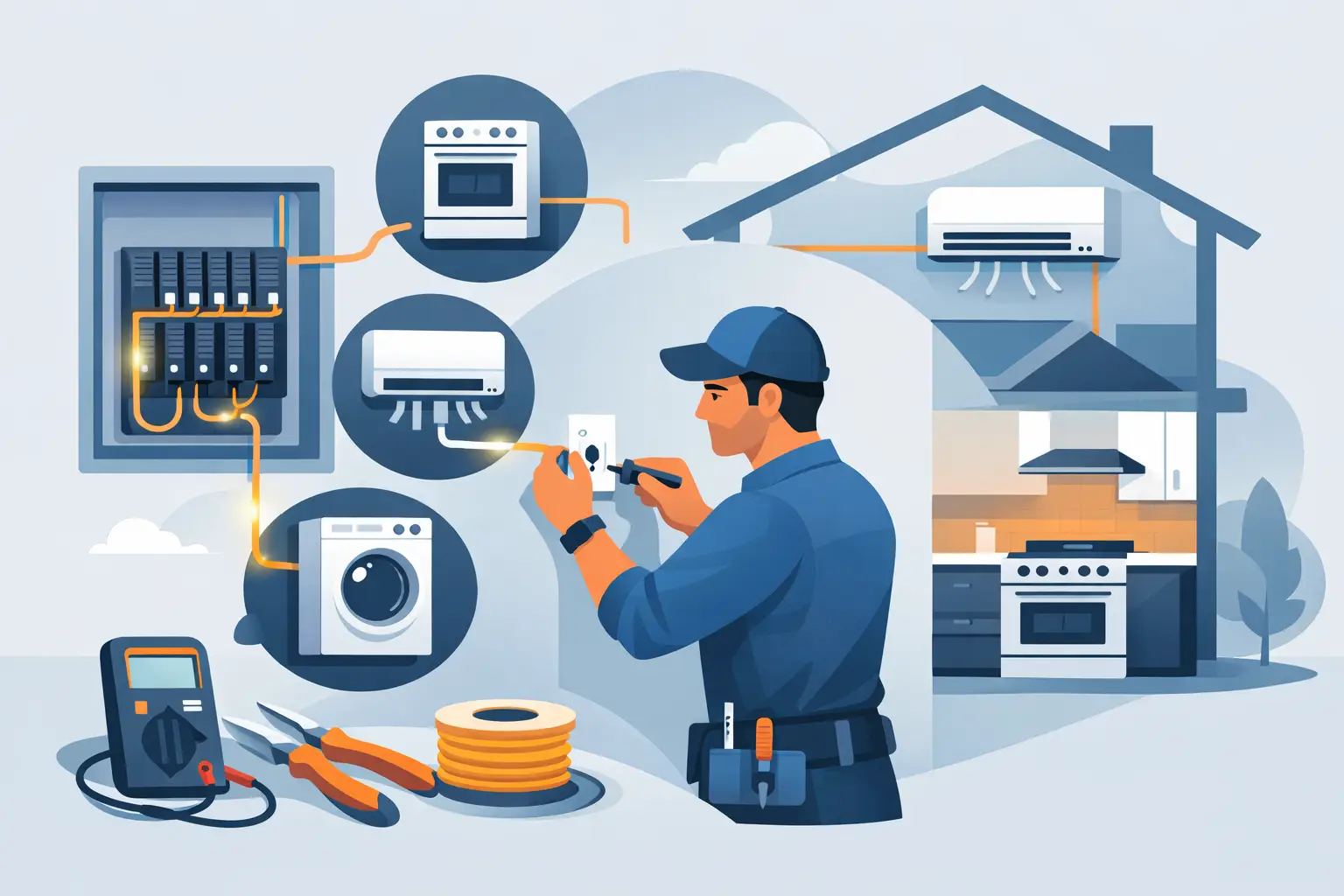
A kitchen outlet that shuts off when the microwave runs, an EV charger that trips a breaker, or a hot tub that needs power for the first time are not problems to solve with an extension cord. They are signs that your home may need dedicated circuit installation. A properly planned circuit gives high-demand equipment the power it needs without overloading the rest of your electrical system.
For homeowners in Santa Rosa and throughout Sonoma County, this is often part of a larger home upgrade. Older homes were not designed around electric vehicles, modern kitchen appliances, powerful garage tools, or today’s comfort equipment. A licensed electrician can determine whether the issue is simply a missing circuit or whether your panel, wiring, or service capacity also needs attention.
What Is a Dedicated Circuit?
A dedicated circuit is an electrical circuit reserved for one appliance or piece of equipment. It runs from the electrical panel to the equipment or outlet it serves and is protected by its own correctly sized breaker.
The purpose is straightforward: certain appliances draw enough power that sharing a circuit with lights, outlets, or other equipment creates a risk of overloads, nuisance tripping, overheated wiring, and premature equipment failure. A dedicated circuit keeps that demand isolated and predictable.
Some dedicated circuits are required by electrical code, while others are strongly recommended based on the appliance and its electrical load. The exact requirements depend on the equipment, the home’s existing wiring, and the applicable local code requirements.
When Your Home May Need Dedicated Circuit Installation
The need is often clear when you are adding a major appliance or planning a renovation. It can also show up as an ongoing electrical annoyance that has never been properly diagnosed.
Common projects that may require a dedicated circuit include an EV charger, hot tub, electric range, wall oven, clothes dryer, dishwasher, garbage disposal, microwave, refrigerator, HVAC equipment, heat pump, sump pump, or heavy-duty workshop equipment. Not every appliance uses the same voltage or amperage. A small countertop microwave and a Level 2 EV charger have very different electrical needs, which is why a one-size-fits-all answer is not safe.
You should also schedule an evaluation if breakers trip repeatedly, outlets become warm, lights dim when an appliance starts, or you rely on power strips to run permanent equipment. A tripped breaker is doing its job by stopping excessive current. Repeatedly resetting it without finding the cause can leave the underlying problem unresolved.
In older Sonoma County homes, homeowners sometimes discover that a new appliance has been connected to an existing general-use circuit. It may appear to work at first, but the circuit can become overloaded as soon as other devices are used. The right fix is usually not a larger breaker. Installing an oversized breaker on wiring that cannot safely handle it can create a serious fire hazard.
Why Circuit Sizing Is Not a Guess
A dedicated circuit must be designed around the actual load. That means reviewing the manufacturer’s specifications, the equipment voltage, the required amperage, the type of wiring, and the distance from the electrical panel. The breaker and conductors must be matched correctly.
Continuous loads need special consideration. EV charging is a common example because a vehicle may draw power for hours at a time. The circuit must be sized according to code and the charger’s settings, while the electrician must also account for available capacity in the home’s panel. A charger can be configured for different output levels, so the best solution may depend on how far you drive, how quickly you need to recharge, and what your electrical service can support.
Hot tubs are another project where details matter. The required disconnect, GFCI protection, circuit size, and equipment placement must all be handled correctly. This is not a project for a general handyman or an improvised outdoor connection.
What a Professional Installation Should Include
Quality dedicated circuit installation starts before any wire is pulled. A licensed electrician should inspect the panel, identify available space, verify the service capacity, and evaluate the route from the panel to the new equipment. In some homes, the circuit can be run through an accessible attic, crawl space, garage, or basement. In others, finished walls, long distances, or a full panel make the work more involved.
The installation itself typically includes a properly sized breaker, code-compliant wiring, required receptacles or disconnects, and any necessary GFCI or AFCI protection. The equipment is then tested to confirm that it operates correctly and that the circuit performs as intended.
Clean workmanship matters here. Electrical upgrades should protect the home without leaving behind unnecessary wall damage, exposed wiring, or confusing panel labeling. A clearly labeled panel makes future maintenance safer and helps the next electrician understand what each circuit serves.
Permitting may also be required depending on the project and local jurisdiction. A professional electrician can explain what applies to your installation and complete work that is ready for inspection when needed. Permits are not paperwork for paperwork’s sake. They provide an additional check that the work meets safety standards.
Does a Dedicated Circuit Mean You Need a Panel Upgrade?
Not always. If your panel has physical space for a new breaker and sufficient electrical capacity for the added load, a dedicated circuit may be a straightforward installation. But some homes need more planning.
A crowded or outdated panel may lack open breaker spaces. More importantly, the panel may not have enough capacity for the home’s existing demand plus a new EV charger, hot tub, or electric appliance. This is especially relevant as homeowners replace gas equipment with electric alternatives.
There are several possible paths. In some cases, a load calculation shows that the existing service can support the project. In others, the electrician may recommend a panel upgrade, a subpanel, load management equipment, or a lower-amperage configuration for the new appliance. The honest answer depends on the home. A trustworthy recommendation should explain both the safety need and the practical trade-offs, including cost and future plans for the property.
What Affects the Cost of a Dedicated Circuit?
The price is driven less by the phrase “new circuit” and more by the details behind it. Circuit amperage, wiring distance, access to the installation route, panel condition, required protection, permit requirements, and whether a panel upgrade is needed all affect the scope.
For example, a circuit installed near an accessible garage panel is generally simpler than one that must travel across a large home with finished ceilings and no easy pathway. A 240-volt circuit for a dryer, hot tub, or EV charger also requires different materials and planning than a standard 120-volt appliance circuit.
Be cautious with estimates that quote a very low price before anyone has examined the panel or equipment specifications. A clear estimate should identify what is included and flag conditions that could change the scope. That transparency helps homeowners compare options without being surprised after work begins.
Protect Your Home With Licensed Electrical Work
Dedicated circuits are not a place to cut corners. Electrical work can look simple from the outside, but safe installation requires correct load calculations, proper connections, suitable materials, and an understanding of current code requirements. Small mistakes can stay hidden behind walls or inside a panel until they become costly or dangerous.
APG Electric helps homeowners make informed decisions about new circuits, EV charging, hot tub power, appliance upgrades, and panel capacity. The goal is not to sell more work than your home needs. It is to identify the right solution, explain it clearly, and complete it with workmanship you can rely on.
If you are planning new equipment or dealing with a breaker that keeps tripping, address it before it becomes a larger problem. A professional evaluation can give you a clear answer about what your home needs and a safer path forward.