935 Bush Street Santa Rosa, CA 95404
License #998700
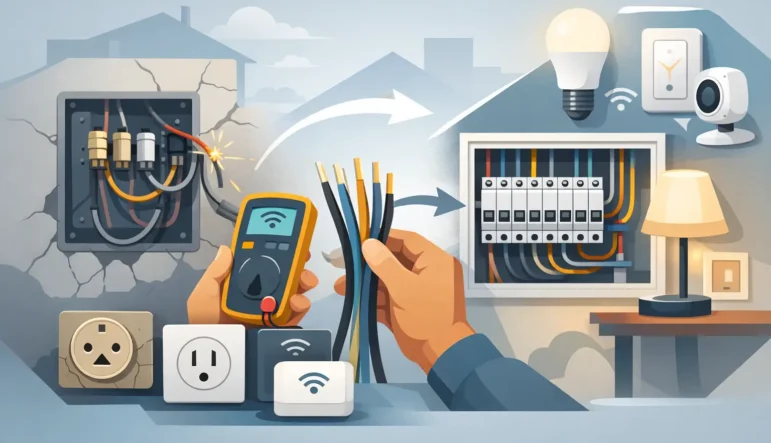
A beautiful older Sonoma County home can hide electrical limitations behind its walls. If lights dim when the microwave starts, breakers trip without a clear reason, outlets feel loose, or you still rely on extension cords, it may be time to look at the best upgrades for old wiring. The right solution is not always a full-house rewire. A licensed electrician should first identify what is actually present, what condition it is in, and which improvements will make the biggest difference for safety and daily use.
Older wiring deserves a thoughtful approach because homes built decades ago were not designed for induction ranges, home offices, heat pumps, EV chargers, hot tubs, or the number of plugged-in devices most families use now. A clear diagnosis helps you invest where it matters instead of paying for work that does not solve the real problem.
Before replacing equipment or opening walls, have the electrical system evaluated as a whole. This is especially valuable in homes with older fuse boxes, Federal Pacific or Zinsco panels, ungrounded outlets, aluminum branch wiring, knob-and-tube wiring, or a history of DIY electrical changes.
An evaluation can reveal whether the concern is isolated to one circuit or reflects a larger capacity or safety issue. The electrician should inspect the service panel, grounding and bonding, visible wiring condition, breaker performance, outlet polarity, circuit loading, and any signs of heat damage. They can also identify whether recent renovations were tied into the system correctly.
This step protects your budget. A flickering light may be a simple loose connection, but it can also point to an overloaded circuit or deteriorated connection that needs prompt attention. Good electrical recommendations are based on what the home needs now and what you plan to add later.
For many older homes, the panel is the most meaningful upgrade. A panel is not just a box of breakers. It distributes power throughout the home and provides overcurrent protection when a circuit draws more electricity than it safely can handle.
An outdated panel may have insufficient space for new circuits, limited amp capacity, corrosion, unreliable breakers, or equipment with a known safety history. If you are planning an EV charger, hot tub, central air conditioning, electric water heater, or major kitchen remodel, a panel upgrade may be necessary before those projects can be completed safely.
The right panel size depends on the home’s electrical load, not simply its square footage. A 200-amp service is common for homes adding significant electric loads, but it is not automatically required in every situation. A proper load calculation helps determine whether you need a service upgrade, a panel replacement, a subpanel, or only additional circuit space.
Many older homes have two-slot outlets with no equipment grounding conductor. Those outlets were normal when installed, but they are less suited to modern electronics and appliances. Grounding provides a safer path for fault current and supports the protective features built into many current devices.
Where practical, replacing old wiring with new grounded circuits is the strongest long-term solution. In some locations, GFCI protection may be an allowed alternative where a grounding conductor is not present, but it does not create a true equipment ground. It is important to understand that distinction before choosing the least invasive option.
Tamper-resistant receptacles are also a worthwhile upgrade, particularly in homes with children or visiting grandchildren. Their internal shutters reduce the chance that a foreign object can be inserted into an outlet. Modern receptacles also tend to grip plugs more securely than worn, loose devices.
Ground-fault circuit interrupter, or GFCI, protection helps reduce shock hazards by shutting off power quickly when it detects current taking an unintended path. It is commonly needed in bathrooms, kitchens, garages, laundry areas, exterior locations, crawl spaces, and other areas where water or damp conditions may be present.
Arc-fault circuit interrupter, or AFCI, protection addresses a different concern. It is designed to detect certain dangerous arcing conditions that can occur from damaged cords, loose connections, or compromised wiring. AFCI protection is commonly used in living areas and bedrooms under current electrical code requirements.
These devices can be installed at the outlet or breaker, depending on the circuit and the work being performed. Older homes sometimes reveal nuisance tripping after protection is added. That is not a reason to remove the protection. It is often a signal that an appliance, cord, receptacle, or wiring connection deserves further investigation.
Some wiring materials and installation methods require closer attention than others. Knob-and-tube wiring, for example, lacks the grounding found in modern cable and may have been altered improperly over time. It can also be damaged when insulation or renovations interfere with the open-air design it originally relied on.
Aluminum branch-circuit wiring, used in some homes from the late 1960s into the 1970s, can develop connection problems if devices and splices are not rated and installed correctly. It should not be treated as a do-it-yourself repair. The appropriate remedy depends on its condition, the connections in place, and the scope of the home’s planned improvements.
A full rewire is sometimes the right decision, especially when wiring is brittle, unsafe, ungrounded throughout, or unable to support the home’s needs. However, selective rewiring can be more practical when only certain areas need attention. Rewiring a kitchen, laundry room, garage, addition, or primary living area may deliver immediate safety and functionality while allowing the remaining work to be phased over time.
Older homes often have too many outlets, lights, and appliances sharing one circuit. That can lead to frequent tripping, warm outlets, overloaded power strips, and inconvenient limits on how the space can be used.
Dedicated circuits give high-demand equipment its own protected path back to the panel. Kitchens, laundry rooms, garages, workshops, bathrooms, and outdoor living spaces are common places to need them. Appliances such as microwaves, dishwashers, disposals, refrigerators, washing machines, dryers, and freezers may need dedicated circuits depending on the installation and applicable code.
A dedicated circuit is also essential for major additions such as a hot tub or EV charger. These are not projects to squeeze onto existing household circuits. They require load planning, correctly sized conductors and breakers, and professional installation.
Even if you do not own an electric vehicle yet, it can be smart to plan electrical upgrades with future charging in mind. Running conduit during a panel or garage project can reduce disruption later. Leaving panel capacity available for a future charger also helps avoid a second round of costly changes.
The same forward-thinking approach applies to heat pumps, induction cooking, battery storage, and electric water heating. Not every home needs to electrify everything at once, and not every panel needs immediate replacement. But a plan based on your likely next improvements can prevent expensive rework.
APG Electric helps homeowners weigh these choices with clear recommendations, from targeted repairs to panel upgrades and EV-ready electrical work. The goal should be a safe, code-conscious system that supports how you use your home without pushing unnecessary work.
Some concerns deserve a prompt service call rather than a future renovation plan. A burning smell, buzzing panel, hot outlet or switch, sparking, recurring breaker trips, shocks or tingling from appliances, and visible discoloration around electrical devices can indicate an active hazard. Turn off power to the affected area if it is safe to do so, avoid using the circuit, and have it evaluated by a licensed electrician.
Also take repeated use of extension cords seriously. They are intended for temporary use, not as a permanent substitute for needed outlets or circuits. Adding properly placed receptacles is cleaner, safer, and more convenient.
The best electrical upgrade is the one that addresses a verified issue and supports the way your household actually lives. In a well-maintained older home, new GFCI protection, grounded receptacles, and a few dedicated circuits may be enough. In another home, an aging panel and deteriorated wiring may make a larger modernization project the responsible choice.
A qualified electrician can explain the options in plain language, identify what is urgent, and separate immediate safety work from improvements that can be planned over time. That gives you control over the investment while protecting the home, the people in it, and the projects you want to enjoy next.
