935 Bush Street Santa Rosa, CA 95404
License #998700
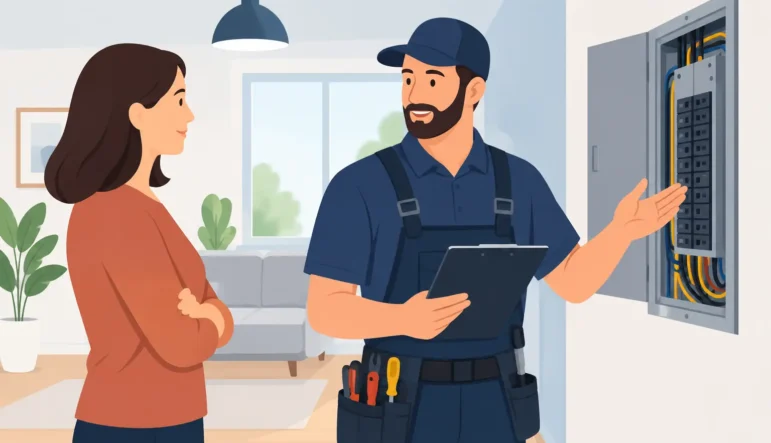
A flickering light may be a simple fixture issue. It can also be a sign of a loose connection, an overloaded circuit, or aging wiring that needs attention. Knowing how to choose an electrician before an urgent problem arises helps protect your home, your budget, and your peace of mind.
For Sonoma County homeowners, the right choice is rarely the lowest number on an estimate. A dependable residential electrician should be properly licensed, clear about the work, responsive to your questions, and committed to fixing the actual problem rather than selling work you do not need.
Start by looking for an electrician whose qualifications match the work you need. Replacing a switch is different from upgrading a service panel, installing an EV charger, or adding a dedicated circuit for a hot tub. Residential electrical work involves safety requirements, load calculations, code compliance, and often permits. Experience with your specific project matters.
A good electrician will ask practical questions before offering a solution. For an EV charger, they may want to know your vehicle, charger type, panel capacity, parking location, and the distance from the panel to the installation area. For recurring breaker trips, they should ask what is plugged into the circuit, when the problem occurs, and whether the issue is new or ongoing.
Be cautious of anyone who promises a diagnosis without hearing the details or seeing the condition of the home. Electrical problems can have similar symptoms but very different causes. Accurate troubleshooting is what prevents unnecessary repairs.
In California, electrical contracting work should be performed by a properly licensed contractor. For most residential electrical projects, look for an active California C-10 Electrical Contractor license. You should also confirm that the contractor carries appropriate insurance and workers’ compensation coverage when applicable.
This is more than paperwork. Licensing helps show that the contractor has met state requirements, while insurance helps protect homeowners if something goes wrong on the job. A professional electrician should be comfortable providing license information and explaining whether your project requires a permit and inspection.
Permits can feel like an extra step, but they are often a sign that the work is being handled correctly. Panel upgrades, new circuits, EV charger installations, and other substantial alterations commonly require permits. The requirements can depend on the scope of work and local jurisdiction, so a trustworthy electrician will explain what applies to your project instead of brushing the question aside.
Many electrical contractors can perform a wide range of work, but residential service calls require a particular approach. Homes often have hidden wiring paths, older equipment, previous DIY work, and electrical systems that have been altered over decades. The electrician needs to work carefully in an occupied space, protect finished surfaces, communicate clearly, and leave the work area clean.
Ask whether the contractor regularly handles the type of work you need. If you are planning a panel replacement, ask about service upgrades, load calculations, and coordination with the utility when needed. If you are adding recessed lighting, ask how they will locate joists, minimize drywall disruption, and plan switch locations. If you need an EV charger, ask how they determine whether your existing panel has enough capacity.
Specialized experience does not mean the electrician should push the biggest possible project. Sometimes a home needs a panel upgrade. Sometimes a less extensive repair, load-management solution, or circuit adjustment is the sensible answer. Honest recommendations should be based on your home’s condition and your actual plans.
Star ratings are useful, but the written reviews often tell you more. Look for consistent comments about communication, punctuality, cleanliness, problem-solving, and whether the final cost matched what was discussed. A homeowner who says an electrician found the real cause of a problem and explained the options clearly is offering more useful insight than a review that simply says, “Great service.”
Pay attention to how the contractor responds to concerns as well. Every service business will occasionally encounter a scheduling conflict or a complicated repair. What matters is whether the company takes responsibility, communicates professionally, and works toward a fair resolution.
For a local service provider, a solid reputation in Santa Rosa and throughout Sonoma County can be especially valuable. Local electricians are familiar with common housing styles, area permitting processes, and the practical needs of homeowners making upgrades to older properties.
When you receive estimates, compare what each electrician is actually proposing. One lower bid may exclude permit fees, use a different equipment rating, leave out drywall patching, or assume an easier wiring route. A higher estimate is not automatically better, but it should be clear why it costs more.
A useful estimate identifies the work to be performed, major materials or equipment, permit expectations, and any known conditions that could affect the final price. For diagnostic work, the electrician may not be able to quote every repair before investigating. In that case, they should explain the service-call or diagnostic fee, what it covers, and how they will present repair options once they find the issue.
Do not be afraid to ask direct questions. Will a new circuit be dedicated? What breaker and wire size are being used? Is the equipment listed for the intended application? Does the estimate include bringing related components up to code where required? Clear answers help you compare proposals fairly.
The lowest price can be a good value when the scope is complete and the contractor is qualified. It becomes risky when the price is vague, the work is rushed, or important safety steps are treated as optional.
The way an electrician communicates before the appointment often predicts the experience you will have during the job. You should be able to reach someone, receive a reasonable appointment window, and understand what will happen next. If a problem requires immediate attention, the company should be honest about availability rather than making promises it cannot keep.
During the conversation, notice whether the electrician explains things in plain language. You do not need a technical lecture, but you do deserve to understand what was found, why it matters, and what your options are. A professional can explain the difference between a safety-critical repair and an improvement you can plan for later.
That distinction is particularly helpful for aging homes. An outdated panel, ungrounded outlet, or overloaded circuit may deserve attention, but the right timing and scope depend on its condition, your household demand, and your future plans. A customer-first electrician will help you prioritize rather than use fear to force a decision.
Some warning signs deserve immediate caution. Consider another contractor if you encounter any of the following:
A professional may uncover unexpected conditions once work begins, especially in older homes. That is not necessarily a red flag. The difference is transparency. You should be shown or clearly told what changed, why it affects the job, and what the available options are before additional work proceeds.
Electrical work is mostly hidden after the job is complete, which makes workmanship especially important. The visible result may be a new outlet, a neat panel, or a properly mounted charger, but the long-term value is in the connections, wire sizing, grounding, protective devices, and installation practices behind it.
Ask what materials and equipment the electrician plans to use, particularly for larger projects. Premium, properly rated components can reduce future headaches and support safer, more reliable performance. This matters for high-demand additions such as EV chargers, air conditioning equipment, induction ranges, and hot tubs.
It also helps to ask about warranties and what happens if you have a concern after the job is done. A reliable contractor stands behind completed work and makes it straightforward to get answers. At APG Electric Co., that means treating each recommendation as a decision homeowners deserve to understand, not a sales opportunity.
The right electrician will not make you feel rushed, confused, or embarrassed for asking questions. They will help you understand the condition of your system, outline the work in practical terms, and respect both the safety of your home and the budget you have set.
If you are seeing warm outlets, burning smells, frequent breaker trips, buzzing, sparks, or a sudden loss of power in part of the home, turn off power to the affected area when it is safe to do so and seek qualified help promptly. For planned upgrades, take the time to choose a licensed local professional who explains the work clearly. That careful choice can make every switch, circuit, and future home improvement feel a little more dependable.
