935 Bush Street Santa Rosa, CA 95404
License #998700
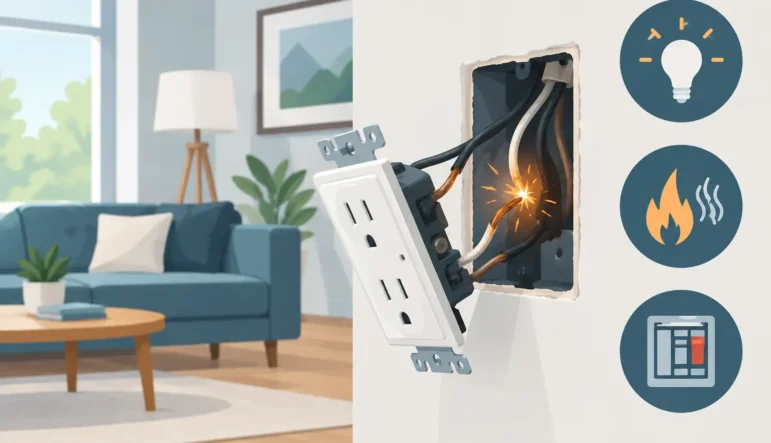
A light that flickers when the refrigerator starts may seem like a small annoyance. So may an outlet that only works when a plug is held at a certain angle. But these are often among the top signs of faulty wiring in a home, and they deserve more attention than a quick workaround.
Electrical problems can develop gradually, especially in older Sonoma County homes that have seen decades of additions, remodels, new appliances, and changing power demands. The safest approach is to notice the warning signs early, avoid risky do-it-yourself repairs, and have a licensed electrician identify the actual cause before a minor problem becomes a damaged circuit, electrical shock hazard, or fire risk.
A circuit breaker is designed to shut off power when it detects an overload, short circuit, or ground fault. An occasional trip after running a space heater, hair dryer, and microwave on the same circuit may simply mean that circuit is overloaded. Repeated trips, however, are not normal.
If the same breaker trips even when little is plugged in, wiring damage, a loose connection, a failing appliance, or a problem inside an outlet or switch box could be involved. Resetting a breaker once after identifying an obvious overload can be reasonable. Resetting it again and again without finding the cause is not.
Never replace a breaker with a larger one just to stop it from tripping. Circuit breakers are sized to protect the wiring behind the walls. Installing an incorrectly sized breaker can allow wires to overheat before the breaker shuts off.
Lights can flicker for simple reasons, such as a loose bulb or an incompatible LED dimmer. But widespread flickering is a different issue. Pay attention if lights dim when major appliances turn on, brighten unexpectedly, or flicker in more than one room.
These symptoms can point to loose connections, an overloaded circuit, voltage problems, or an electrical panel that is no longer meeting the home’s needs. Homes adding EV chargers, heat pumps, induction ranges, hot tubs, or other high-demand equipment may need a professional load calculation and possibly a panel upgrade.
A brief change in brightness when a large motor starts can occur in some homes. The concern rises when the changes are frequent, severe, affect multiple circuits, or occur without a clear reason. Those patterns call for a timely electrical diagnosis.
Outlets and switches should not feel hot during normal use. A slight warmth from a dimmer can be expected in some cases, but a noticeably warm outlet cover, switch plate, plug, or cord is a warning sign. Brown or black marks, melted plastic, cracks, or a burning smell require immediate attention.
Heat is often caused by a loose wire connection or a worn outlet that cannot hold a plug securely. Electricity meeting resistance creates heat, and heat can damage insulation and surrounding materials over time. Do not continue using that outlet, and do not cover the smell with an air freshener or assume it will go away.
If you see smoke, sparks, or active scorching, turn off power at the breaker if it is safe to do so and call emergency services if there is any sign of fire. For a non-emergency issue, leave the circuit off and schedule a licensed electrician to inspect it.
Your electrical system should operate quietly. A faint hum from certain transformers or dimmers may be normal, but buzzing, crackling, popping, or sizzling from an outlet, switch, breaker panel, or light fixture is not something to ignore.
Those sounds can occur when a connection is loose, electricity is arcing, or a component is failing. Arcing means electricity is jumping across a gap instead of moving through a secure connection. It produces significant heat and can ignite nearby combustible material.
Do not remove a panel cover or take apart a switch to investigate. Turn off the affected circuit if you can identify it safely, stop using the device or outlet, and call for professional service. The source may be simple to repair, but it needs to be found accurately.
An outlet that stops working may be connected to a tripped breaker or a GFCI outlet that needs resetting. Check nearby GFCI outlets in bathrooms, kitchens, garages, laundry rooms, exterior areas, and sometimes garages or crawl spaces. If a reset restores power and the outlet continues to work normally, the issue may have been a one-time trip.
If an outlet repeatedly loses power, only works intermittently, shocks you, or will not hold a plug firmly, it needs service. Loose outlets and worn receptacles are more than a convenience issue. They can create poor connections that generate heat.
Avoid relying on power strips, extension cords, or multi-plug adapters as a permanent answer to too few outlets. They can mask an underlying capacity problem and add load where the wiring was not designed to support it. Adding properly installed outlets or dedicated circuits is the safer long-term solution.
A burning odor is one of the clearest signs that something may be overheating. Homeowners sometimes describe it as a smell like hot plastic, fish, rubber, or an appliance that has been running too long. The odor may be strongest near an outlet, switch, fixture, electrical panel, or attic area.
Unplugging a device may solve the issue if the device itself is faulty. If the smell remains, returns, or cannot be traced to a specific appliance, treat it seriously. Shut off the affected circuit if possible and arrange an inspection promptly.
The trade-off is straightforward: calling an electrician to investigate an odor that turns out to be minor may feel inconvenient, but waiting on a hidden overheating connection can be far more costly and dangerous.
A small static-electricity snap after walking across carpet is different from a shock or tingling feeling when touching an appliance, switch, faucet, or outlet. Any repeatable shock should be evaluated, particularly in kitchens, bathrooms, laundry spaces, garages, and outdoor areas where moisture increases the danger.
A tiny spark when plugging in a device can occasionally happen as electricity begins flowing. A large spark, repeated sparking, visible arcing, or a spark paired with a burning smell is not normal. Stop using the outlet or device until the source is identified.
Modern safety devices, including GFCI and AFCI protection, can reduce the risk of shock and fire. Whether your home needs these upgrades depends on the location, age of the electrical system, scope of the work, and current code requirements. A licensed electrician can explain the practical options without recommending work your home does not need.
Faulty wiring is not always visible at an outlet. Sometimes the concern is an electrical system built for a different era of household power use. Older panels, outdated wiring methods, undersized service equipment, and crowded breaker spaces can all create limitations when a home is updated.
This matters when planning an EV charger, hot tub circuit, remodeled kitchen, new air conditioning equipment, or expanded lighting. These projects should begin with an assessment of available electrical capacity, not an assumption that the existing panel can handle another high-demand circuit.
An electrical panel upgrade is not automatically necessary just because a home is older. Some older homes have been properly updated, while some newer homes still need capacity improvements after major additions. A careful inspection and load calculation provide a more honest answer than a one-size-fits-all recommendation.
Start by stopping use of the affected outlet, switch, fixture, or appliance. If there is heat, smoke, sparking, or a burning odor, turn off the circuit breaker only if it can be done safely. Keep family members away from the area, and call emergency services for an active fire or immediate danger.
For issues that are not emergencies, write down what you noticed, when it happens, and what was running at the time. That information helps an electrician diagnose the issue efficiently. Photos of visible discoloration or damage can also be useful, but never remove covers or expose wiring to get a better look.
APG Electric helps Santa Rosa and Sonoma County homeowners identify electrical problems clearly, explain the available repair options, and make safety-focused recommendations based on the condition of the home. A good diagnosis should address the root cause, not just reset the breaker or replace the most visible part.
If something in your home’s electrical system feels off, trust that instinct. A prompt, professional inspection can provide peace of mind and help protect the people, equipment, and memories inside your home.
