
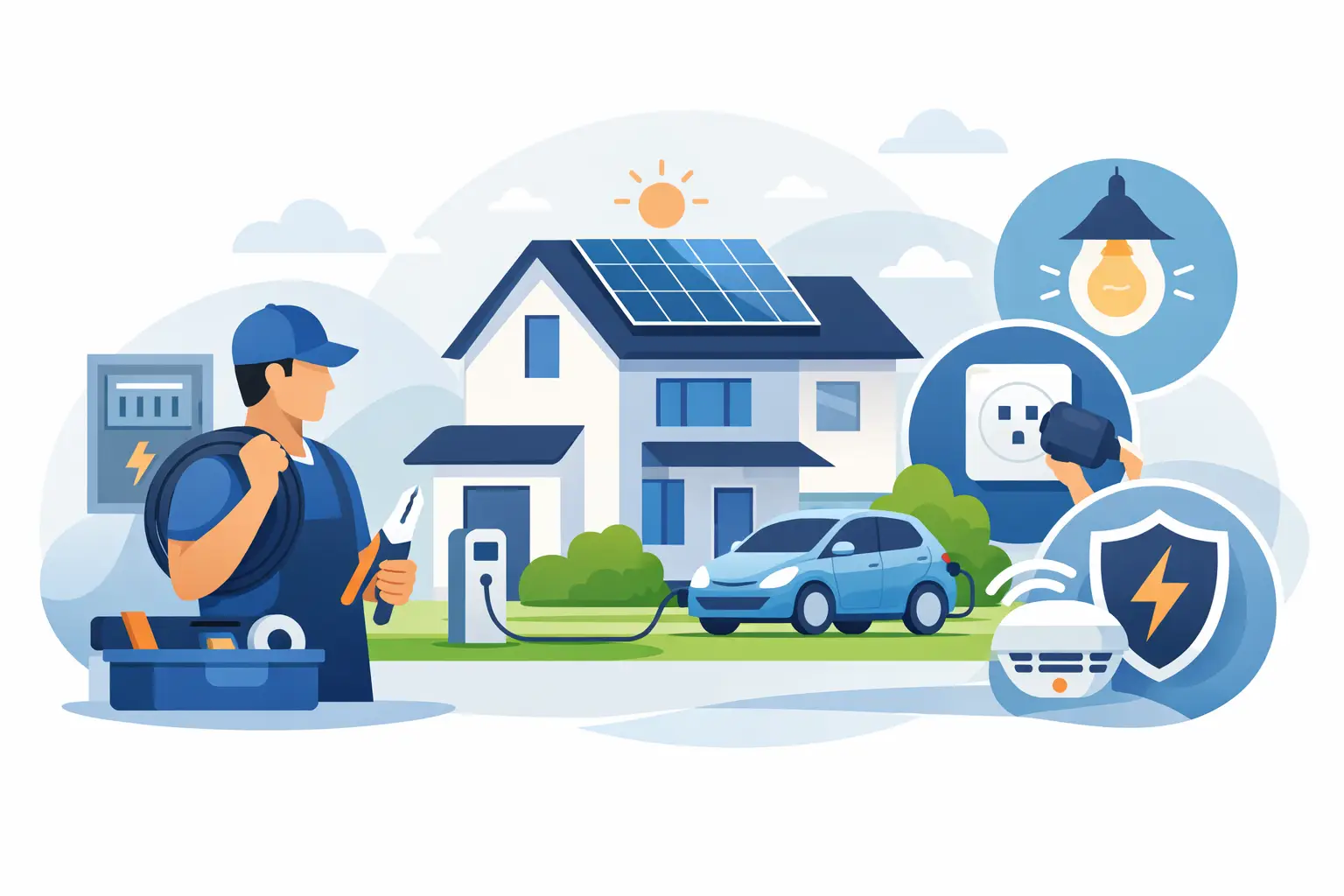
A flickering light might seem minor until it starts happening in three different rooms. An outlet that feels warm may still work, but it is often your home’s way of signaling a bigger issue. When homeowners start looking into types of electrical services, what they usually want is simple – a safe home, a clear explanation, and work that fixes the problem without creating a new one.
Residential electrical work covers more ground than many people realize. Some services are urgent, like diagnosing a dead circuit or replacing damaged wiring. Others are tied to home improvement projects, such as adding recessed lighting or upgrading an older panel to support modern appliances. And more homeowners now need electrical work that barely existed a decade ago, including EV charger installation and circuits for electrified home upgrades.
The main types of electrical services homeowners need
For most homes in Santa Rosa and across Sonoma County, electrical services fall into a few practical categories: repairs, upgrades, installations, and safety-focused improvements. The right service depends on the age of the home, the condition of the existing system, and how the household uses power day to day.
What matters most is accurate diagnosis. A tripping breaker could point to an overloaded circuit, a failing breaker, a wiring fault, or even an appliance issue. Those problems can look similar from the outside, but the repair approach is different in each case. That is why licensed residential electrical service is less about guesswork and more about finding the real cause before recommending work.
Electrical repairs
Repairs are often the service homeowners call for first. Common issues include outlets that stop working, switches that spark, breakers that trip repeatedly, lights that flicker, and sections of the house that lose power unexpectedly. Sometimes the repair is straightforward, like replacing a worn receptacle or faulty switch. Other times, the visible symptom leads back to a hidden wiring issue, a damaged connection, or an overloaded circuit.
Repairs are also where honesty matters most. Not every problem requires a major overhaul. In some homes, a targeted repair is the right answer and can restore safe, reliable performance without unnecessary expense. In others, repeated problems are a sign that patchwork fixes are no longer the cost-effective option.
Electrical panel upgrades and replacements
Panel work is one of the most important types of electrical services for older homes. Your panel distributes power throughout the house and protects circuits from overload. If it is undersized, outdated, damaged, or simply no longer keeping up with demand, the rest of the electrical system can suffer.
Homeowners often start thinking about a panel upgrade when they add a large load, such as an EV charger, hot tub, or new HVAC equipment. In other cases, the warning signs show up earlier – breakers tripping often, limited space for new circuits, or a panel with aging components that should be replaced for safety and reliability.
A panel replacement is not always needed, and that distinction matters. If the existing panel is in good condition and has enough capacity, a smaller modification may be all that is required. But if the home has an older system that was never designed for current electrical use, upgrading the panel can improve both safety and flexibility for future projects.
Outlet and switch installation or replacement
Outlets and switches are easy to overlook because they are everywhere. But they are one of the most common service categories in residential electrical work. Homeowners frequently need to replace worn outlets, add new outlets in more convenient locations, install dimmers, update switches, or bring older areas of the home up to current safety standards.
This type of work often comes up during remodels, but it also matters in everyday use. A loose outlet, a switch that crackles, or a receptacle that no longer holds a plug securely should not be ignored. In kitchens, bathrooms, garages, and outdoor areas, proper protection is especially important. The right devices and correct installation make a real difference in safety.
Lighting installation and upgrades
Lighting is one of the most visible electrical improvements a homeowner can make. Recessed lighting is especially popular because it changes how a space looks and functions without adding visual clutter. It can brighten kitchens, living rooms, hallways, and home offices while giving the room a cleaner finish.
But lighting work is not just cosmetic. Good lighting design can improve usability, reduce dark areas, and make a home feel more comfortable. The trade-off is that some projects are simple fixture swaps, while others involve new wiring, switch changes, or ceiling modifications. Homes with older wiring may also need added evaluation before installing new fixtures.
EV charger installation
EV charger installation has quickly become one of the most requested modern residential services. For homeowners who own or plan to buy an electric vehicle, charging at home is usually more convenient and more cost-effective than relying on public stations.
This service is more involved than many people expect. The charger itself is only part of the equation. The home’s panel capacity, available circuit space, location of the charger, and routing for wiring all affect the final scope of work. In some homes, installation is fairly direct. In others, a panel upgrade or load calculation may be necessary before the charger can be added safely.
That is where experience matters. A proper installation should fit how the homeowner actually uses the vehicle, not just meet the minimum technical requirement. Some households need faster charging. Others do well with a simpler setup that controls cost while still meeting daily driving needs.
Types of electrical services tied to home upgrades
Not every electrical project starts with a problem. Many begin because a homeowner wants to improve comfort, convenience, or property value.
Dedicated circuits for high-demand equipment
Certain equipment needs its own dedicated circuit to operate safely and reliably. Hot tubs are a common example. So are some large appliances, garage equipment, and newer home systems with specific power requirements.
Adding a dedicated circuit protects against overload and helps the equipment perform as intended. It also reduces the chance that one high-demand appliance will interfere with other parts of the home. The exact requirements depend on the equipment, the existing system, and local code, which is why this is not an area for shortcuts.
Support for remodels and room updates
Kitchen updates, bathroom remodels, garage conversions, and home office improvements often require electrical changes behind the scenes. That may include adding outlets, moving switches, installing new lighting, or expanding circuit capacity.
These projects work best when the electrical plan is treated as part of the design, not an afterthought. It is much easier to place lighting well, add convenient outlet locations, and account for appliance loads before walls are closed up. A remodel is also a good time to correct older electrical issues that have been tolerated for years simply because they were hidden.
How to tell which electrical service you need
Homeowners are rarely expected to know the exact service name before they call. What helps is noticing patterns. If power problems are isolated to one area, it may be a local repair. If the whole home feels strained by modern usage, panel work might be part of the answer. If the project involves a new appliance, vehicle charger, or hot tub, there is a good chance a dedicated circuit or capacity review is needed.
The key is not to self-diagnose too confidently. Electrical issues can overlap. A dead outlet might be a failed device, but it could also trace back to a tripped GFCI, a broken connection, or a larger circuit issue. Good service starts with a clear assessment and a recommendation that matches the actual condition of the home.
What homeowners should expect from residential electrical service
The best electrical service is not just technical. It is clear, professional, and respectful of the homeowner’s budget and priorities. That means explaining what is wrong, what is recommended, and where there is flexibility. Some situations call for immediate corrective work because safety is involved. Others allow for options, especially when a homeowner is planning future upgrades.
For a company like APG Electric Co., that standard means licensed workmanship, straightforward communication, and recommendations based on what the home needs – not what inflates the job. Homeowners should expect clean work, dependable scheduling, and solutions built to last, whether the project is a single repair or a larger upgrade.
Electrical systems do not need to be complicated from the homeowner’s perspective. If something is not working, if a project needs power added, or if the house is ready for an upgrade, the next step is simply getting the right set of experienced eyes on it. A good electrician should leave you with more confidence than confusion, and a home that is safer and better prepared for everyday life.