
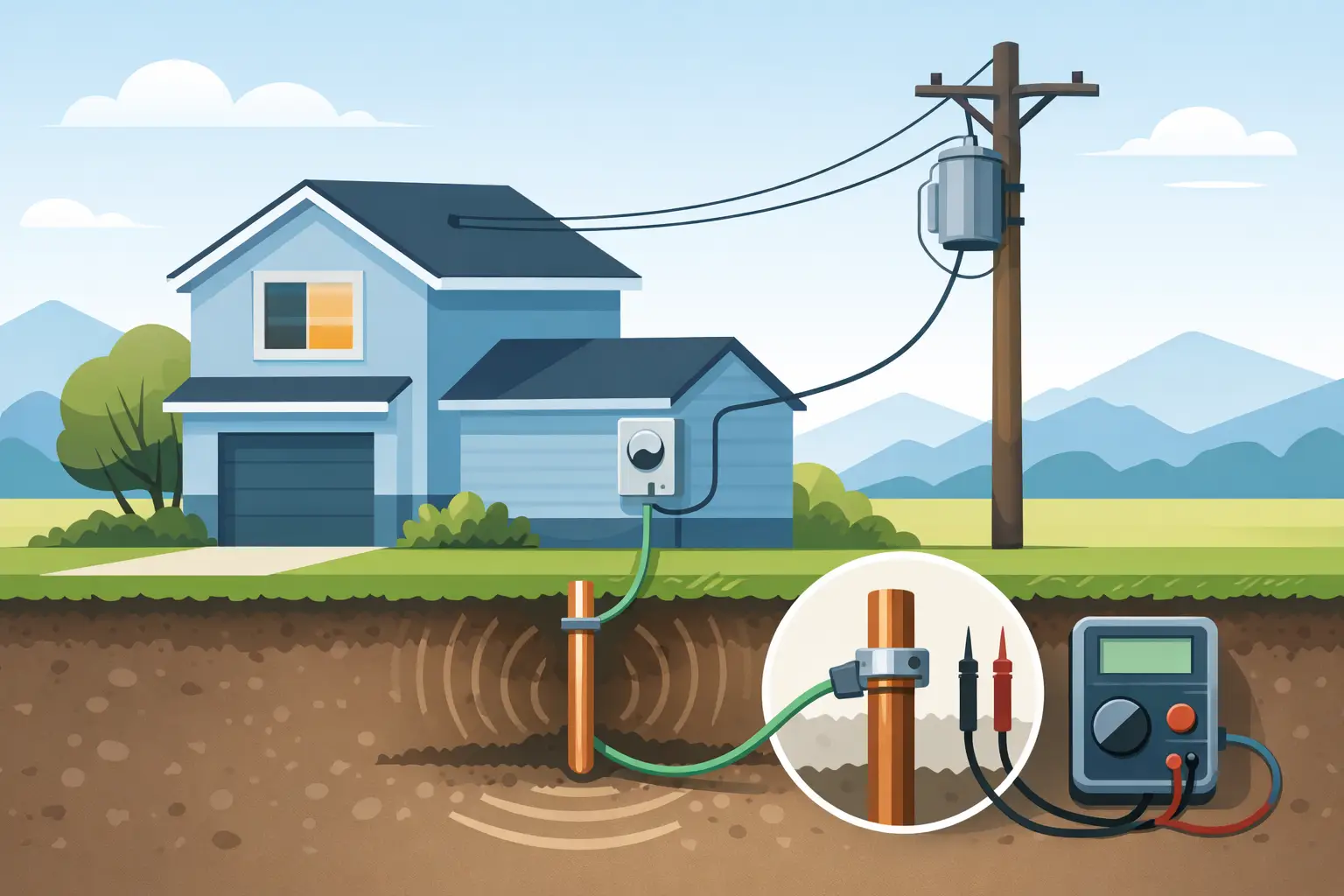
If you are searching for how to ground residential electrical service, the first thing to know is this: proper grounding is not a small add-on at the panel. It is a complete safety system that helps control fault current, stabilizes voltage to earth, and reduces the risk of shock, fire, and equipment damage. In many homes, especially older ones in Sonoma County, grounding problems are tied to aging panels, corroded connections, outdated water pipe assumptions, or service upgrades that were never fully brought up to current standards.
For homeowners, that usually means two things. First, grounding matters more than most people realize. Second, this is one of those jobs where the right result depends on the home, the service equipment, the soil conditions, and the existing electrode system. The broad idea is simple. The actual installation needs to be exact.
What grounding a residential electrical service actually means
When people talk about grounding, they often mix together grounding and bonding. They are related, but they are not the same thing.
Grounding connects the electrical service to the earth through a grounding electrode system. That system may include one or more ground rods, a concrete-encased electrode, a metal underground water pipe if it qualifies, or other code-recognized electrodes. Bonding connects metal parts that could become energized, such as enclosures, raceways, and metal piping systems, so they stay at the same electrical potential and allow faults to clear properly.
At the service equipment, the grounded conductor, usually the neutral, is bonded to the enclosure and connected to the grounding electrode system. Downstream subpanels are handled differently. In subpanels, neutrals and grounds must be separated. That detail is one of the most common mistakes in DIY electrical work.
How to ground residential electrical service the right way
The basic process starts with identifying what grounding electrodes already exist at the home. A newer home may have a concrete-encased electrode and metal water pipe bonding already in place. An older home may rely on a water pipe that no longer qualifies because part of the line has been replaced with plastic. Some homes have ground rods, but the conductor is undersized, damaged, or improperly terminated.
From there, the service grounding electrode conductor must be sized correctly based on the service conductors and installed continuously or with approved irreversible splices. It must terminate at the proper point in the service equipment and connect to the electrode system with listed clamps and fittings rated for the location and material.
If ground rods are used, they must be installed to code depth and spacing, and the connection must remain accessible unless the fitting is listed for direct burial without access. The grounding electrode conductor cannot just be wrapped around a rod or attached with a hardware-store clamp. The connection method matters because corrosion, loose terminations, and incompatible metals can quietly weaken the system over time.
The water service, if metal and in contact with earth for the required length, may also need to be bonded within the required distance from where it enters the home. In many homes, gas piping and other metal systems may require bonding as well. This is where residential grounding stops being a simple one-step task and becomes a full evaluation of the service.
Why older homes often have grounding issues
A lot of grounding problems are hidden. The lights still work. The breakers do not seem to trip for no reason. Nothing looks obviously wrong from across the garage. But once the panel cover comes off, the issues become clearer.
In older homes, it is common to find undersized grounding conductors, double-lugged bars, rusted clamps, missing bonding jumpers, or service changes that left parts of the original grounding system behind. It is also common to find assumptions that were acceptable decades ago but no longer provide a reliable grounding path today.
For example, a house may have once depended on a continuous metal water line to the street. If that line was replaced partially or fully with plastic, the effective grounding electrode may have been lost without the homeowner ever knowing it. The panel might still have a wire attached to a pipe, but that does not mean the system is actually grounded the way it should be.
Ground rods are not the whole story
Many homeowners assume grounding a service means driving one or two rods into the soil and calling it done. Sometimes rods are part of the solution. They are not the full picture.
A code-compliant grounding electrode system depends on what electrodes are present and required at the property. In some homes, the best grounding system includes multiple electrodes bonded together. In others, service upgrades trigger additional work to bring grounding and bonding into compliance. Soil resistivity, electrode type, service size, and equipment location all affect the final setup.
That is why two houses on the same street may not need identical grounding work. One may need new rods and water pipe bonding. Another may need correction at the service disconnect and separation of neutrals and grounds in a subpanel. Another may need a full panel upgrade because the existing equipment is not safe to modify.
Common mistakes homeowners should avoid
The biggest mistake is treating grounding like a general handyman task. Even a neat-looking installation can be wrong in ways that matter during a fault event.
Improper clamp selection is common. So is attaching grounding conductors to the wrong pipe, landing conductors under terminals not listed for multiple wires, or bonding neutral and ground together in places where they must stay isolated. Another issue is physical damage. Grounding electrode conductors routed too low on a wall or exposed near storage areas can be nicked, loosened, or removed during other work.
There is also a permitting and inspection side to consider. Service grounding work is often tied to panel replacements, service changes, or corrective upgrades that should be evaluated as part of a larger electrical scope. Doing one piece halfway can leave the home with a mixed system that is harder to troubleshoot later.
When a panel upgrade and grounding upgrade go together
This topic comes up often during service panel replacements. If a home is upgrading for an EV charger, air conditioning, a hot tub, or added circuits, the grounding and bonding system should be reviewed at the same time.
That is not just about passing inspection. A newer panel connected to an outdated or incomplete grounding electrode system is not giving you the full safety benefit of the upgrade. Modern electrical loads can expose weaknesses in old service equipment, and the grounding system needs to support the service as it exists now, not as it existed 40 years ago.
For many homeowners, this is the most cost-effective moment to correct grounding issues. The electrician already has access to the service equipment, can evaluate the entire setup, and can make sure the panel, grounding electrodes, bonding, and conductor terminations all work together as one system.
Signs your home may need grounding evaluation
You do not need obvious sparks or constant breaker trips for grounding to be worth a closer look. A grounding review is smart if your home has an older panel, recent plumbing changes, a planned service upgrade, or signs of corrosion around the service equipment.
It is also worth checking if you have had major electrical additions over the years but no documented update to the service grounding system. Homes with mixed old and new wiring, detached structures, or previous unpermitted work often need more than a quick visual check.
If your electrician is upgrading outlets, installing a dedicated circuit, or replacing a panel, that is a good time to ask whether the grounding electrode system and bonding connections are correct and current.
Why this is a licensed electrician job
Understanding how to ground residential electrical service is useful as a homeowner because it helps you ask better questions and recognize why the work matters. Actually installing or correcting that system is different.
Grounding and bonding errors are often subtle, and they can sit unnoticed until there is a fault, surge event, or equipment failure. The right electrician will not just add a rod and leave. They will evaluate the service equipment, identify existing electrodes, verify conductor sizing, inspect bonding points, and make recommendations that fit the home instead of selling a one-size-fits-all fix.
That is especially important in homes where electrical systems have been altered over time. Honest diagnosis matters. So does clean workmanship, proper permitting when required, and using quality components that will hold up for years.
For homeowners in Santa Rosa and Sonoma County, grounding is one of those systems you hope never has to prove itself. But when a fault occurs, when a surge hits, or when service equipment needs to do its job under stress, proper grounding is what helps protect the home behind the panel. If you are unsure whether your service is grounded correctly, getting a licensed electrician to inspect it now is a lot easier than finding out later that it was never right to begin with.