
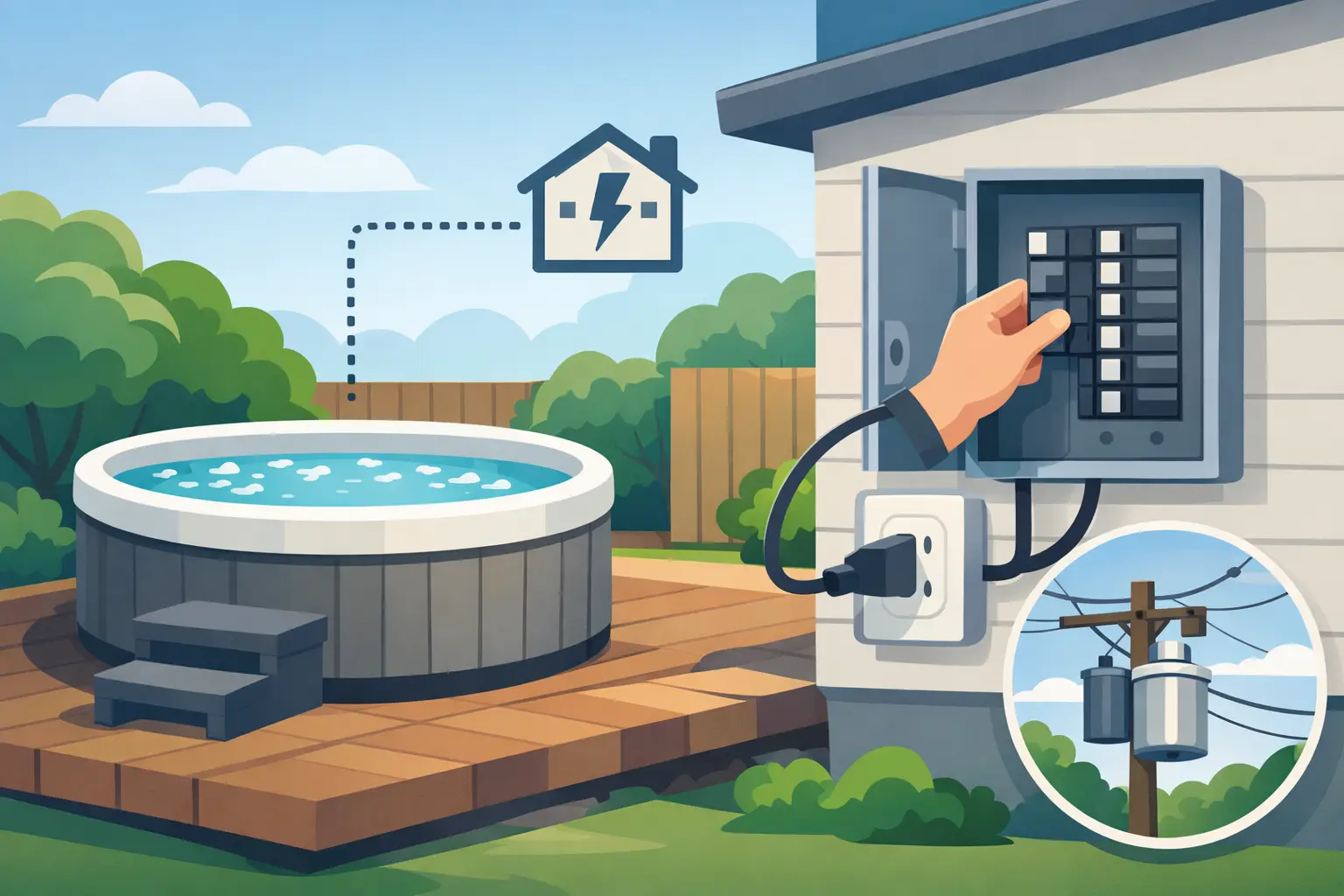
A new hot tub can turn a Santa Rosa backyard into the place everyone wants to be – until the electrical work becomes an afterthought. Homeowners often ask, do hot tubs need dedicated circuits? For most permanently installed hot tubs, the answer is yes. The exact circuit size and setup depend on the spa’s manufacturer specifications, but sharing power with household outlets or lighting is rarely appropriate and can create a serious safety issue.
A properly designed hot tub circuit is not just about keeping the water warm and the jets running. It protects the equipment, helps prevent nuisance breaker trips, and gives your home’s electrical system the capacity it needs to operate safely.
Do Hot Tubs Need Dedicated Circuits? Usually, Yes
Most hardwired hot tubs require a dedicated branch circuit. “Dedicated” means that circuit serves the hot tub only – not patio lights, a garage refrigerator, outdoor receptacles, or any other appliance. The circuit runs from your electrical panel to the required disconnecting means near the spa, with the proper overcurrent protection and ground-fault protection.
Hot tubs place a substantial and variable demand on a home’s electrical system. Pumps, heaters, blowers, lights, control systems, and circulation equipment may all operate at different times. When the heater and jet pumps run together, the electrical load can rise quickly. A shared circuit may overload, trip frequently, or leave the spa unable to perform as designed.
The manufacturer’s installation manual is the starting point. It identifies the required voltage, breaker size, wire specifications, and whether the unit needs one circuit or more than one. Electrical code requirements and local permitting rules also apply. A licensed electrician reviews all of these factors before installation rather than guessing based on the tub’s physical size or price.
The common exception: smaller plug-in spas
Some smaller portable spas are designed to plug into a standard 120-volt receptacle. These units are often called plug-and-play models. Even then, the manufacturer may require that receptacle to be on a dedicated circuit, and it must have the correct GFCI protection.
A plug-in spa should never be powered through an extension cord, power strip, adapter, or outlet of uncertain condition. Outdoor cords and connections are exposed to moisture, foot traffic, weather, and heat. They are not a substitute for a correctly installed circuit.
Why a Dedicated Hot Tub Circuit Matters
A hot tub combines water, people, metal components, heating elements, and electricity in one area. That is why electrical rules for spas are more specific than rules for many ordinary household appliances. The right installation includes equipment selected and placed to reduce shock risk and to make emergency shutoff practical.
GFCI protection is a major part of the setup. A ground-fault circuit interrupter monitors the flow of electricity and shuts power off rapidly if it detects an unintended path to ground. This protection is especially critical around water, but it does not replace proper wiring, grounding, bonding, or installation practices.
A dedicated circuit also helps protect the hot tub itself. Low voltage caused by an undersized circuit, improper wire, or overloaded panel can be hard on motors and electronic controls. Repeated breaker trips are not a normal inconvenience to ignore. They are a signal that the circuit or equipment needs professional evaluation.
There is also the practical side. If your spa shares a circuit with another device, a single overloaded outlet or failed appliance could shut down the tub. In colder Sonoma County evenings, a loss of power can affect water temperature and, in some cases, create a risk of damage if freezing conditions occur.
What Does a Hot Tub Electrical Installation Include?
The breaker size is often what homeowners focus on, but a safe hot tub installation is a complete system. The electrician confirms the spa’s electrical rating and plans the installation around both the manufacturer instructions and applicable code requirements.
For a typical 240-volt hot tub, the work may include a new dedicated breaker in the main electrical panel, properly sized copper conductors, suitable conduit or cable protection, GFCI protection, and a weather-rated spa disconnect located within sight of the tub but at a safe required distance from the water. The installation also addresses bonding, which connects certain metal parts to reduce voltage differences that could create a shock hazard.
The final requirements can vary based on the unit, the location of the tub, and the age and capacity of the home’s electrical system. A spa on a concrete patio near the panel may be relatively straightforward. A tub on a distant deck, under a pergola, or beside a pool may require more planning, trenching, conduit routing, or coordination with other site features.
Panel capacity can change the scope of work
A dedicated circuit only works if the panel can safely support the additional load. Many Sonoma County homes have older electrical panels or panels that have gradually filled up with additions such as air conditioning, remodeled kitchens, EV chargers, or workshop equipment.
An electrician performs a load calculation to determine whether the existing service and panel have adequate capacity. Sometimes the panel has room and the installation can move forward without major changes. Other times, a subpanel, panel upgrade, or service upgrade may be the safer long-term recommendation.
That does not mean every hot tub requires a panel replacement. Honest electrical planning means identifying what your home actually needs, explaining the options clearly, and avoiding unnecessary work. The answer should come from the equipment rating and a proper assessment of your system, not a one-size-fits-all sales pitch.
Avoid These Hot Tub Electrical Shortcuts
Hot tub wiring is not a project for improvised solutions. A new circuit may look simple from the outside, but the safety details happen at the panel, within the wiring method, at the disconnect, and around the spa equipment.
Do not rely on a standard exterior outlet simply because it is nearby. Do not install a larger breaker to stop repeated tripping. A larger breaker can allow conductors to overheat if the wiring is not rated for it. Do not use extension cords, bury unapproved cable, or place a disconnect wherever it is most convenient without checking required clearances.
It is also wise to be cautious about pre-owned hot tubs. The electrical label and manual may be missing, damaged, or inconsistent with modifications made by a prior owner. Before connecting power, have the spa’s requirements identified and inspect the condition of its wiring, control pack, and bonding provisions.
When to Call a Licensed Electrician
Call before the hot tub is delivered if possible. Early planning allows the circuit route, panel capacity, permit needs, and disconnect location to be resolved before a large spa blocks access to the work area. It also helps homeowners get a more accurate estimate instead of discovering added requirements after installation day.
You should also call an electrician if an existing hot tub trips the breaker, loses power when the jets or heater run, produces a burning smell, has damaged wiring, or was connected by a previous owner without clear documentation. Turn off power and avoid using the spa until the issue has been inspected.
For homeowners in Santa Rosa and Sonoma County, APG Electric Co. can evaluate your panel, review the hot tub specifications, and install a properly sized dedicated circuit with safety and long-term reliability in mind. The goal is straightforward: clear recommendations, quality materials, and electrical work that lets you enjoy your backyard without wondering what is happening behind the panel door.
A hot tub should be a place to relax, not another reason to watch the breaker box. Plan the electrical work before the first fill, and you can enjoy the warm water with far more confidence.