935 Bush Street Santa Rosa, CA 95404
License #998700
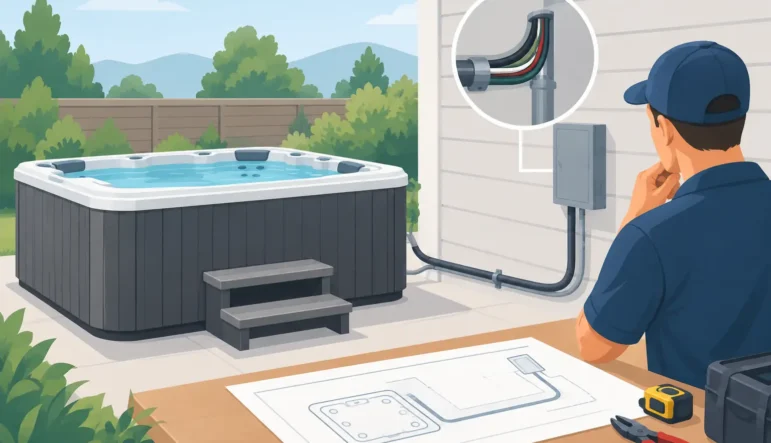
A new hot tub should feel like a relaxing upgrade, not the project that exposes a weak electrical panel or creates a last-minute permit problem. Knowing how to plan hot tub wiring before the delivery date helps protect your home, keeps the installation on schedule, and gives you a clear picture of the work involved.
For most Sonoma County homeowners, a hot tub requires more than adding a nearby outlet. It needs a properly sized dedicated circuit, GFCI protection, an approved disconnecting means, and a careful review of the home’s existing electrical capacity. The right plan starts with the spa’s specifications and ends with an installation that is safe, code-compliant, and built to last.
The hot tub’s manufacturer label and installation manual are the starting point. Do not choose a breaker size based on what a neighbor installed or what seems typical online. The nameplate tells the electrician what the equipment actually requires, including voltage, maximum current draw, wire requirements, and whether the unit needs a 120-volt or 240-volt connection.
Many full-size portable spas use a 240-volt dedicated circuit, often in the 50- to 60-amp range. Smaller plug-in models may operate on 120 volts, but they still need to be evaluated carefully. A plug-in spa can sound simpler, yet an outdoor receptacle may not be positioned or protected appropriately for the installation.
Features matter. More pumps, stronger heaters, lighting packages, audio equipment, and dual-zone controls can change the electrical demand. If you are still shopping for a spa, provide the model information before purchasing. That lets your electrician identify likely electrical needs early rather than discovering a mismatch after the unit arrives.
An available breaker space is not the same thing as available electrical capacity. A panel may have an empty slot but still be close to its safe service load because of major appliances, HVAC equipment, an electric range, EV charging, or other household demand.
A licensed electrician should evaluate the panel, the main service rating, and the home’s calculated load. This review determines whether the hot tub can be added as planned or whether a panel upgrade, subpanel, or load-management solution should be considered.
This is especially relevant in older Santa Rosa and Sonoma County homes. Some properties have aging panels, limited service capacity, crowded wiring, or equipment that no longer supports the level of electrification homeowners expect. A hot tub circuit can be straightforward in one house and a larger electrical project in another. A clear assessment upfront prevents surprises and avoids overbuilding when a targeted solution will do the job.
A hot tub should have its own circuit. It should not share power with patio lighting, garage receptacles, landscape equipment, or another high-demand appliance. Dedicated wiring reduces nuisance tripping, helps protect the equipment, and gives the electrician a clean, code-appropriate installation path.
The best wiring route is rarely determined by the shortest visible distance from the panel to the hot tub. It depends on access, protection from physical damage, the location of walls and crawlspaces, existing utilities, landscaping, and where the disconnect must be installed.
During a site visit, an electrician may inspect the panel location, the route through the attic or crawlspace, the exterior wall penetrations, the spa pad, and any planned decking or fencing. If trenching is needed for underground wiring, that work should be planned before new concrete, pavers, irrigation, or landscaping make access more difficult and expensive.
Give attention to the spa’s service side as well. Hot tubs need access for future maintenance. Placing the unit tightly against a wall or enclosing its equipment compartment can make routine service harder and may complicate the electrical installation. The electrical disconnect must also be accessible while meeting required placement rules, so it can be used safely without being within unsafe reach of the water.
Water and electricity demand a higher level of protection. A hot tub circuit requires ground-fault circuit-interrupter protection, commonly called GFCI protection. This equipment is designed to quickly shut off power when it detects an imbalance that could indicate current flowing where it should not.
The setup usually includes a weather-rated spa disconnect located within sight of the hot tub and positioned according to applicable electrical code requirements. Depending on the equipment and layout, the disconnect may contain the GFCI breaker, while other installations use GFCI protection at the main panel. The correct arrangement depends on the hot tub manufacturer’s instructions, the electrical equipment, and the installation conditions.
Outdoor electrical components also need to be rated for their environment. That includes enclosures, fittings, conduit, conductors, and covers. Premium materials matter here because outdoor wiring is exposed to moisture, sunlight, temperature changes, and possible physical damage over time.
Grounding and bonding are related, but they are not interchangeable. Grounding provides a path intended to help clear certain faults. Bonding connects conductive parts so they remain at the same electrical potential, reducing shock risk around the spa area.
The exact bonding requirements can vary based on the type of hot tub, its listing, nearby metal components, and local code requirements. Metal fencing, handrails, equipment, or structures near the water may need to be considered. This is one reason hot tub wiring is not a good place for guesswork or a generic wiring diagram.
A licensed electrician will verify the manufacturer’s instructions and inspect the entire installation area, not just the circuit breaker. That detail-oriented approach is what helps turn a functional connection into a safe residential installation.
Electrical work for a hot tub commonly requires a permit and inspection. Requirements can vary by city, county, and the scope of work, particularly when the project includes a service upgrade, new subpanel, trenching, or structural changes around the spa.
Permits are not simply paperwork. They create a record that the installation was reviewed against current safety standards. They can also matter when selling a home, making an insurance claim, or troubleshooting a future electrical concern.
Build permit timing into the project calendar. If the hot tub delivery is fixed, schedule the electrical evaluation early enough to address panel capacity, order needed equipment, and complete permit steps without rushing the work. A reputable electrician can explain what the local process is likely to involve and handle the electrical scope professionally.
A useful estimate begins with good information. If available, share the hot tub make and model, the installation manual, the planned location, and photos of the electrical panel and proposed spa area. Mention other significant electrical loads in the home, especially EV chargers, air conditioning, electric heat, solar equipment, or recent appliance upgrades.
It also helps to explain your timeline. Are you choosing between two hot tub models? Has the spa already been delivered? Is the patio still under construction? These details affect the best wiring route and whether it makes sense to coordinate electrical work with excavation, decking, or landscape work.
The goal is not to make the project more complicated than necessary. It is to identify the real requirements, explain the options clearly, and install the right equipment once. APG Electric helps homeowners throughout Santa Rosa and Sonoma County plan hot tub circuits with licensed workmanship, honest recommendations, and attention to the details that protect both the home and the people enjoying it.
Before you schedule delivery, schedule the electrical assessment. A little planning at the beginning can keep your first evening in the hot tub focused on relaxing instead of wondering whether the power is ready.
