935 Bush Street Santa Rosa, CA 95404
License #998700
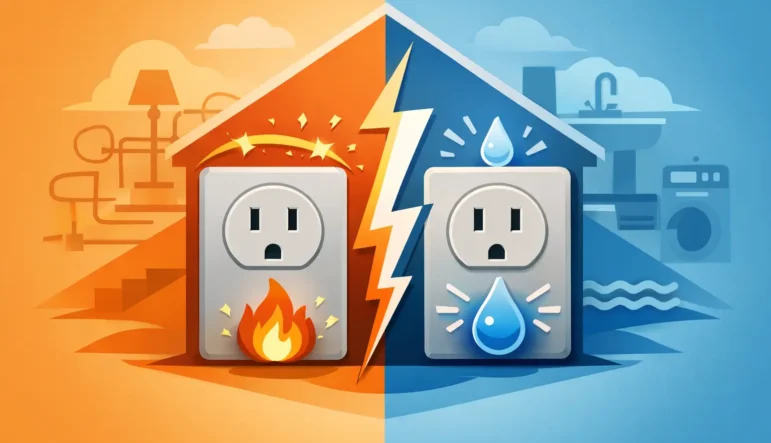
A breaker trips in the kitchen, a bathroom outlet will not reset, or a new appliance keeps shutting off a circuit. In situations like these, understanding AFCI versus GFCI protection helps homeowners know what their electrical system is trying to tell them. These two safety devices can look similar at the panel or outlet, but they protect against very different hazards.
For Sonoma County homeowners, the practical question is not which device is better. Many homes need both, often on the same circuit. The right protection depends on the room, the wiring, the equipment being used, and the electrical code requirements that apply to the project.
A GFCI, or ground-fault circuit interrupter, is designed to reduce the risk of electric shock. It monitors the electricity flowing out on the hot wire and returning on the neutral wire. If it detects even a small imbalance, it can shut off power quickly.
That imbalance may mean electricity is taking an unintended path – through water, damaged equipment, a grounded surface, or a person. GFCI protection is especially valuable in areas where moisture and electricity may meet.
An AFCI, or arc-fault circuit interrupter, is designed to reduce fire risk from dangerous electrical arcing. An arc occurs when electricity jumps across a gap caused by damaged insulation, a loose connection, a worn cord, or failing wiring. Some arcing is normal, such as when a switch operates or a motor starts. AFCI devices are built to recognize patterns associated with hazardous arcs and disconnect power before heat can build up inside walls, outlets, or cords.
Put simply, GFCIs focus on shock hazards. AFCIs focus on fire hazards. One does not replace the other.
GFCI protection is commonly required where water, dampness, or grounded surfaces increase the chance of shock. In a typical home, that often includes bathrooms, kitchens, garages, laundry areas, unfinished basements, crawl spaces, exterior receptacles, and locations near pools or hot tubs.
The exact requirements depend on the applicable code and the scope of the work. A kitchen outlet near the sink is an obvious example, but GFCI protection may also be required for countertop receptacles farther from the sink. Garage outlets and outdoor outlets generally need it because concrete, moisture, and weather create a higher-risk environment.
A GFCI can be installed as a receptacle with TEST and RESET buttons, or as a GFCI circuit breaker in the electrical panel. Both approaches can be appropriate. A breaker can protect the full circuit, while a properly wired GFCI receptacle can protect itself and downstream outlets. The best choice depends on access, the condition of the circuit, and what needs protection.
If a GFCI will not reset, do not assume the device itself has failed. The cause could be moisture in an outdoor box, a damaged appliance, a wiring issue downstream, or a problem with a connected load. Repeated resetting without finding the cause can leave a real problem unresolved.
AFCI requirements are generally associated with living spaces where cords, furniture, aging wiring, and everyday appliance use can conceal damaged connections. Depending on the code edition and the work being performed, AFCI protection may apply to circuits serving bedrooms, living rooms, family rooms, dining rooms, hallways, closets, and similar finished areas.
AFCI protection is often provided by a breaker in the electrical panel. That makes sense because it can monitor the entire branch circuit, including wiring concealed behind walls. In certain situations, an AFCI receptacle may be used as part of a compliant protection strategy, but the correct solution should be determined by a licensed electrician who can evaluate the circuit and local requirements.
Older Sonoma County homes can benefit from careful AFCI evaluation during a panel upgrade, remodel, or electrical repair. Aging insulation, loose connections, improperly modified circuits, and damaged cords can all create conditions that AFCI technology is meant to address. That does not mean every older home needs a full rewire. It means the wiring should be assessed honestly, with recommendations based on its actual condition.
Some areas of a home present both shock and fire risks. A laundry area, kitchen circuit, or finished basement can be examples, depending on the circuit and the current electrical code requirements. In those cases, the circuit may need both AFCI and GFCI protection.
This is commonly handled with a dual-function circuit breaker. A dual-function breaker provides both arc-fault and ground-fault protection from the panel. It can be a clean solution when a panel is being upgraded or when a new circuit is installed for a remodel.
Still, equipment selection is not always as simple as choosing the most advanced breaker. Compatibility matters. The breaker must be listed for the specific panel, installed correctly, and matched to the circuit conductors and load. Using the wrong breaker brand or attempting a panel modification without proper expertise can create a serious safety issue.
A tripped protective device has done its job by interrupting power. The next step is determining why it tripped.
A GFCI may trip because of a wet exterior outlet, a failing refrigerator or disposal, a damaged power tool, a faulty heating element, or a neutral-to-ground connection problem. It may also trip when an appliance has normal leakage that becomes excessive as the appliance ages.
An AFCI may trip because of a loose outlet connection, a damaged extension cord, a pinched wire, a failing appliance motor, or arcing at a switch or receptacle. Sometimes the issue is a compatibility concern with older electronic equipment, but that should not be the first assumption. A professional diagnosis should rule out damaged wiring and unsafe connections before treating a trip as a nuisance.
If one circuit trips repeatedly, avoid swapping breakers, bypassing protection, or replacing a GFCI with a standard receptacle. Those actions can conceal the warning rather than solve the problem. Unplug portable devices on the circuit and see whether the device resets. If it trips again with loads removed, or if you notice heat, buzzing, burning odors, discoloration, or flickering lights, leave the circuit off and arrange an inspection.
Electrical upgrades create a good opportunity to bring affected circuits up to current safety standards. A new EV charger, hot tub circuit, kitchen renovation, panel replacement, or added lighting may involve new wiring and new protection requirements.
For example, EV charging equipment has its own installation requirements related to circuit sizing, breaker type, wiring method, and location. A hot tub installation has especially strict rules because water and electrical equipment are in close proximity. These are not projects where a generic answer or an online wiring diagram is enough.
During a panel upgrade, a licensed electrician can identify which circuits require AFCI, GFCI, or dual-function protection under the code governing the project. They can also uncover common issues found in older panels, such as doubled-up conductors where they do not belong, deteriorated breakers, missing grounding, overloaded circuits, or unmarked wiring.
At APG Electric Co., the goal is to explain what is required, what is recommended for safety, and what can reasonably be planned for later. Homeowners deserve clear options, not unnecessary upselling.
Test GFCI receptacles periodically using the built-in TEST button, then press RESET to restore power. If the device will not reset or shuts off again immediately, treat that as a reason to investigate. AFCI breakers may also have a test function, but homeowners should follow the manufacturer’s instructions and avoid removing a panel cover.
Pay attention to patterns. Does the circuit trip when you use one particular appliance? Does an outdoor outlet stop working after rain? Do lights flicker when a switch is touched? Details like these help an electrician diagnose the cause efficiently and may prevent a small wiring issue from becoming a larger repair.
The most useful protection is protection that is correctly installed, properly matched to the circuit, and never bypassed. When your home gives you a warning through a tripped AFCI or GFCI, taking it seriously is one of the simplest ways to protect the people and property you care about.
