935 Bush Street Santa Rosa, CA 95404
License #998700
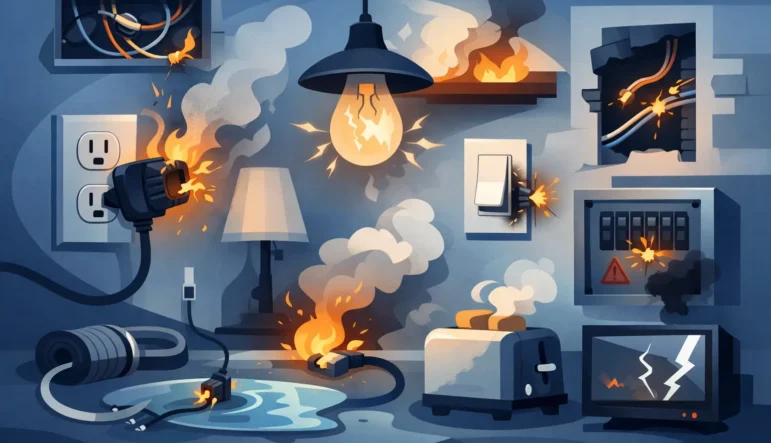
A light that flickers when the refrigerator starts may seem like a minor annoyance. A warm outlet or a breaker that trips repeatedly is different. These can be signs of unsafe electrical wiring, and they deserve prompt attention before a small electrical issue becomes damage to your home, an equipment failure, or a fire risk.
Many Sonoma County homes have electrical systems that have been added onto over decades. A panel may have been adequate when the home was built but strained by modern appliances, air conditioning, home offices, EV charging, or a remodeled kitchen. Homeowners do not need to diagnose the wiring themselves. They do need to recognize when the system is asking for a licensed electrician to take a closer look.
A circuit breaker is designed to shut off power when it detects an overload, short circuit, or ground fault. One trip after running too many high-demand appliances on the same circuit can happen. Resetting a breaker that continues to trip, however, is not a solution.
Repeated trips can point to a damaged wire, a failing appliance, a loose connection, or a circuit that no longer has enough capacity for the load it serves. Avoid repeatedly resetting the breaker or replacing it with a larger one. A larger breaker on undersized wiring can allow wires to overheat before the breaker trips.
An occasional flicker during a neighborhood power event is not always cause for concern. But lights that dim when a microwave, vacuum, garage door opener, or refrigerator starts can signal a voltage drop or an overloaded circuit. Flickering that affects multiple rooms may also indicate a loose connection at the panel, meter, or service equipment.
Pay particular attention to lights that become noticeably brighter and then dimmer. That pattern can be associated with a serious connection problem and should be evaluated quickly. If you notice sparking, smoke, or a burning smell along with changing light levels, turn off power if it is safe to do so, leave the area, and call for emergency help.
Outlets, switches, faceplates, and plugs should not be hot to the touch. Mild warmth from a device charger can be normal at the charger itself, but heat at the wall outlet, switch, or plug connection is a warning sign.
Heat can develop when a connection is loose, a wire is damaged, or a circuit is carrying more current than it should. Discoloration, melted plastic, buzzing, or a faint burning odor makes the concern more urgent. Stop using that outlet or switch and have the circuit inspected rather than covering the symptom with a new faceplate.
Brown or black marks around an outlet, switch, panel, or plug are not cosmetic issues. They may indicate arcing, which occurs when electricity jumps through air between poor connections. Arcing creates intense heat and can ignite nearby materials.
Cracked receptacles, loose outlets that move in the wall, missing cover plates, and plugs that fall out easily also require repair. These conditions can expose energized components or prevent a plug from making a secure connection. In homes with children or pets, damaged devices create an added shock hazard.
Electrical wiring should be quiet and odor-free. A persistent buzzing sound from an outlet, switch, fixture, or electrical panel can be caused by a loose connection, arcing, or a failing component. A sharp odor similar to hot plastic or burning insulation deserves immediate attention.
Do not assume the smell will go away after turning off a light or unplugging an appliance. If the source is unclear, turn off the affected circuit if you can identify it safely. If there is smoke, visible sparks, or active fire, get everyone out of the home and call 911.
Extension cords are meant for temporary use, not as permanent wiring. When a room depends on power strips and extension cords because there are not enough outlets, the electrical layout may no longer meet how the space is used.
This is common in older homes, home offices, workshops, and entertainment areas. A quality surge protector can help protect electronics from transient surges, but it does not add circuit capacity. Adding properly located outlets or a dedicated circuit is often the safer long-term answer.
Ground-fault circuit interrupter, or GFCI, protection is intended to reduce shock risk in areas where electricity and moisture may meet. Bathrooms, kitchens, garages, laundry areas, outdoor locations, and spaces near sinks are common examples.
A GFCI receptacle has test and reset buttons, though protection can also be provided by a breaker in the panel. If a GFCI will not reset, trips without an obvious reason, or does not cut power when tested, do not ignore it. The issue may be the device itself, downstream wiring, or a condition on the circuit that needs professional diagnosis.
Your electrical panel is the control center for your home. Rust, corrosion, moisture, buzzing, a hot panel cover, missing breaker labels, or breakers that will not stay reset all warrant an inspection. A panel that feels warm can be especially concerning because high-resistance connections can generate heat inside the enclosure.
Age alone does not automatically mean a panel needs replacement. Some older panels remain serviceable, while others have known reliability concerns or lack the capacity needed for today’s loads. The right recommendation depends on the panel’s condition, its available capacity, the wiring connected to it, and your plans for the home.
Older wiring methods are not all equally risky, and they should not be judged by appearance alone. Still, certain systems deserve a careful professional evaluation. Knob-and-tube wiring may lack a grounding conductor and can be compromised by insulation or past alterations. Aluminum branch-circuit wiring requires properly rated connections and special attention because loose or incompatible terminations can overheat.
Frayed insulation, exposed wire, rodent damage, amateur splices, and open junction boxes are clear repair concerns regardless of the wiring’s age. Never touch exposed wiring or open an electrical panel to investigate. What looks like a simple repair can involve energized components and hidden damage.
Electrical problems often appear after a home changes, not because anyone did something wrong, but because demand increased. A new induction range, hot tub, heat pump, workshop tool, or Level 2 EV charger can place significant load on a system designed for a different era.
A dedicated circuit may be needed for a specific appliance, and a panel upgrade may be appropriate if there is limited capacity. The goal is not to sell more work than necessary. It is to verify that the wiring, breaker size, panel capacity, and equipment installation work safely together.
Start by treating heat, odor, sparks, and repeated breaker trips as safety concerns rather than inconveniences. Stop using the affected outlet, switch, or appliance. If you can do so safely, turn off the circuit at the panel. Do not remove outlet covers, force a breaker to stay on, or attempt a repair with online instructions.
For an immediate hazard such as smoke, flames, or a strong burning smell, leave the home and call 911. For non-emergency concerns, schedule an evaluation with a licensed residential electrician. A proper visit should include identifying the actual cause, explaining the condition in plain language, and presenting repair options that fit the home and the budget.
Electrical safety is not about worrying over every flicker or replacing equipment without a reason. It is about responding early when your home shows a pattern of trouble. APG Electric helps Santa Rosa and Sonoma County homeowners understand what is happening behind the walls, make informed repair decisions, and protect the electrical system their daily lives depend on.
When something feels off, trust that instinct. A timely inspection can turn an uncertain warning sign into a clear, practical plan for a safer home.
