
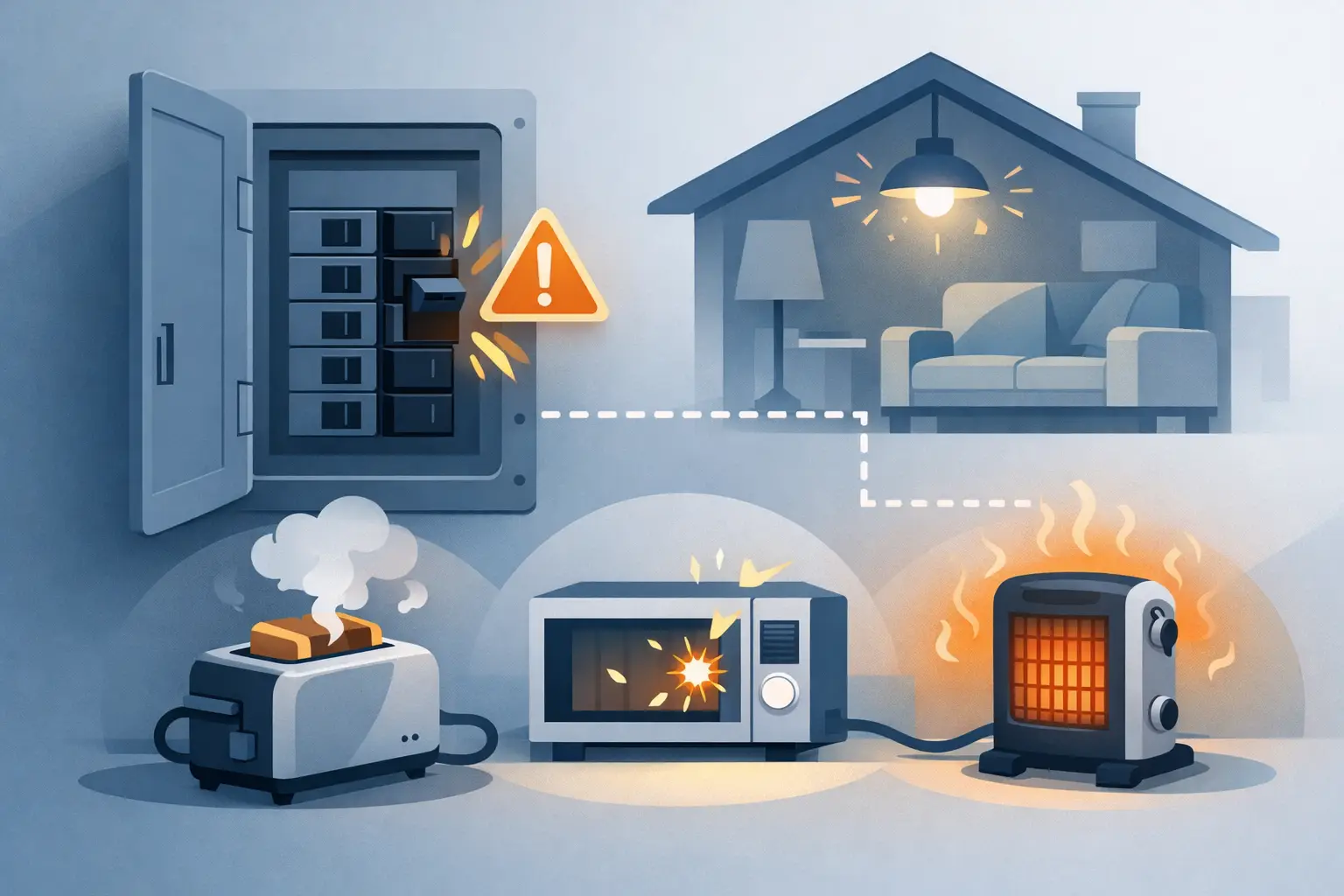
A breaker that trips once may have done exactly what it was designed to do. A breaker that trips again and again is a message from your electrical system that should not be ignored. If you are asking, why do breakers trip repeatedly, the answer can range from an overloaded circuit to a damaged wire or failing appliance. The safe next step depends on when it trips, what is plugged in, and whether there are any warning signs such as heat, buzzing, or burning odors.
Circuit breakers protect your home by shutting off power when they sense a condition that could overheat wiring or create a shock or fire hazard. Resetting a breaker without identifying the cause can turn a useful safety feature into a recurring frustration – and, in some cases, allow a serious problem to get worse.
Why Do Breakers Trip Repeatedly? Common Causes
The timing of the trip provides valuable clues. Does it happen only when you run the microwave and toaster together? Does it trip the instant you plug in one appliance? Does it occur after rain or when an outdoor outlet is used? Those details help narrow down the source.
The circuit is overloaded
Overloads are among the most common reasons for repeated breaker trips in homes. Every circuit is designed to carry a limited amount of electricity. When too many devices draw power from the same circuit at the same time, the breaker shuts off before the wiring can overheat.
Kitchens, garages, laundry rooms, and older homes are frequent trouble spots. A portable space heater, hair dryer, air fryer, toaster oven, vacuum, or window AC unit can draw a substantial amount of power on its own. Add other appliances sharing that circuit, and the load can exceed what it was built to handle.
An overload usually happens while several items are operating, not the instant a single device is plugged in. Unplugging or turning off some items may stop the immediate problem, but recurring overloads often mean the home needs another circuit, improved outlet placement, or a panel evaluation. Using extension cords and power strips is not a permanent answer for a circuit that cannot support the way you use the space.
A faulty appliance or cord is causing the trip
If the breaker trips whenever you use one specific appliance, suspect that appliance, its cord, or the outlet it uses. Internal damage can create a short circuit or ground fault that causes a rapid shutdown. Common examples include older refrigerators, garbage disposals, washing machines, power tools, outdoor equipment, and heating appliances.
Do not keep testing a suspect appliance by repeatedly resetting the breaker. Unplug it, leave it disconnected, and see whether the circuit remains stable with normal use. If it does, have the appliance repaired or replaced as appropriate. If the breaker still trips with everything unplugged, the issue is more likely in the outlet, wiring, breaker, or another connection on that circuit.
There is a short circuit or damaged wiring
A short circuit occurs when a hot wire contacts a neutral wire or another unintended conductive path. This can create a sudden surge of current, causing the breaker to trip immediately. A damaged cord can cause a short, but problems can also exist behind the wall, inside an outlet box, at a light fixture, or in an electrical junction.
Wiring damage is more likely in homes with aging electrical systems, recent remodeling work, rodent activity, moisture exposure, or outlets that have been loose or damaged for a long time. A breaker that trips instantly, especially after you reset it with all portable devices unplugged, requires professional diagnosis. This is not a situation to solve by installing a larger breaker. An oversized breaker can allow wiring to overheat before protection activates.
A GFCI or AFCI is responding to a real hazard
Many modern homes use GFCI and AFCI protection. A ground-fault circuit interrupter, or GFCI, protects against electric shock, particularly around water. You will commonly find this protection in kitchens, bathrooms, garages, laundry areas, exterior locations, and near pools or hot tubs.
An arc-fault circuit interrupter, or AFCI, is designed to detect dangerous electrical arcing that may occur from a damaged wire, loose connection, or failing cord. These breakers are common in bedrooms and other living spaces under current electrical code requirements.
These protective devices can trip for reasons that feel less obvious than a standard overload. Moisture in an outdoor box, a worn appliance cord, a loose outlet connection, or a damaged cable hidden in a wall may be enough to trigger them. They can also occasionally be affected by certain equipment or aging components, which is why accurate testing matters. The right solution is based on the cause, not simply replacing a device and hoping the trips stop.
The breaker or electrical panel has a problem
Breakers do wear out, although a failing breaker is not the first assumption a qualified electrician should make. Age, repeated heavy loading, corrosion, heat, or a poor connection at the panel can affect a breaker’s performance. Older panels may also lack capacity for the way a household now uses electricity.
This is increasingly common when a home has added major electrical loads over time. An EV charger, hot tub, heat pump, induction range, workshop equipment, or expanded home office may require dedicated circuits and adequate panel capacity. When the electrical system was designed decades ago, it may not have been sized for those additions.
A panel upgrade is not automatically required every time a breaker trips. Sometimes the answer is a targeted repair or a new dedicated circuit. A licensed electrician should assess the existing panel, load demands, wiring condition, and the specific equipment involved before recommending the most cost-conscious path forward.
What to Do Before Resetting a Breaker Again
Start by identifying the breaker that has tripped and make a note of what was running at the time. Turn off or unplug devices on that circuit before attempting one reset. If the breaker stays on, restore power one item at a time to see whether a particular appliance causes the trip.
There are a few situations where it is best not to reset the breaker at all. Stop and arrange professional electrical service if you notice any of the following:
- A burning smell, smoke, scorch marks, buzzing, crackling, or unusual heat at an outlet, switch, panel, or appliance.
- A breaker that trips immediately after being reset, even with devices unplugged.
- Water near an outlet, exterior electrical equipment, a panel, or an appliance.
- Flickering lights, outlets that stop working intermittently, or breakers that feel loose or will not reset.
Do not remove the panel cover, replace a breaker yourself, or increase the breaker size to stop nuisance trips. Electrical panels contain energized components even when individual breakers are off. More importantly, changing protective equipment without verifying wire size and circuit conditions can create a genuine fire risk.
When Repeated Trips Point to a Larger Upgrade
A repeated trip is sometimes a localized repair. Other times, it exposes a gap between an older electrical system and a home’s current needs. If the same area struggles whenever your family uses everyday appliances, that room may need a properly designed dedicated circuit. If the panel is full, undersized, or showing age-related concerns, a panel replacement or upgrade may be the better long-term investment.
This matters especially before installing high-demand equipment. EV chargers and hot tubs require careful load calculations, correctly sized wiring, appropriate breakers, and reliable connections. Adding these loads to an already strained circuit is not a safe workaround. Planning the electrical work correctly protects the equipment, the home, and the people using it.
For Sonoma County homeowners, APG Electric provides clear residential diagnostics that focus on finding the actual cause of a repeated trip before recommending repairs or upgrades. A licensed electrician can test the circuit, inspect connections and protective devices, evaluate appliance loads, and explain practical options without guessing.
A breaker that keeps tripping is doing its job, but your home should not have to live with recurring interruptions. Treat the pattern as useful information, keep the affected circuit safe, and have the cause identified before a small electrical issue becomes a larger repair.