935 Bush Street Santa Rosa, CA 95404
License #998700
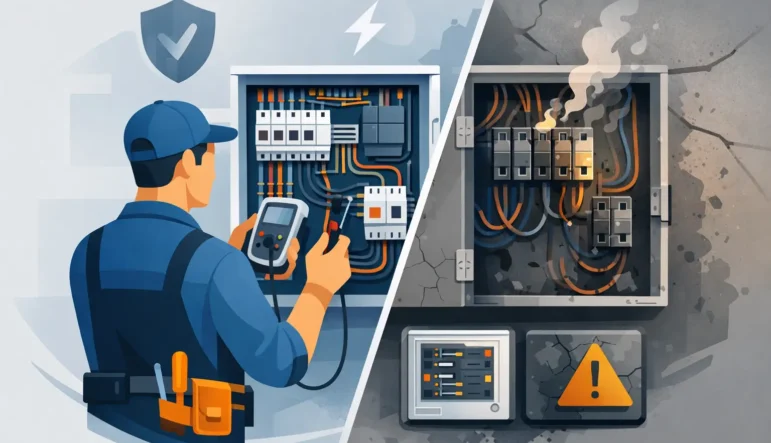
If your lights flicker when the microwave runs, or you keep resetting breakers after plugging in everyday appliances, your electrical panel may be telling you something. Homeowners often ask when should a panel be replaced, and the honest answer is that it depends on age, condition, capacity, and whether the panel is still safely handling your home’s electrical load.
For many homes in Santa Rosa and Sonoma County, the issue is not one dramatic failure. It is a gradual pattern – nuisance tripping, warm breakers, limited space for new circuits, or an older panel that was built for a very different era. Today’s homes use more power for HVAC equipment, kitchen appliances, home offices, EV charging, and outdoor living upgrades. A panel that was acceptable decades ago may now be undersized, outdated, or simply worn out.
A repair makes sense when the problem is isolated. For example, a single bad breaker, a loose connection, or a specific circuit issue can sometimes be corrected without replacing the entire panel. But there is a line where repeated repairs stop being the smart choice.
If the panel itself is deteriorating, showing heat damage, corroding, or failing to provide enough safe capacity for the home, replacement is usually the better long-term move. The same goes for panels with a known history of reliability or safety concerns, or panels that no longer meet the practical needs of the household.
A good electrician should not jump straight to replacement just because the panel is older. Age matters, but condition matters just as much. Some older panels remain serviceable. Others are overdue for replacement even if they appear functional on the surface.
One of the clearest signs is frequent breaker tripping. Breakers are supposed to trip when they detect an overload or fault, so occasional tripping is not automatically a panel problem. But if it keeps happening under normal use, especially on multiple circuits, the system needs closer evaluation.
Another warning sign is visible heat or damage. If you notice scorch marks, a burning smell, discolored breakers, melted insulation, or warmth around the panel, that is not something to watch and wait on. Those symptoms can point to loose connections, overheating, or internal failure.
Flickering or dimming lights also deserve attention, particularly when large appliances start up. Sometimes that points to a circuit issue, but it can also reflect a panel that is struggling with load distribution or aging components.
Then there is the practical limitation many homeowners run into – no room for additional circuits. If you are planning an EV charger, hot tub, air conditioning upgrade, kitchen remodel, or added outlets, a crowded panel can become a bottleneck. In that case, replacement may not be about failure. It may be about safely supporting the way you live now.
Homeowners often want a simple rule like replace the panel after 25 or 30 years. Realistically, there is no one expiration date. Electrical panels can last for decades, but lifespan depends on installation quality, usage, environmental conditions, and whether the panel has developed internal wear.
That said, older homes deserve closer attention. If your panel is several decades old and has never been updated, it may have limited amperage, outdated breaker technology, or wear that is not obvious from casual inspection. Even if nothing seems wrong today, an aging panel may leave little margin for modern electrical demand.
Homes built long before EV charging, induction cooking, larger HVAC systems, and expanded electronics often reach a point where the panel is no longer a good fit. Replacement becomes less about age alone and more about whether the electrical service still matches the home.
Some replacement decisions are driven by the panel’s make and model. Certain older panel brands have developed a reputation for breakers failing to trip properly or for other safety issues. If your home has one of those panels, replacement is often strongly recommended even if the system has not caused an obvious problem yet.
This is where homeowners benefit from a licensed electrician who will identify the equipment accurately and explain the actual risk. Not every old panel is automatically dangerous, but some deserve a much shorter leash than others. A clear, honest inspection matters more than guesswork.
Sometimes the panel is not failing. It is simply too small.
This comes up often when homeowners add an EV charger, a hot tub, a home addition, or new all-electric appliances. These upgrades can place significant demand on the system. If the panel lacks enough amperage or breaker space, trying to squeeze in more load can lead to nuisance trips, performance problems, or unsafe workarounds.
In many older homes, a 100-amp service may have been enough years ago. For some households, it still is. For others, especially those adding EV charging or major appliances, moving to a 200-amp panel is the more practical and future-ready choice. The right answer depends on the home’s total electrical load, not just one new project.
A proper load calculation is the key step here. That tells you whether the panel can safely support current and planned usage, or whether replacement is the better investment.
The best decision usually comes down to three questions.
First, is the issue isolated or systemic? If one breaker has failed, that may be a straightforward repair. If multiple breakers are acting up, the bus bars are damaged, or the panel shows signs of heat, replacement becomes much more likely.
Second, is the panel safe and reliable enough to keep? A panel that is technically still working but has corrosion, age-related wear, recalled components, or a poor safety track record may not be worth patching.
Third, will the panel meet your needs a few years from now? If you are already close to capacity and planning upgrades, repeated small fixes can end up costing more than replacing the panel once and doing it right.
That is why a trustworthy electrician will look at both the immediate problem and the larger picture. Homeowners should not be pushed into a replacement they do not need. At the same time, they should not be sold a cheap repair that delays a bigger safety issue.
For many homeowners, panel replacement sounds more disruptive than it really is. In most cases, the work involves removing the old panel, installing a new one that meets current code, reconnecting circuits, and coordinating permits and inspections as required.
Depending on the scope, the job may also include a service upgrade, grounding improvements, surge protection, labeling, and cleanup of existing wiring inside or near the panel. If the home has older wiring or related code issues, those may need to be addressed at the same time.
The power will usually be shut off during part of the process, so planning matters. A good electrical contractor will explain the timeline clearly, set expectations, and make sure the replacement is done cleanly and safely.
Panels rarely choose a convenient time to fail. What starts as a minor annoyance can become a no-power situation, damaged equipment, or a genuine safety hazard.
Waiting can also limit your options. If you address panel concerns before they become urgent, you have more time to compare recommendations, budget for the work, and coordinate replacement around other home improvements. If you wait until the panel is actively overheating or repeatedly failing, the decision gets made for you.
For homeowners who want a reliable answer without pressure, this is where a professional inspection matters most. An experienced residential electrician can tell you whether your panel needs a repair, an upgrade, or a full replacement, and explain why in plain language. That kind of straightforward guidance is what homeowners in Sonoma County should expect from a licensed local electrician like APG Electric Co.
If you are seeing warning signs, planning a major electrical upgrade, or simply wondering whether your older panel is still up to the job, trust the evidence over the guesswork. A safe panel should do its job quietly, consistently, and without making you think twice every time you flip a switch.
