935 Bush Street Santa Rosa, CA 95404
License #998700
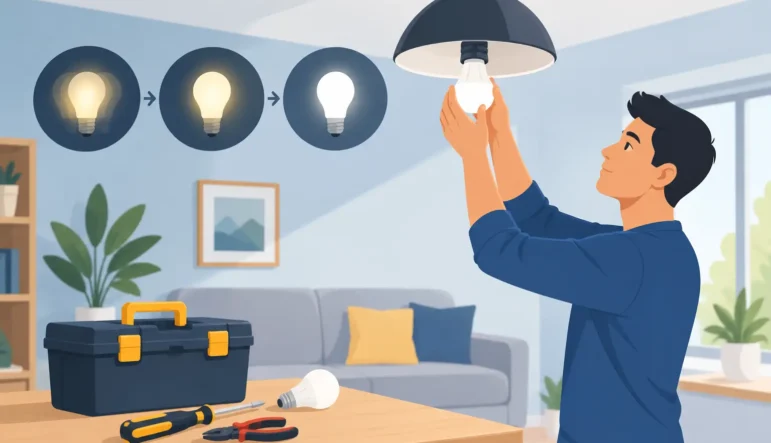
A light that flickers once when you turn on a major appliance may be annoying. A light that repeatedly dims, flashes, or changes brightness without explanation can point to a loose connection, an overloaded circuit, or a problem farther upstream. Knowing how to fix flickering lights starts with recognizing which issues are safe to check yourself and which require a licensed electrician.
For Santa Rosa and Sonoma County homeowners, the age of the home matters. Many local properties have older wiring, aging panels, or circuits that were never designed for modern electrical loads such as EV chargers, heat pumps, hot tubs, and expanded kitchen appliances. Flickering lights are not always an emergency, but they should not be ignored when they are frequent, widespread, or paired with other warning signs.
If only one light flickers, begin with the simplest possible explanation. Turn off the switch, allow the bulb to cool, and make sure it is seated securely in the socket. A bulb that is slightly loose can lose contact as the fixture vibrates or warms up.
If tightening the bulb does not help, replace it with a new, compatible bulb. LED bulbs can flicker when they are paired with an older dimmer switch that was designed for incandescent bulbs. Not every dimmer works properly with every LED, even when the bulb turns on and off normally.
Check the fixture’s labeling and the bulb packaging for dimmer compatibility. If the flickering occurs only when the light is dimmed, a compatible LED dimmer or properly matched bulbs may solve the problem. If a brand-new bulb flickers at full brightness, the issue may be in the fixture, switch, or wiring instead.
The pattern of flickering provides useful clues. A single recessed light or lamp usually points to a bulb, fixture, switch, or local connection. Several lights on the same circuit may indicate a loose wire, overloaded circuit, or failing breaker. Lights flickering throughout the home can signal a panel, service, or utility-side issue.
Pay attention to what happens at the same time. Does the kitchen lighting dip when the microwave starts? Do bedroom lights flicker when the air conditioner, well pump, or dryer runs? A brief, minor change in brightness can occur when large motors start. Significant or persistent dimming is different. It suggests that a circuit, neutral connection, panel, or electrical service needs professional evaluation.
Do not assume a flickering light is harmless just because it still works. Loose electrical connections create resistance and heat. Over time, that heat can damage wiring, switches, outlets, fixtures, and electrical panel components.
A worn switch can cause intermittent flickering, especially if the light responds when you touch, wiggle, or toggle the switch. A dimmer can also fail internally or be incompatible with the bulbs installed.
Before doing anything near a switch box, turn off the correct breaker and verify the power is off. Homeowners may be comfortable replacing a standard switch or an approved dimmer with an identical replacement, but this is not the right place to experiment. If the wiring is unfamiliar, damaged, aluminum, crowded, or missing proper grounding, stop and schedule service.
A qualified electrician can determine whether the switch is the source of the issue or whether it is only where the symptom is showing up. That distinction matters. Replacing a switch may temporarily improve a loose connection behind it, while leaving the underlying wiring problem unresolved.
Modern households put more demand on electrical systems than homes did decades ago. A circuit serving lighting, outlets, electronics, and a portable heater may be overloaded even if the breaker has not tripped. The same can happen when a garage circuit is asked to support tools, refrigeration, and EV charging equipment without proper upgrades.
Common signs that a circuit may be overloaded include:
Moving a plug-in appliance to a different circuit may help identify a load-related pattern, but it is not a permanent repair. Avoid replacing a breaker with a larger one to stop tripping. Breaker sizing must match the wire size and circuit design. Installing an oversized breaker can allow wiring to overheat before the breaker trips.
Loose wiring connections are one of the most concerning causes of flickering lights. They can occur at a fixture, outlet, switch, junction box, breaker, panel, meter connection, or service equipment. Because electrical current can arc across a poor connection, this is not a repair to delay.
Turn off power and call a licensed electrician promptly if you notice flickering along with a burning smell, buzzing sound, discoloration around a switch or outlet, hot electrical equipment, sparks, or a breaker that will not stay on. Also treat widespread flickering as urgent, particularly if lights brighten and dim dramatically in multiple rooms.
A loose neutral connection deserves special attention. In a typical home, the neutral helps stabilize voltage across circuits. When it is loose or failing, some lights may become unusually bright while others dim. This can damage electronics and appliances, so disconnect sensitive devices when it is safe to do so and arrange for immediate diagnosis.
If your neighbors are experiencing similar flickering or power fluctuations, the cause may be outside your home. Contact your utility provider to report the issue. However, do not assume the utility is responsible simply because several rooms are affected. The fault could still be at your home’s service equipment, meter base, main panel, or main connections.
An electrician can inspect the portions of the electrical system that belong to the home and help clarify whether utility involvement is needed. This prevents the common frustration of being sent back and forth without a clear diagnosis.
A licensed residential electrician does more than replace the visible part that appears to be causing trouble. Proper troubleshooting involves identifying the circuit, checking voltage behavior under load, examining accessible connections, and evaluating the condition of breakers, wiring, fixtures, and panel components.
In an older Sonoma County home, the recommended repair may be as straightforward as replacing a failing dimmer or repairing a loose fixture connection. In other cases, the electrician may find an outdated panel, deteriorated wiring, undersized circuits, or a service issue that needs a larger repair. The right solution depends on the actual cause, not on the symptom alone.
APG Electric provides clear residential diagnostics for homeowners who want an honest explanation of what is happening, what needs attention now, and what can be planned for later. That approach helps avoid unnecessary work while addressing conditions that could affect safety or reliability.
Call for professional help immediately when flickering lights occur with heat, odor, smoke, sparks, buzzing, repeated breaker trips, or visible damage. You should also schedule an inspection soon if lights flicker in several rooms, fluctuate when large appliances run, or continue after replacing bulbs and checking compatible dimmers.
Until the issue is inspected, avoid overloading the affected circuit. Do not remove panel covers, touch exposed wiring, or repeatedly reset a breaker that trips. If there is smoke, fire, or an immediate electrical hazard, leave the area and contact emergency services.
A dependable electrical system should fade into the background of daily life. When lights begin flickering, paying attention early can turn a small repair into a straightforward fix instead of a larger disruption to your home.
