935 Bush Street Santa Rosa, CA 95404
License #998700
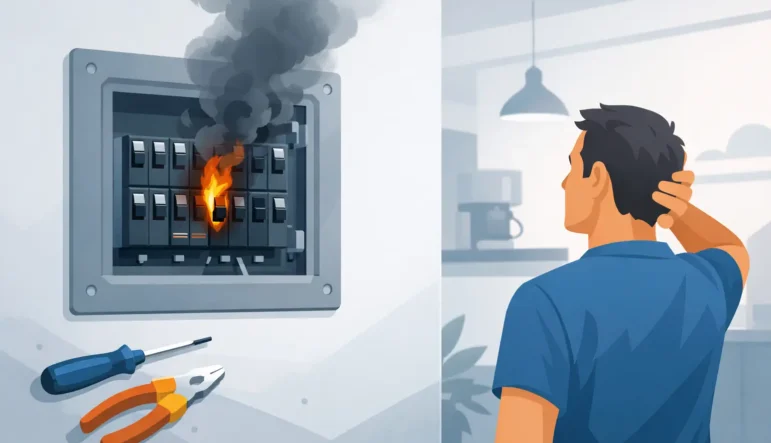
A sharp burnt-plastic smell near your electrical panel is not a problem to monitor for a few days. Homeowners often ask why breakers smell burnt after noticing an odor in a garage, hallway, utility room, or near a panel that seems otherwise normal. In most cases, that smell points to overheating, damaged insulation, arcing, or a failing electrical component that needs prompt professional attention.
A circuit breaker is designed to interrupt power when a circuit draws too much current or develops a fault. But breakers, wiring connections, and the panel itself can still overheat when there is a loose connection, a damaged breaker, or more electrical demand than the equipment can safely handle. The smell may be coming from the breaker, but it can also come from wiring behind it, the panel bus bar, or a connected appliance.
The most common cause is heat. Electricity moving through a loose, corroded, or damaged connection creates resistance. Resistance creates heat, and sustained heat can discolor metal, melt insulation, and produce the familiar smell of burnt plastic or electrical wiring.
A breaker may smell burnt even if it has not tripped. That is one reason the odor should never be dismissed. A breaker can remain on while a loose terminal or internal component slowly overheats. By the time a breaker begins tripping repeatedly, visible damage may already be present.
Wires must be properly secured to the breaker terminal and properly sized for the circuit. If a connection loosens over time, electrical current has to pass through a smaller contact area. The resulting heat can damage the wire, terminal, or breaker.
This issue is more likely in older homes, panels that have been modified over the years, or circuits serving high-demand equipment. It can also occur after a previous repair if the connection was not torqued correctly. The repair may be as straightforward as addressing a damaged connection, but an electrician must first determine how far the heat damage has spread.
A circuit can become overloaded when it supplies more power than it was designed to carry. Portable space heaters, air fryers, microwaves, hair dryers, window air conditioners, workshop tools, and older appliances can all place heavy demand on a circuit. EV charging and hot tub equipment also require correctly sized, dedicated circuits.
Overload conditions do not always mean the breaker is defective. Sometimes the home simply needs a new dedicated circuit or a panel upgrade to support the way the household now uses electricity. Replacing a breaker without correcting the underlying load issue can allow the problem to return.
Breakers contain internal parts that wear out or fail. If a breaker is hot to the touch, shows discoloration, makes buzzing sounds, trips without an obvious reason, or smells burnt, it may no longer be operating reliably.
In some cases, the problem is not limited to the breaker. Heat can damage the panel bus bar, which is the metal component the breaker connects to. Once a bus bar has been compromised, simply installing a new breaker may not be a safe or lasting solution. A licensed electrician should inspect the panel and recommend only the repair or replacement work the condition actually requires.
Arcing happens when electricity jumps across a gap rather than traveling through its intended path. It can create intense heat and a distinct burning odor. Loose connections, damaged conductors, worn outlets, and failing equipment can all contribute to arcing.
Moisture and corrosion can also affect panels, especially in garages, exterior locations, or areas with past water intrusion. In Sonoma County homes, rodents can be another concern. Chewed wiring insulation can expose conductors and create a serious fire hazard that may first show up as an electrical odor.
Treat a burning electrical smell as a safety concern, especially if it is strongest at the electrical panel. Do not remove the panel cover, take apart a breaker, or try to tighten wiring yourself. Panel work exposes live electrical components and requires the right training, tools, and testing procedures.
If you see smoke, sparks, charring, or signs of active fire, move everyone away from the area and call 911. Do not spray water on an electrical panel. If it is safe to do so and there is no heat, smoke, or sparking at the panel, you can turn off the affected circuit breaker and leave it off. If you cannot identify the affected circuit, or the panel itself feels hot or smells strongly burnt, avoid touching it.
Do not repeatedly reset a breaker that trips. A breaker that will not stay on is responding to an abnormal condition. Resetting it again and again can energize damaged wiring or equipment and increase the risk of overheating.
If the smell seems connected to an appliance, unplug the appliance only when it is safe to do so. A toaster, space heater, power strip, or extension cord may be the source rather than the breaker. Even then, a burned odor at the panel deserves inspection because the appliance may have stressed an already weak circuit connection.
A burnt smell alone is enough reason to schedule a prompt electrical inspection, but some symptoms call for more urgency. Contact a licensed electrician as soon as possible when you notice any of the following:
These signs do not automatically mean your entire electrical panel needs replacement. The right solution depends on the condition of the breaker, wiring, connections, panel components, and electrical load. A trustworthy diagnosis should explain what failed, why it failed, and whether a targeted repair, new circuit, or panel upgrade is the appropriate next step.
A qualified residential electrician starts by identifying the source of the odor and checking for heat damage. This may include examining breakers, wire terminations, panel components, and the circuits connected to the affected area. Testing can help determine whether the circuit is overloaded, whether a connection has high resistance, or whether a breaker is not functioning correctly.
The electrician should also consider what has changed in the home. A new EV charger, hot tub, HVAC equipment, appliance, or workshop setup can reveal that an older panel no longer has adequate capacity. On the other hand, a single damaged breaker might be isolated to one circuit. Accurate diagnosis matters because electrical work should solve the cause, not just hide the symptom.
For Santa Rosa and Sonoma County homeowners, APG Electric provides clear residential electrical diagnostics and recommendations based on the actual condition of the system. That means explaining your options plainly, prioritizing safety, and helping you make a cost-conscious decision without unnecessary upselling.
Regular attention to your electrical system can reduce the chances of an overheating issue. Avoid overloading outlets with power strips and extension cords, and use dedicated circuits for major electrical loads. If a breaker trips occasionally when several appliances are running, consider that an early warning instead of an inconvenience.
It also helps to plan electrical upgrades before adding high-demand equipment. An EV charger, hot tub, major kitchen appliance, or garage workshop may need a dedicated circuit, and some homes need panel capacity improvements to support those additions safely. Proper installation with correctly sized wire, breakers, and connections protects both the equipment and the home.
A burnt electrical smell is your home asking for attention. Keep the affected circuit off when it is safe to do so, avoid opening the panel, and have a licensed electrician identify the source before a small overheating issue becomes a larger repair or fire risk.
