
A wall outlet should be one of the least noticeable parts of your home. When it feels hot, grips a plug poorly, makes a sound, or leaves you relying on extension cords, it is asking for attention. Recognizing outlet replacement warning signs early can help Sonoma County homeowners prevent damaged devices, electrical shocks, and potentially serious fire hazards.
Outlets wear out, but age is not the only issue. A problem at the receptacle can also point to loose wiring, an overloaded circuit, moisture exposure, or an outdated electrical system. The right repair depends on the cause, which is why a licensed electrician should inspect any outlet that shows signs of failure.
Outlet Replacement Warning Signs Homeowners Should Act On
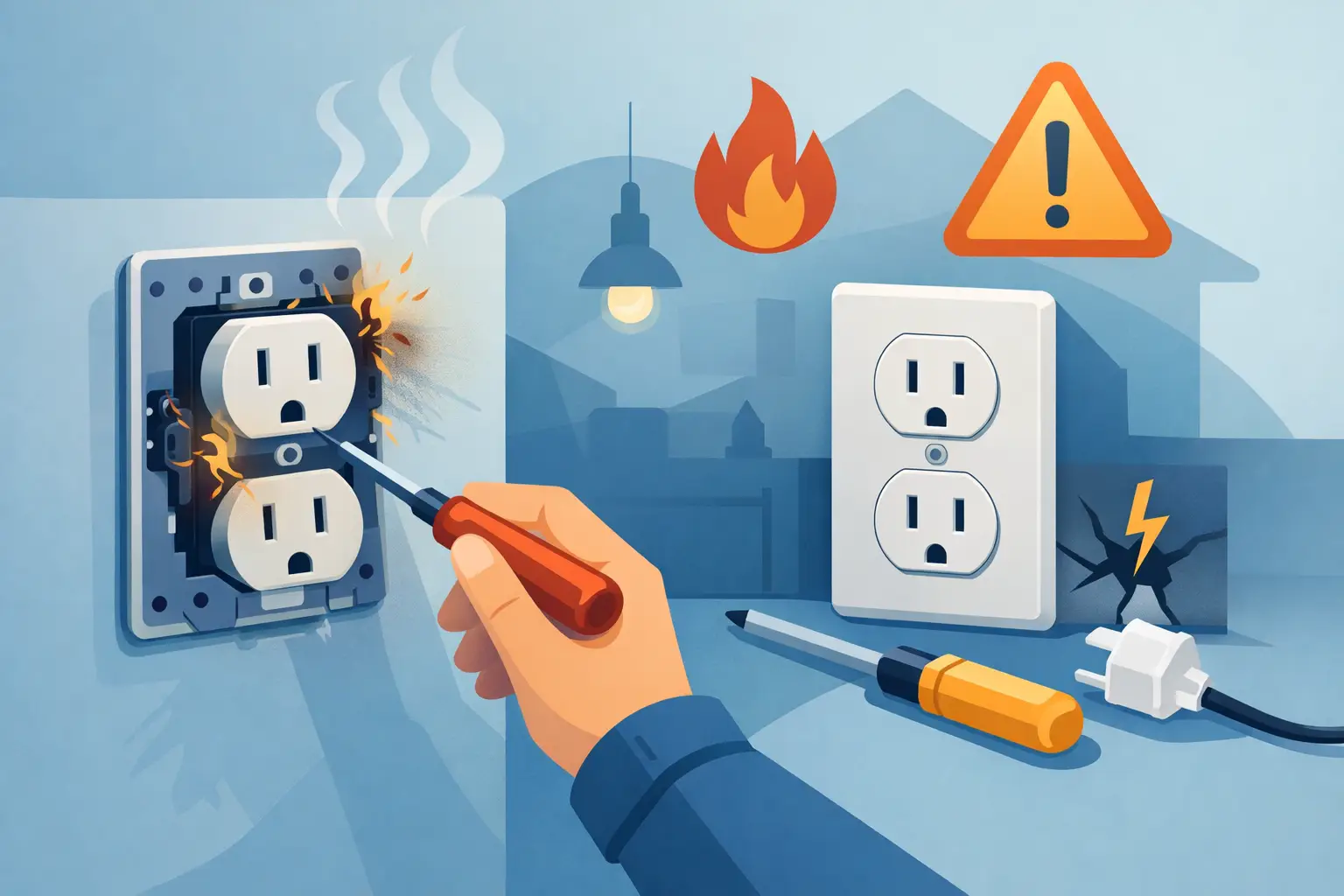
The outlet is warm, discolored, or smells burnt
An outlet should not feel warm during normal use. A slight amount of warmth may occur with certain high-demand equipment, but a hot faceplate, scorched marks, melted plastic, or a burning smell is not normal. These symptoms can indicate a loose connection behind the outlet, damaged wiring, or a receptacle that is no longer safely handling the load.
Unplug anything connected to the outlet if it can be done safely, avoid using it again, and arrange for professional service promptly. Do not cover the outlet or assume a new faceplate will solve the problem. The heat source needs to be identified before the circuit is used.
Plugs fall out or fit loosely
A plug should slide in with firm resistance and stay securely in place. If phone chargers, lamps, or appliance cords droop out of an outlet, the internal contacts may be worn. Loose contacts create poor electrical connections, which can lead to arcing and heat buildup.
This is one of the most common outlet replacement warning signs in older homes. It may seem minor, especially when a plug still works, but it is worth addressing before the receptacle deteriorates further. A replacement is often straightforward, though an electrician should also verify that the wiring and box are in good condition.
You see sparks, hear buzzing, or notice crackling
A tiny, brief spark can occasionally occur when a plug is inserted or removed while a device is switched on. Repeated sparking, large sparks, buzzing, popping, or crackling are different. They may signal arcing, a loose wire, internal damage, or a failing outlet.
Turn off the circuit breaker if the outlet is making noise, sparking repeatedly, or showing other signs of overheating. Avoid experimenting with different plugs to see whether the problem continues. Electrical arcing can damage the receptacle and surrounding wiring even when power appears to be working normally.
The outlet does not work consistently
An outlet that works only when a cord is held at a certain angle, cuts power in and out, or stops working without an obvious reason needs an inspection. The issue could be a failed receptacle, but it could also be a loose connection elsewhere on the circuit.
Before assuming the outlet needs replacement, check whether a nearby GFCI outlet has tripped. GFCI outlets, commonly found in kitchens, bathrooms, garages, laundry areas, and outdoor locations, can protect downstream outlets. If resetting a GFCI does not restore reliable power, or it trips again, it is time to have the circuit evaluated.
The outlet is damaged or has no cover plate
Cracked receptacles, broken faceplates, exposed wiring, or loose outlets that move inside the wall box should be repaired. Damaged plastic can expose energized components, while a loose outlet can strain wire connections every time something is plugged in.
This concern is especially urgent in homes with children, pets, or frequent guests. Tamper-resistant receptacles can provide an added level of protection in appropriate locations, but they should be installed correctly and matched to the circuit’s needs.
When an Outlet Problem May Be Bigger Than the Outlet
Replacing a worn receptacle is sometimes the complete fix. In other cases, a failing outlet is the visible symptom of a broader wiring or circuit issue. Older Sonoma County homes may have aging components, limited outlet capacity, ungrounded receptacles, or circuits that were not designed for modern household electrical demand.
For example, a kitchen outlet that repeatedly trips when operating a toaster oven and coffee maker may be overloaded or incorrectly configured. An outlet in a garage that powers an EV charger through an extension cord is not an appropriate long-term charging solution. High-demand equipment needs a properly designed, dedicated circuit where required, not a workaround at a standard wall outlet.
A licensed electrician can determine whether the concern is isolated or whether the home would benefit from circuit repairs, GFCI protection, AFCI protection, additional outlets, or an electrical panel upgrade. Honest diagnostics matter here. Not every outlet issue requires major electrical work, but a professional should explain what is necessary, what is recommended, and why.
Outlets Near Water Need Extra Attention
Bathrooms, kitchens, laundry rooms, garages, basements, and outdoor living areas all present a higher risk because moisture and electricity do not mix. These locations generally require GFCI protection, which is designed to shut off power quickly when it detects an imbalance that could indicate current is traveling where it should not.
If an outlet near water is not GFCI-protected, will not reset, trips frequently, has corrosion, or shows moisture damage, do not ignore it. The solution may involve replacing the receptacle, correcting wiring, improving weather protection, or tracing a moisture issue. The best approach depends on the location and the condition of the circuit.
Outdoor outlets deserve a close look after periods of rain. A weather-resistant receptacle, a proper in-use cover, and secure connections help protect the outlet while cords are plugged in. Indoor-rated outlets and loose covers are not suitable substitutes outside.
Avoid Temporary Fixes for Electrical Problems
Power strips and extension cords can be useful for temporary, low-demand needs, but they are not a replacement for adequate permanent wiring. If a room depends on multiple extension cords because outlets are too far away or too few, consider adding outlets where you actually use power.
Likewise, repeatedly resetting a breaker or GFCI without understanding why it tripped can create a false sense of security. Circuit breakers and GFCIs are safety devices. When they operate repeatedly, they are signaling a condition that should be addressed rather than bypassed.
Never remove a grounding pin from a plug, force a three-prong plug into an ungrounded outlet, paint over a damaged receptacle, or install a higher-amperage outlet on a circuit that is not designed for it. These shortcuts can increase risk while hiding the underlying problem.
What to Expect From a Professional Outlet Inspection
A qualified electrician does more than swap the visible outlet. The inspection should include checking the receptacle condition, wiring connections, grounding, box security, circuit protection, and signs of heat damage. If the outlet has failed because of a problem upstream, finding that issue is essential to preventing a repeat failure.
The electrician can also recommend practical upgrades based on how the space is used. That might mean tamper-resistant outlets in living areas, USB-equipped outlets where they genuinely add convenience, weather-resistant outdoor receptacles, or added dedicated circuits for appliances and modern electrical loads. The goal is a safer home that works better for the way your family lives.
APG Electric provides licensed residential electrical service for homeowners throughout Santa Rosa and Sonoma County, with clear recommendations and workmanship built for long-term reliability. If an outlet feels wrong, looks damaged, or cannot keep up with normal use, treating it early is usually the safest and most cost-conscious choice.