935 Bush Street Santa Rosa, CA 95404
License #998700
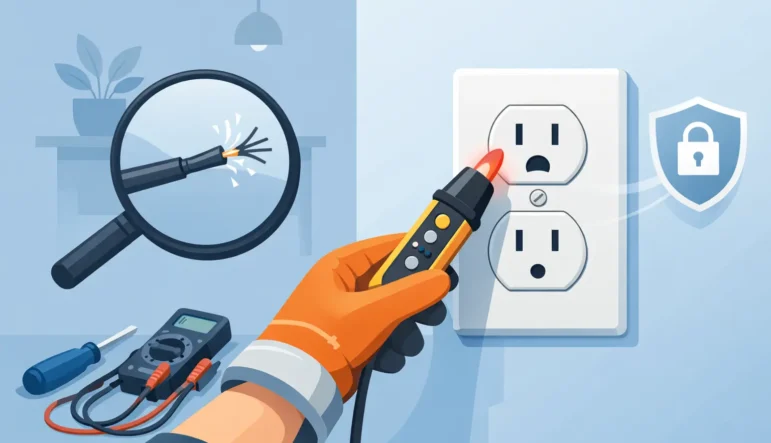
A phone charger stops working in one corner of the room, then you discover the lamp beside it is out too. Before assuming the outlet has failed, learn how to troubleshoot dead outlets in a way that protects you, your home, and the electrical system behind the wall. A dead receptacle can be a simple reset issue, but it can also point to a loose connection, overloaded circuit, or wiring problem that needs a licensed electrician.
The first step is to rule out the easy explanation: the device or cord may be the problem, not the outlet. Plug a known working lamp or small appliance into the outlet. Avoid using a high-demand item such as a space heater, hair dryer, or power tool for this test.
If the working device does not turn on, check nearby outlets in the same room. Also check outlets on the opposite side of the same wall, in adjoining rooms, and in the garage or exterior areas. A single circuit can serve more locations than homeowners expect, especially in older Sonoma County homes.
Pay attention to what is and is not working. If several outlets, lights, or switches are out together, the issue is likely at the breaker, a tripped safety device, or an upstream connection. If only one outlet is dead, it may still be fed through another outlet or switch before it.
Go to your electrical panel and look for a tripped breaker. A breaker may not always look fully switched to the OFF position. It can sit in a middle position that is easy to miss.
To reset it, move the suspected breaker firmly all the way to OFF first, then move it back to ON. Return to the outlet and test it again with the same known working device.
If the breaker immediately trips again, or trips when you plug something in, leave it off. Repeated tripping is not an inconvenience to work around. It is a safety signal that may indicate a short circuit, damaged appliance, overloaded circuit, or wiring fault. Do not keep resetting the breaker in hopes that it will hold.
If your panel labels are unclear, do not remove the panel cover or touch anything inside the panel. A licensed electrician can identify the circuit, verify its condition, and update inaccurate or incomplete labeling when needed.
Many dead outlets are caused by a tripped ground-fault circuit interrupter, commonly called a GFCI. These outlets are designed to shut off power quickly when they detect an electrical imbalance that could create a shock hazard.
GFCIs are common in bathrooms, kitchens, laundry areas, garages, crawl spaces, unfinished basements, and outdoor locations. One GFCI outlet can protect several standard outlets farther down the circuit. That means the dead outlet itself may not have TEST and RESET buttons.
Look for GFCI outlets nearby and in less obvious places, including another bathroom, the garage, exterior outlets, or utility areas. Press RESET once and then test the dead outlet again. If the GFCI will not reset, trips right away, feels warm, has visible damage, or makes a buzzing sound, stop there and schedule professional service.
Newer homes may also have arc-fault circuit interrupter protection at the panel. An AFCI breaker can trip when it detects electrical arcing, which may be caused by a damaged cord, loose wire, or failing connection. Like a GFCI, an AFCI that will not stay reset deserves a proper diagnosis rather than repeated attempts to turn it back on.
A visual check can help you explain the issue clearly when you call an electrician. Keep the inspection limited to what you can see and safely access from the outside.
Look for discoloration around the outlet face, cracked plastic, loose plugs, a burning smell, buzzing, warmth, or scorch marks. These are not cosmetic concerns. They can indicate overheating or arcing behind the receptacle.
Also consider what was plugged in before the outlet went dead. A heavily loaded power strip, portable heater, window air conditioner, microwave, shop vacuum, or older appliance can overload a circuit or expose a weak connection. Unplug the items from the affected circuit before checking the breaker or GFCI again.
Do not remove the outlet cover, pull the receptacle from the wall, or probe the slots with a tool. Even if an outlet appears dead, wiring in the box may still be energized from another source or affected by a shared circuit. Electrical diagnosis often requires testing that should be performed with the right equipment and training.
A dead outlet is often the last visible symptom, not the original failure point. Residential outlets are usually connected in sequence, so a loose or damaged connection at one device can interrupt power to outlets farther along the circuit.
In aging homes, worn receptacles, loose terminal connections, backstabbed wiring connections, and past repairs can all create intermittent or complete power loss. The problem may show up after years of normal use, especially when a circuit begins carrying more load from modern electronics, kitchen appliances, home office equipment, or EV-related electrical upgrades.
Sometimes the issue is more straightforward. The outlet may be controlled by a wall switch, a switched receptacle may have been turned off, or a breaker could be undersized or overloaded for how the circuit is being used. The correct repair depends on the cause. Replacing an outlet without addressing a loose upstream connection, for example, may restore power briefly while leaving the actual hazard in place.
Call a licensed residential electrician promptly if you notice heat, smoke, sparking, a burning odor, melted plastic, buzzing, or repeated breaker or GFCI trips. Turn off the affected breaker if you can identify it safely, and do not use that outlet or circuit until it has been inspected.
Professional help is also the right choice when multiple outlets are out, the issue returns after a reset, the panel is older or poorly labeled, or the dead outlet is in a kitchen, bathroom, garage, exterior location, or other area requiring GFCI protection. These spaces have additional safety requirements, and a correct repair may involve more than replacing a receptacle.
A qualified electrician can trace the circuit, test for voltage and continuity, inspect connections, identify failed devices, and determine whether the issue is isolated or part of a larger panel or wiring concern. That approach is more cost-conscious than guessing at parts, and it helps prevent a small electrical repair from becoming damage to your home.
For Santa Rosa and Sonoma County homeowners, APG Electric provides clear, licensed diagnostics for outlet and circuit problems. The goal is not to sell work you do not need. It is to find the source of the failure, explain the repair options plainly, and restore dependable power safely.
A dead outlet may be solved by a reset button, but it should never be treated casually when there are signs of heat, damage, or recurring power loss. Trust the simple checks, respect the warning signs, and bring in a professional when the circuit gives you a reason to question what is happening behind the wall.
