935 Bush Street Santa Rosa, CA 95404
License #998700
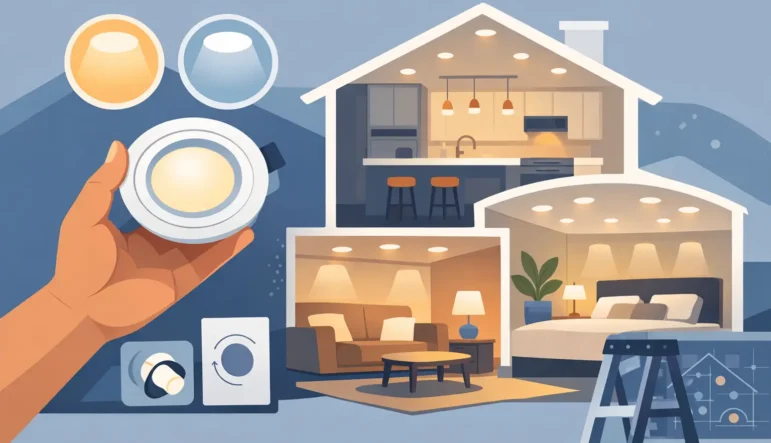
A recessed light can make a Santa Rosa living room feel brighter and more open, but the wrong layout can leave corners dim, create glare over the sofa, or make a kitchen work area frustrating to use. Knowing how to choose recessed lighting starts with a simple question: what should the light help you do in this room?
Recessed lighting is not a one-size-fits-all upgrade. The fixture size, trim style, beam spread, brightness, and placement all affect the result. A thoughtful plan gives your home clean-looking illumination while avoiding unnecessary holes in the ceiling, uneven light, and costly changes later.
Before choosing a fixture, identify the lighting layers the room needs. Ambient lighting provides general visibility throughout the space. Task lighting helps with specific activities, such as chopping vegetables, reading, shaving, or working at a desk. Accent lighting draws attention to art, a fireplace, built-in shelving, or an architectural detail.
Recessed lights are excellent for ambient and accent lighting, and they can provide task lighting when they are placed deliberately. In a kitchen, for example, ceiling lights should illuminate the countertop rather than only the open floor behind you. In a living room, a few well-positioned recessed lights may work alongside lamps and decorative fixtures instead of replacing them entirely.
Think about how the room is actually used after dark. A media room may need dimmable lights on separate zones. A bathroom benefits from bright, even light, but the vanity still needs face-level lighting to reduce shadows. Bedrooms often feel best with softer ambient lighting and focused light near closets or reading areas.
Most modern residential recessed fixtures use integrated LED lights, often called canless or wafer lights. These fixtures are slim, energy efficient, and useful where ceiling space is limited. Traditional recessed housings are still appropriate in some situations, particularly when a specific trim, adjustable directional light, or architectural look is desired.
Fixture diameter influences both the appearance and the amount of light. Four-inch fixtures offer a smaller, more discreet look and work well in hallways, bathrooms, and rooms with lower ceilings. Five- and six-inch fixtures are common for general lighting in larger living areas and kitchens. Bigger is not automatically better. Installing oversized fixtures in a modest room can make the ceiling feel cluttered.
Trim matters as well. A fixed downlight sends illumination directly downward and works well for general room lighting. Adjustable gimbal trims can aim toward a wall, artwork, or fireplace. Wall-wash trims spread light vertically to brighten a feature wall. In wet locations, such as a shower, use a fixture rated for wet locations, not merely damp locations.
The cleanest option for many homes is a white, low-profile trim that blends into a white ceiling. Black or decorative trims can be an intentional design choice, but they should coordinate with the rest of the room rather than call attention to every fixture.
A common mistake is choosing lights by wattage. With LED lighting, lumens are the more useful measurement because they describe light output. Higher lumens mean a brighter fixture.
For general lighting, many homeowners choose recessed LED fixtures in the 700- to 1,000-lumen range. The right amount depends on ceiling height, wall color, natural light, furnishings, and how the room is used. A dark-paneled room or kitchen with deep countertops may need more usable light than a white bedroom of the same size.
Do not try to solve every lighting need by installing the brightest possible fixtures. Too much direct overhead light can feel harsh, especially in bedrooms and living rooms. Dimmers give you control and make a room more flexible. They also let brighter task-capable lighting feel comfortable during a quiet evening.
When planning a remodel, consider lighting zones. Kitchen perimeter lights, island pendants, under-cabinet lighting, and dining lights can each be controlled separately. This approach often creates a better result than placing every light on one switch.
Color temperature is measured in Kelvin and affects whether white light appears warm or cool. It is one of the details homeowners notice immediately, especially when new recessed lights are installed next to existing fixtures.
For most Sonoma County homes, 2700K to 3000K provides a warm, inviting light for living rooms, bedrooms, hallways, and dining areas. A 3000K light is slightly crisper and is a popular choice for kitchens and bathrooms because it still feels comfortable while improving visual clarity.
A 3500K or 4000K light can suit a garage, workshop, laundry room, or highly contemporary space, but it may feel too cool in a traditional living area. Whenever possible, keep color temperature consistent within connected rooms. A warm dining room next to a noticeably cool kitchen can make the lighting feel mismatched.
Also look for a high color rendering index, or CRI. A CRI of 90 or above helps paint colors, wood finishes, food, and skin tones look more natural. It is a worthwhile feature for kitchens, bathrooms, closets, and any room where color accuracy matters.
The layout is where recessed lighting projects succeed or fail. A useful starting point is to space fixtures roughly half the ceiling height apart. For an eight-foot ceiling, that suggests approximately four feet between lights. This is a guideline, not a rule. Fixture beam angle, room shape, furniture placement, and desired brightness can change the plan.
Keep fixtures far enough from walls to avoid harsh scallops of light unless wall washing is the goal. In many rooms, placing lights about two to three feet from the wall creates a balanced effect. For artwork or a fireplace, an adjustable fixture can direct light exactly where it belongs.
In kitchens, center lights over the work surfaces, not only down the middle of the room. If lights are directly behind the person standing at the counter, their body creates shadows over the workspace. A layout that follows the countertop line is usually more functional.
Avoid treating recessed lights like a grid that must fill every inch of ceiling. Decorative fixtures, windows, ceiling fans, beams, and furniture all influence where light is needed. Fewer, properly located fixtures often look and perform better than a ceiling crowded with lights.
A lighting plan must work with what is above the ceiling. Joists, HVAC ducts, plumbing, insulation, existing wiring, and structural elements can limit where fixtures can go. An electrician can assess these conditions before cutting holes and recommend practical adjustments that preserve the intended look.
If recessed lights will be installed in an insulated ceiling, use fixtures rated for insulation contact when required. The correct housing and installation method matter for safety, energy performance, and code compliance. Older homes may also have wiring or electrical box conditions that need attention before new lighting is added.
This is also the time to discuss switches, dimmers, and smart controls. Not every LED fixture works properly with every dimmer. Choosing compatible components helps prevent flickering, buzzing, poor dimming range, or lights that do not turn fully off.
A professional installation is about more than making neat ceiling cutouts. It includes evaluating the circuit load, selecting properly rated equipment, making secure connections, protecting wiring, and confirming that switches and controls operate correctly. That attention is especially valuable in older Sonoma County homes, where existing electrical systems may not match the assumptions of a new lighting plan.
APG Electric helps homeowners make practical recessed lighting choices based on the room, the home’s existing electrical conditions, and the desired finish. Clear recommendations can prevent overbuilding a project while still delivering the brightness, comfort, and reliability you expect.
The best recessed lighting should disappear into the ceiling while making every part of the room easier and more enjoyable to use. Start with the way you live in the space, choose quality dimmable fixtures, and have the layout reviewed before installation. That is how a lighting upgrade continues to feel right long after the project is complete.
